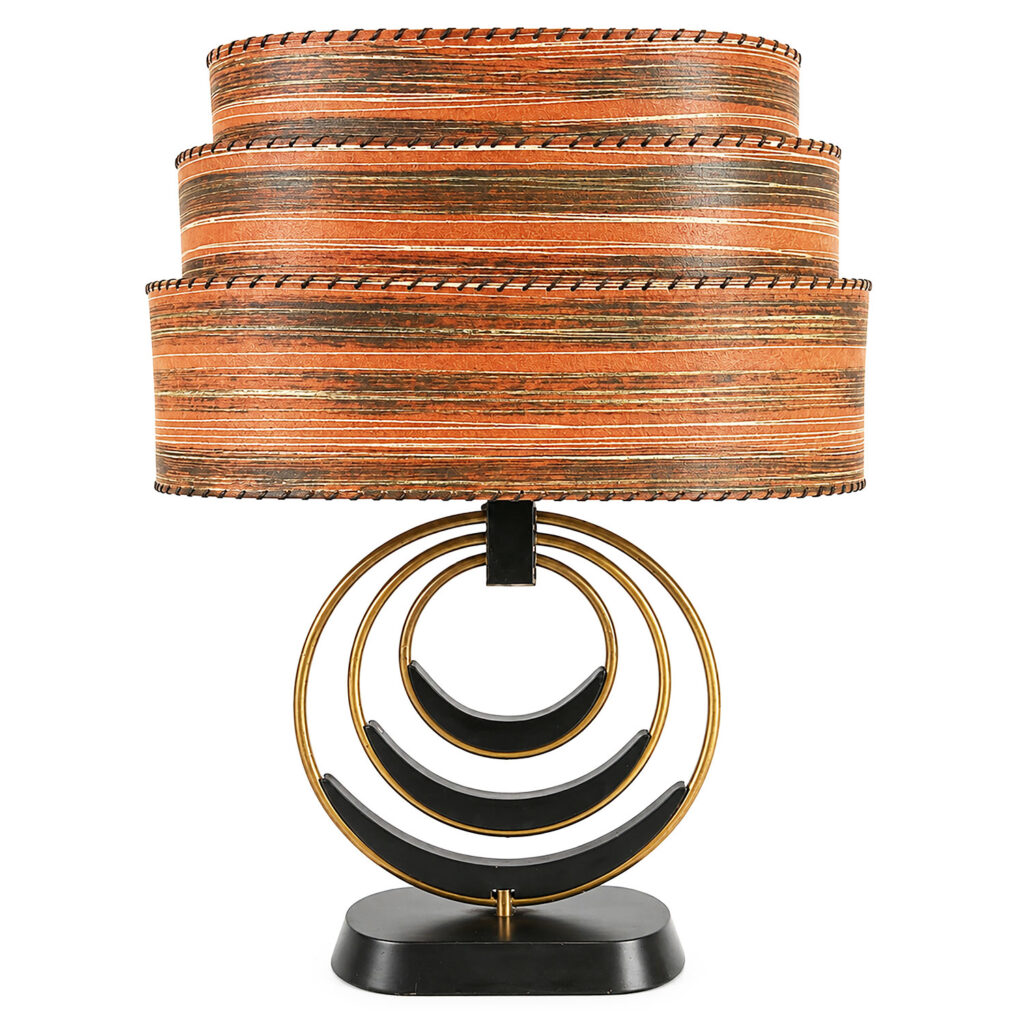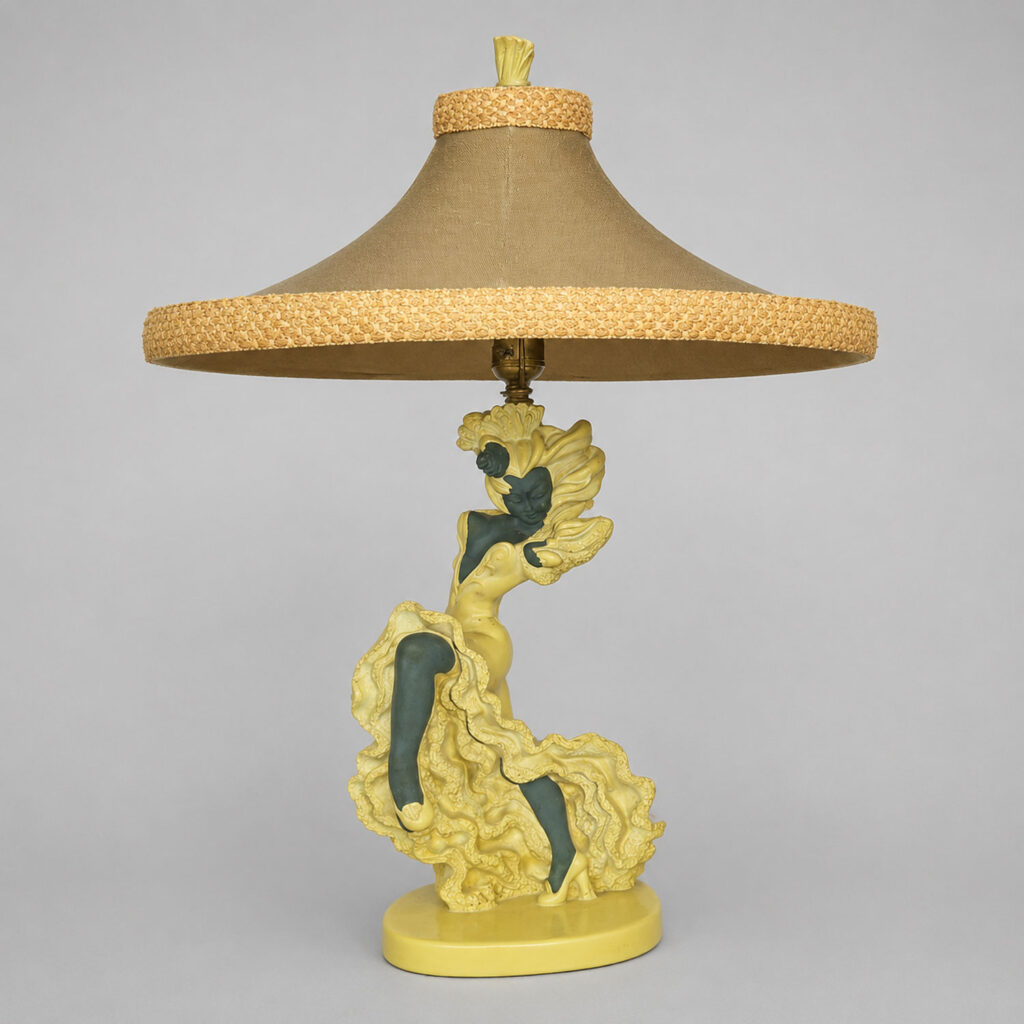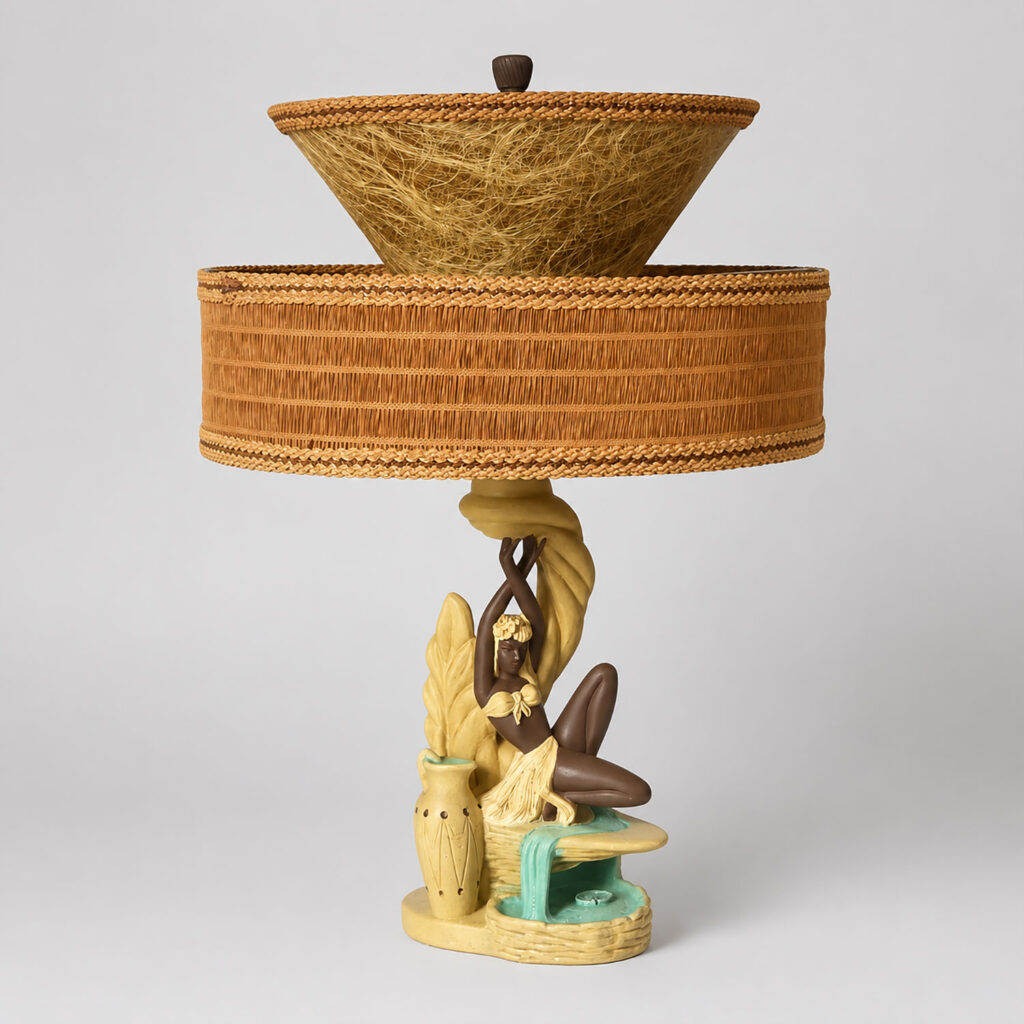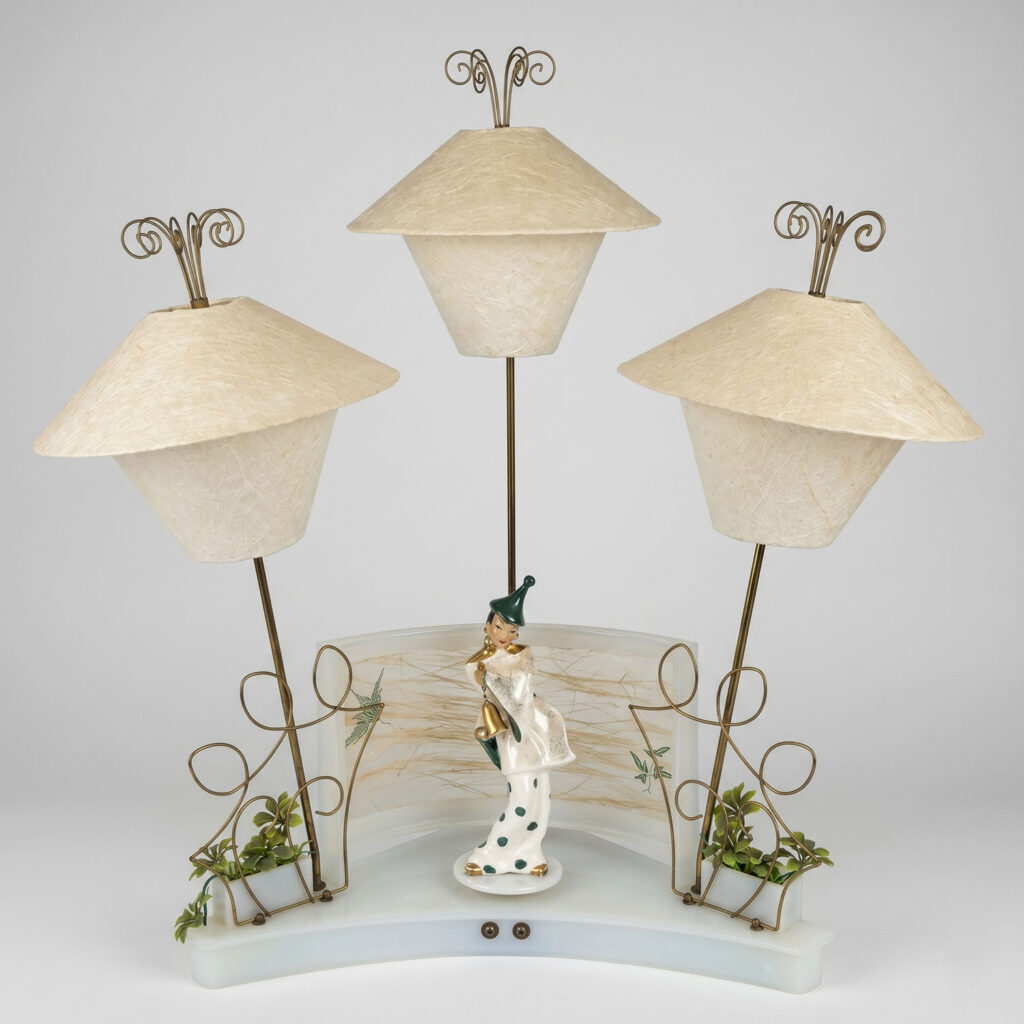




Lighting is one of the most expressive areas of mid-century decorative design. More than a practical necessity, a lamp could act as sculpture, color accent, mood piece, and design statement all at once. In the 1930s, 1940s, and 1950s, American lighting manufacturers experimented freely with form, material, and surface, producing table lamps, floor lamps, wall lights, and novelty designs that reflected the changing character of the modern home.
This section explores lighting as both functional object and decorative art. The focus is on American lamps and lighting design from the Machine Age through the postwar period, with attention to materials, manufacturers, styles, and the ways lighting helped shape domestic interiors. Chrome, brass, ceramic, chalkware, glass, wood, fiberglass, rattan, and lucite all found their way into lighting design, often in inventive combinations that are now strongly associated with the period.
Mid-century lighting sits at the intersection of industry and imagination. Some designs were sleek and architectural, borrowing from Streamline Moderne, Art Deco, and modernist furniture forms. Others were playful, theatrical, or openly decorative, using figural bases, textured shades, tropical themes, atomic motifs, or bold color. A lamp could be understated and elegant, or it could be the most visually assertive object in the room.
The manufacturers represented here range from well-known names to smaller firms whose work survives more often in objects than in documentation. Companies such as Majestic, Reglor, Haeger, Continental Art Company, and others produced lighting that reflected the tastes of a rapidly changing marketplace. Some pieces were promoted as modern design, while others belonged to the broader world of affordable home decoration, department store furnishings, and postwar novelty.