



Reglor of California: Theatrical Lamps for the Postwar Interior
Reglor of California sits right in that postwar California decorative-lamp world where the boundary between sculpture, souvenir, Hollywood Regency, and functional lighting gets wonderfully blurry. The company is generally described as having been founded in 1947 in Montebello, California, by Rena Stein and her husband Bernie Stein. Several dealer histories say the name “Reglor” came from Rena and her cousin Gloria, although this detail seems to circulate mostly through collector and dealer sources rather than through surviving company documentation. One dealer account says the business began behind the Steins’ home in Montebello, starting with plaster sculpture before moving into cast lamps.
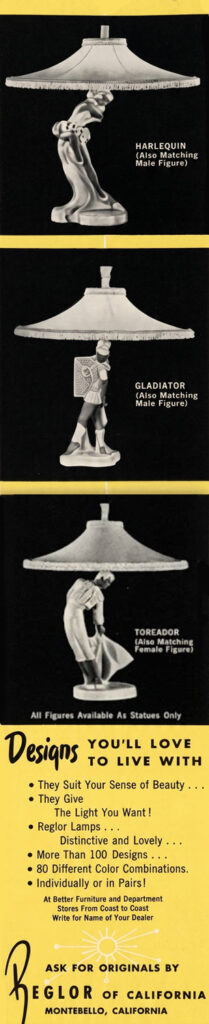
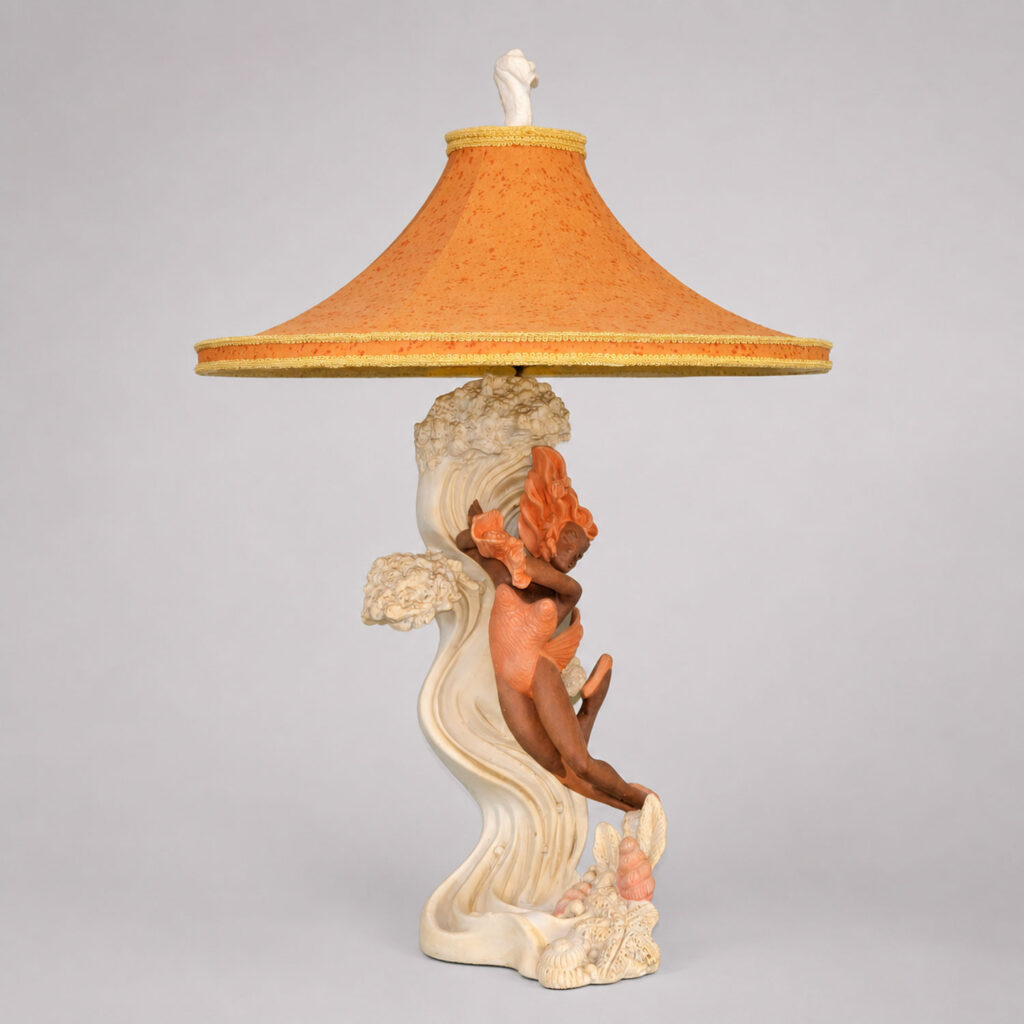
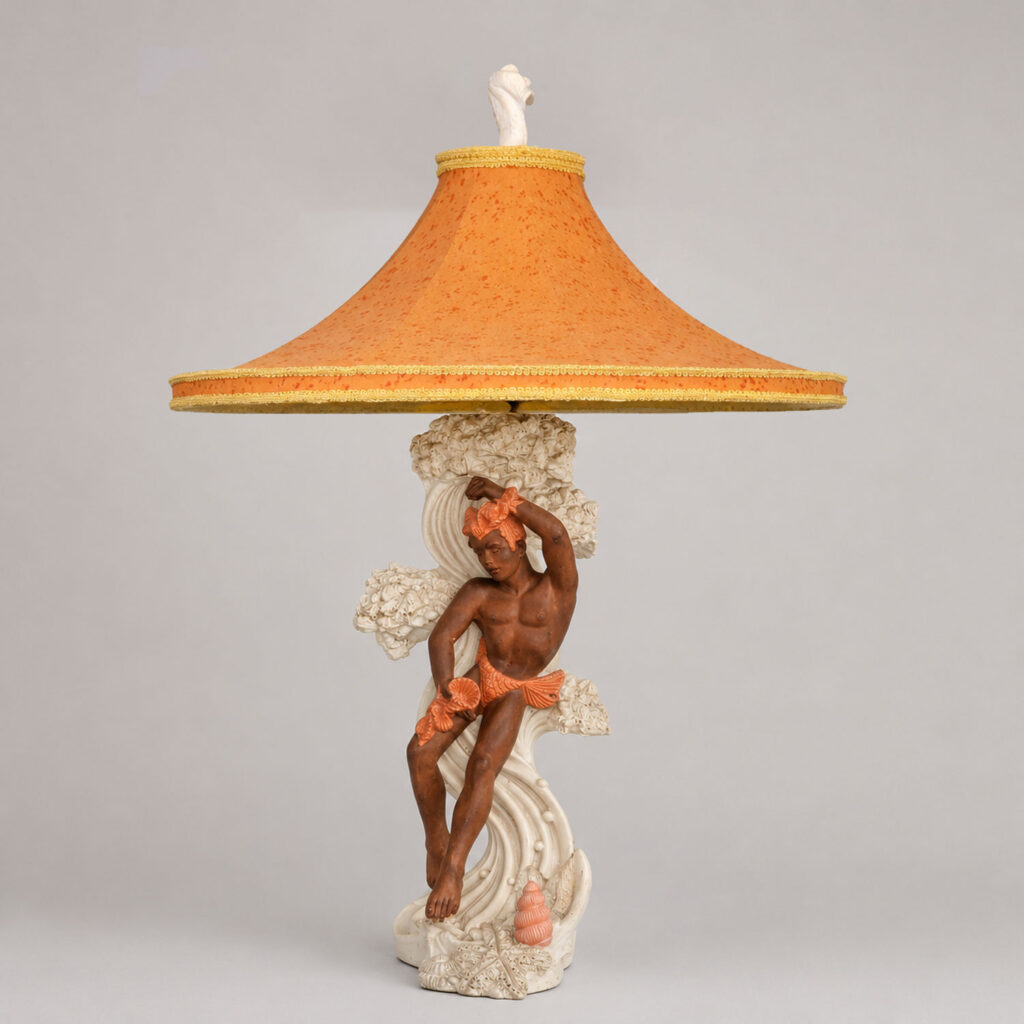
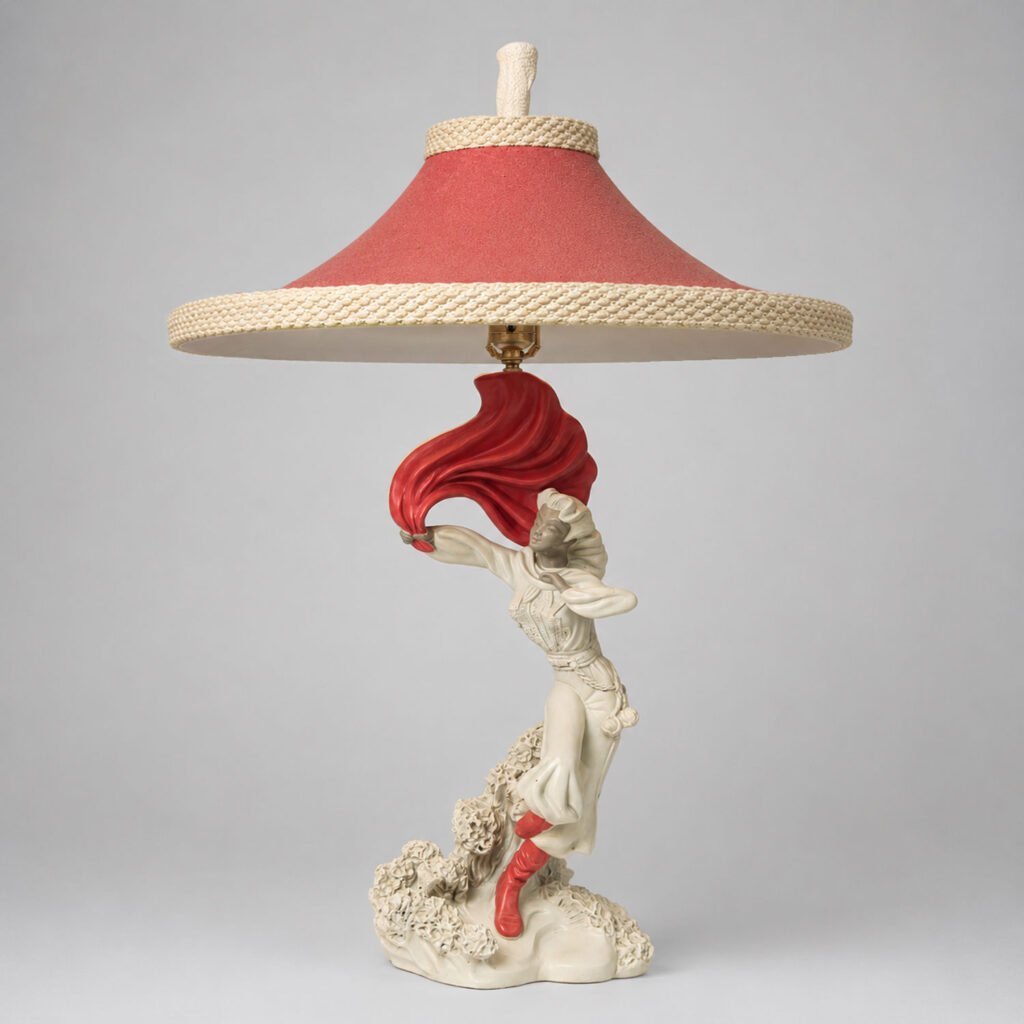
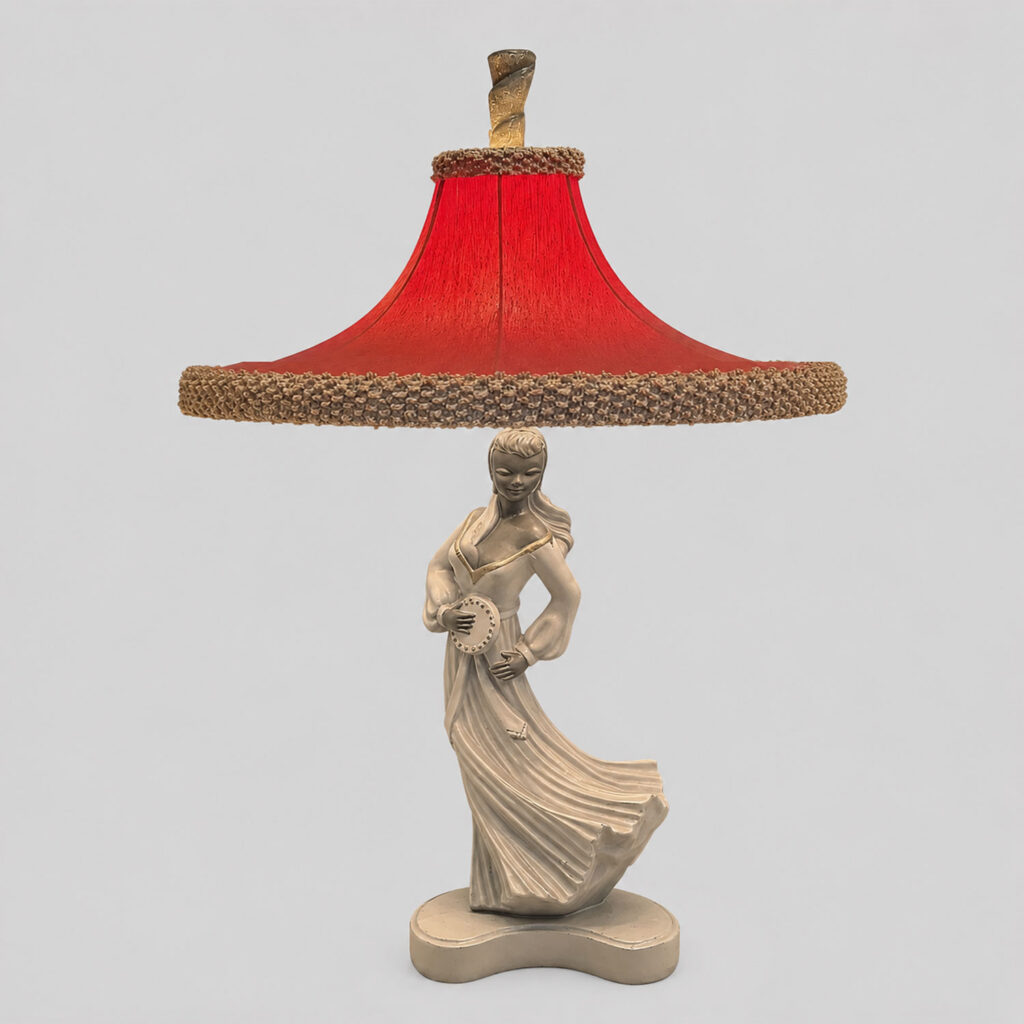
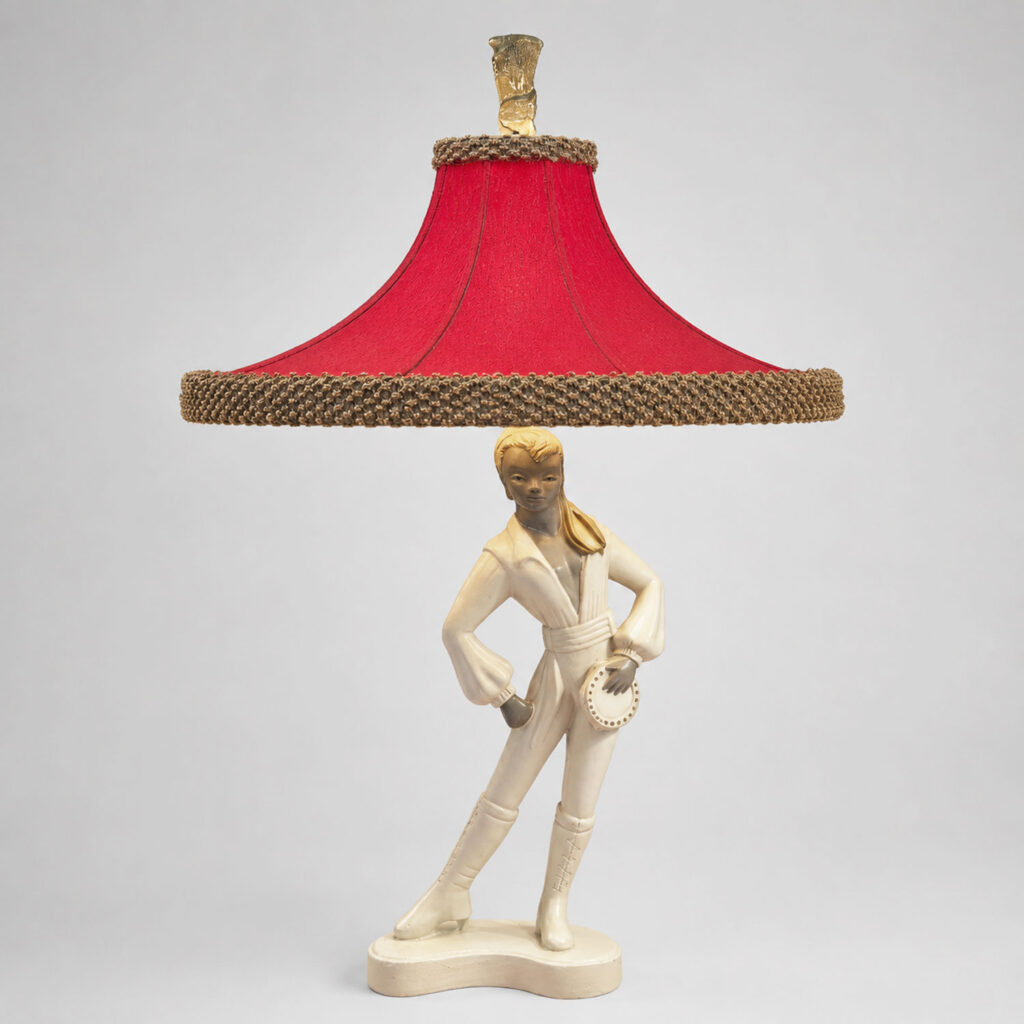
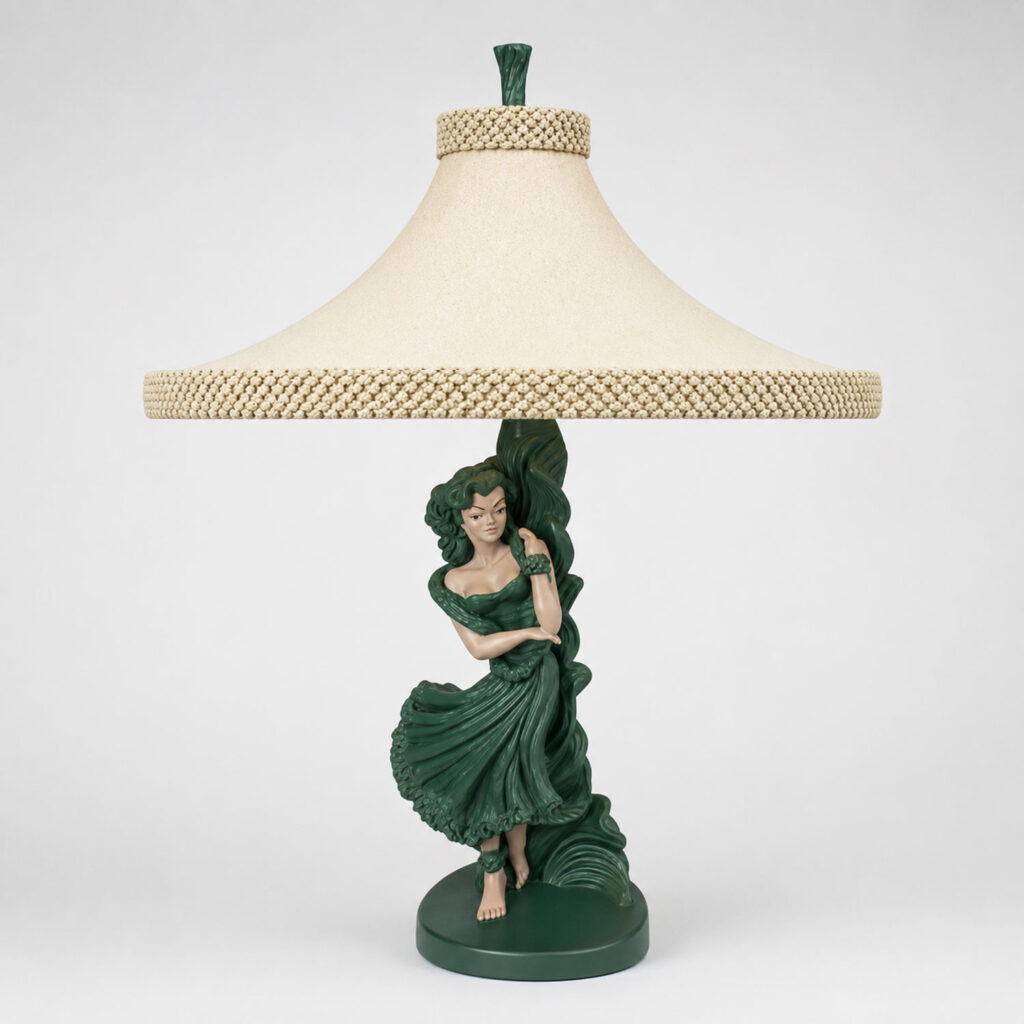
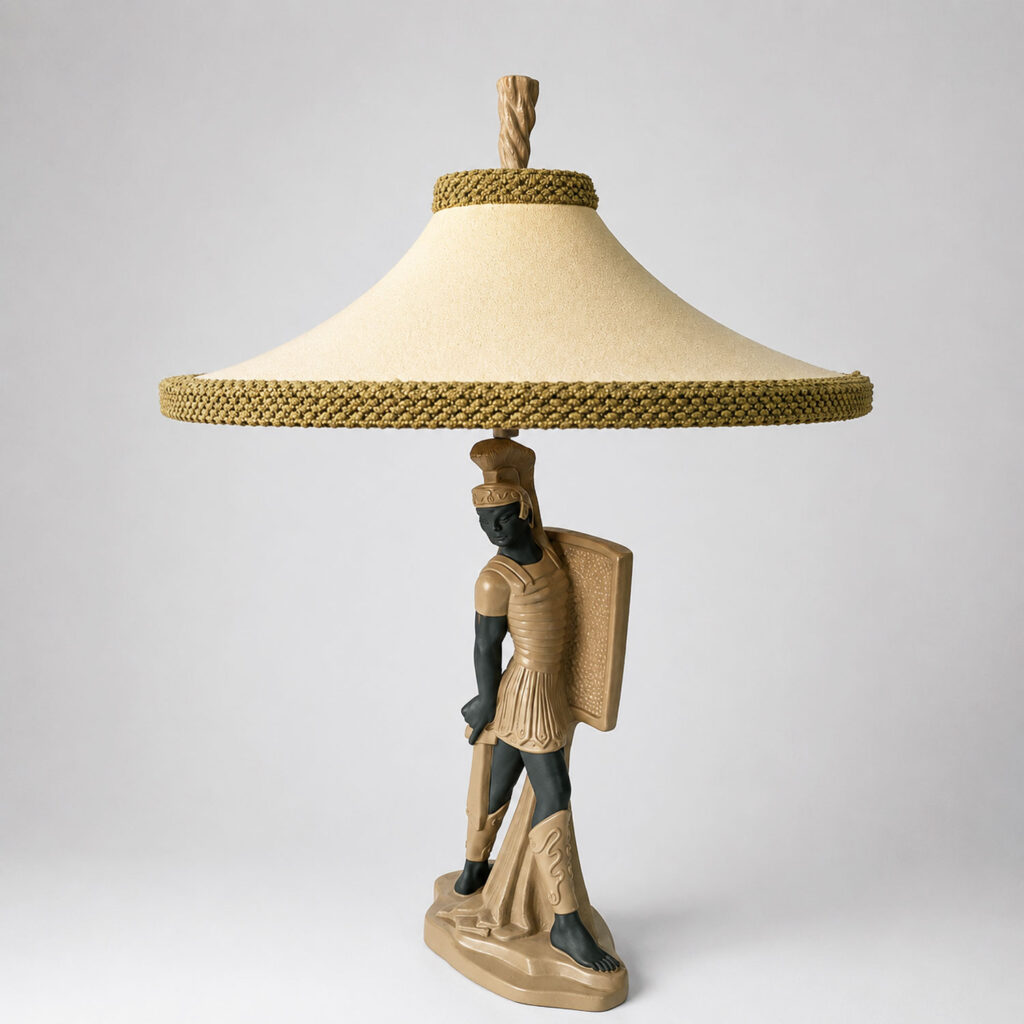
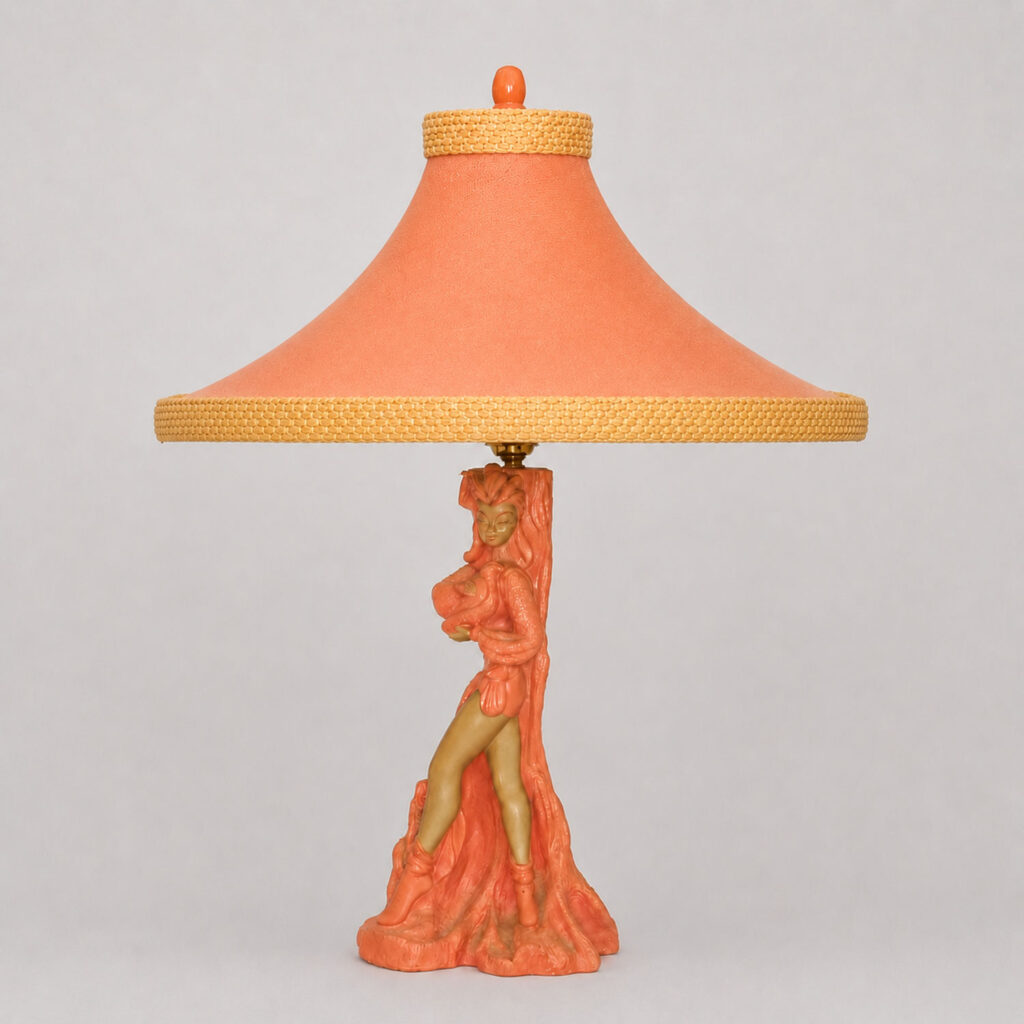
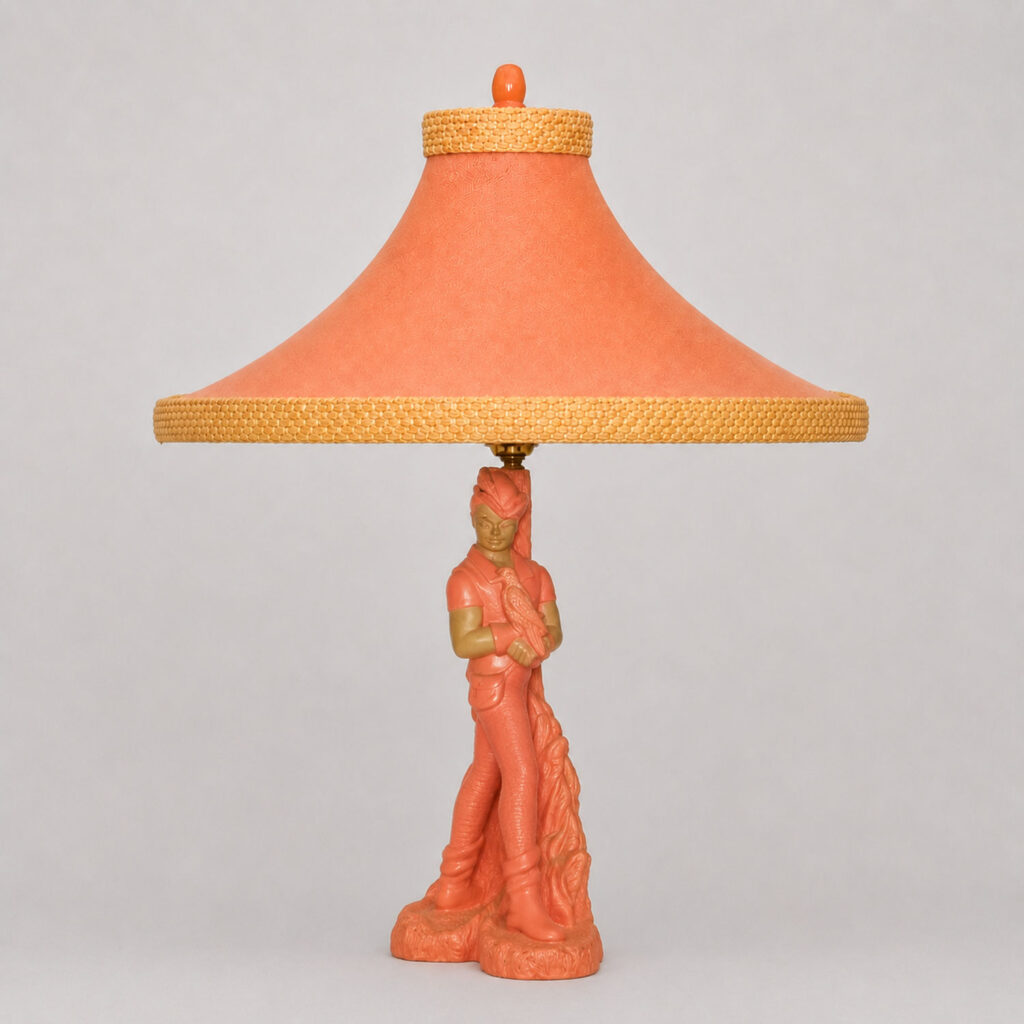
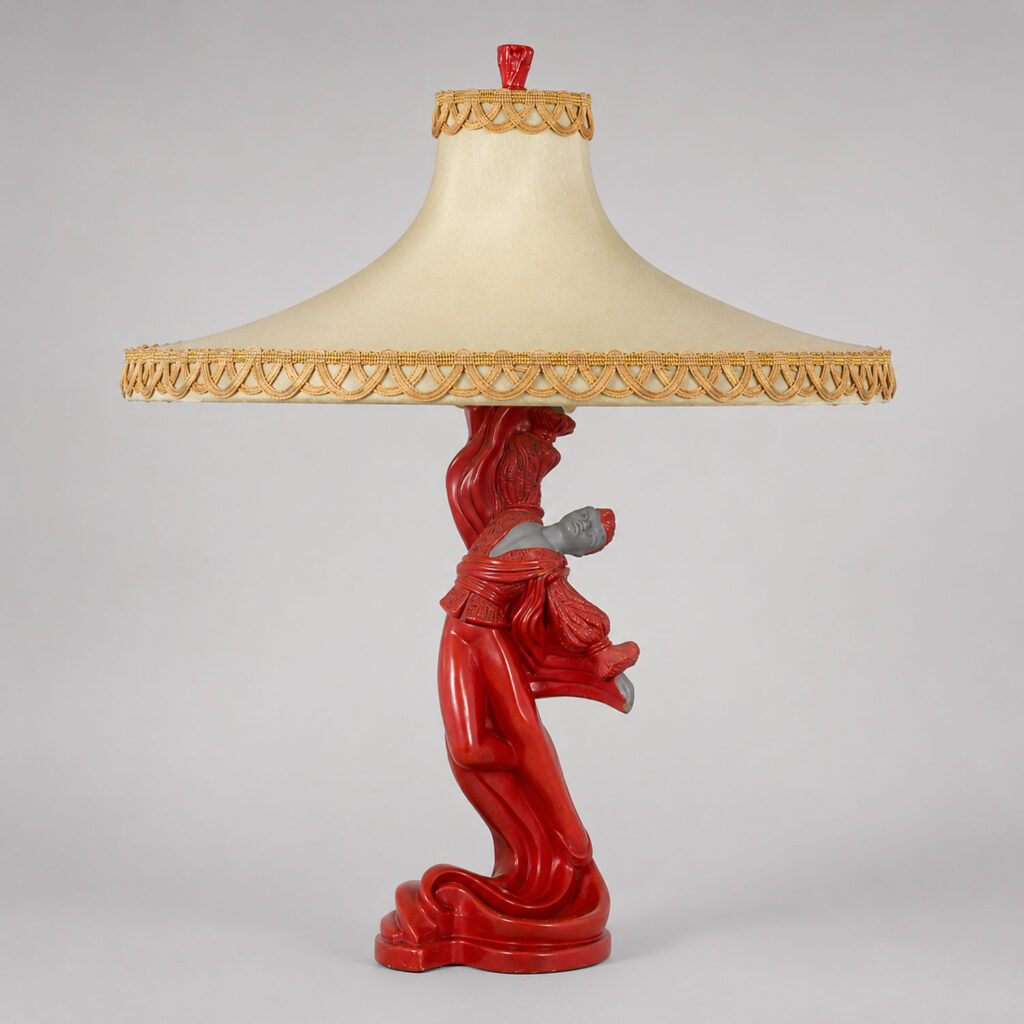
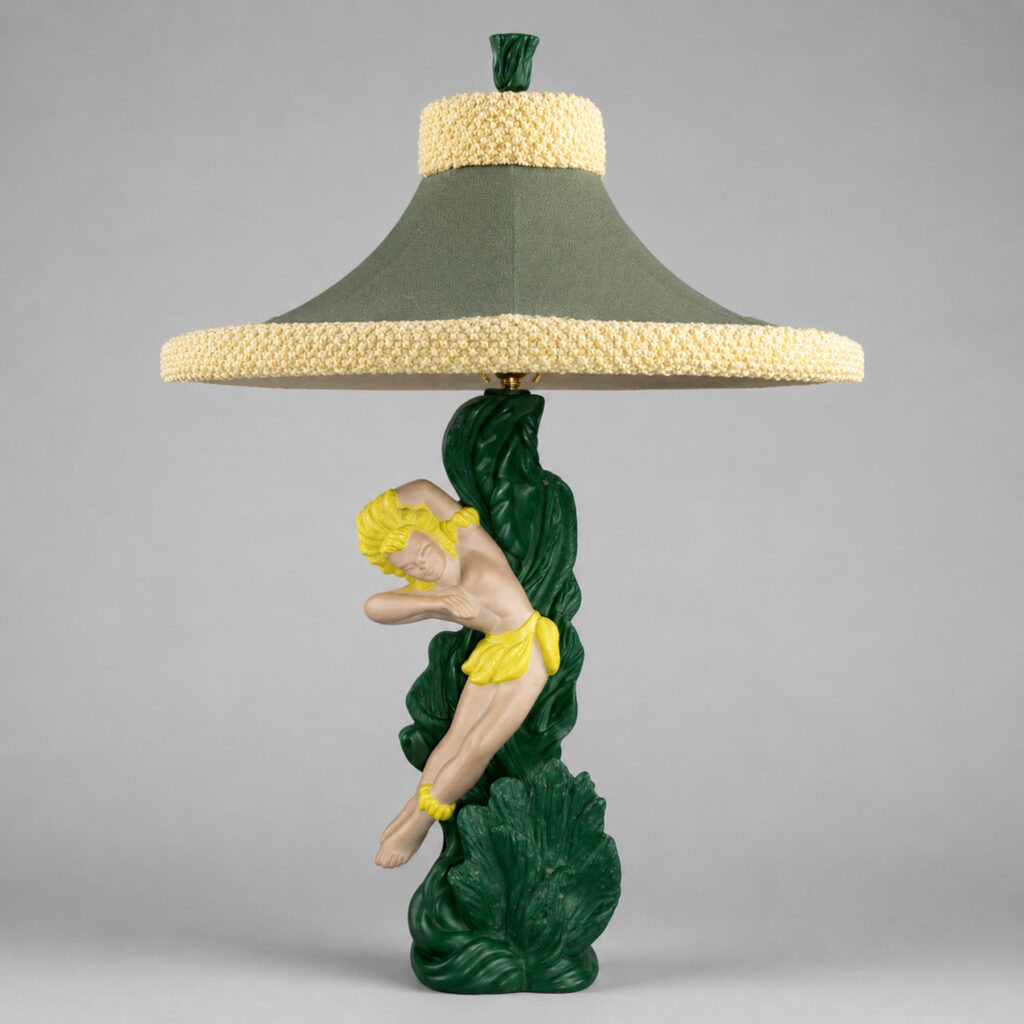
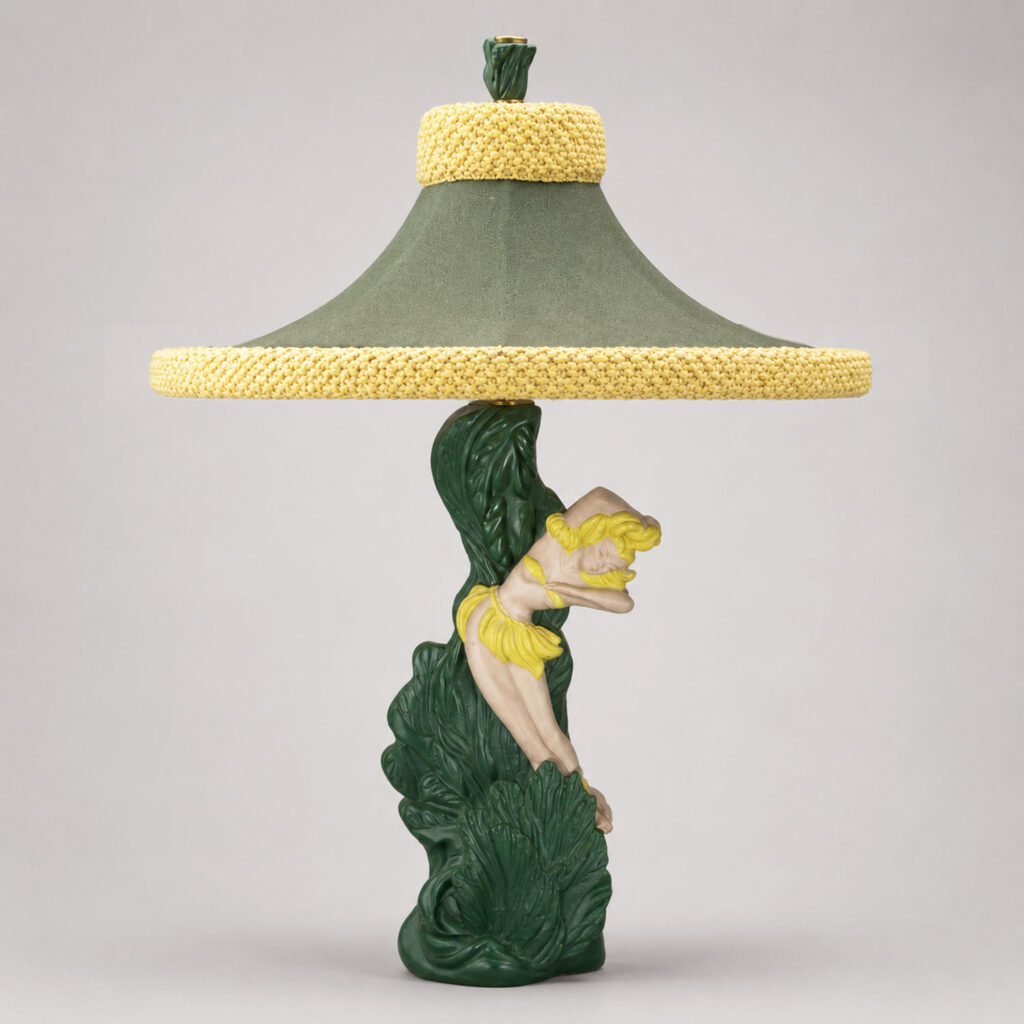
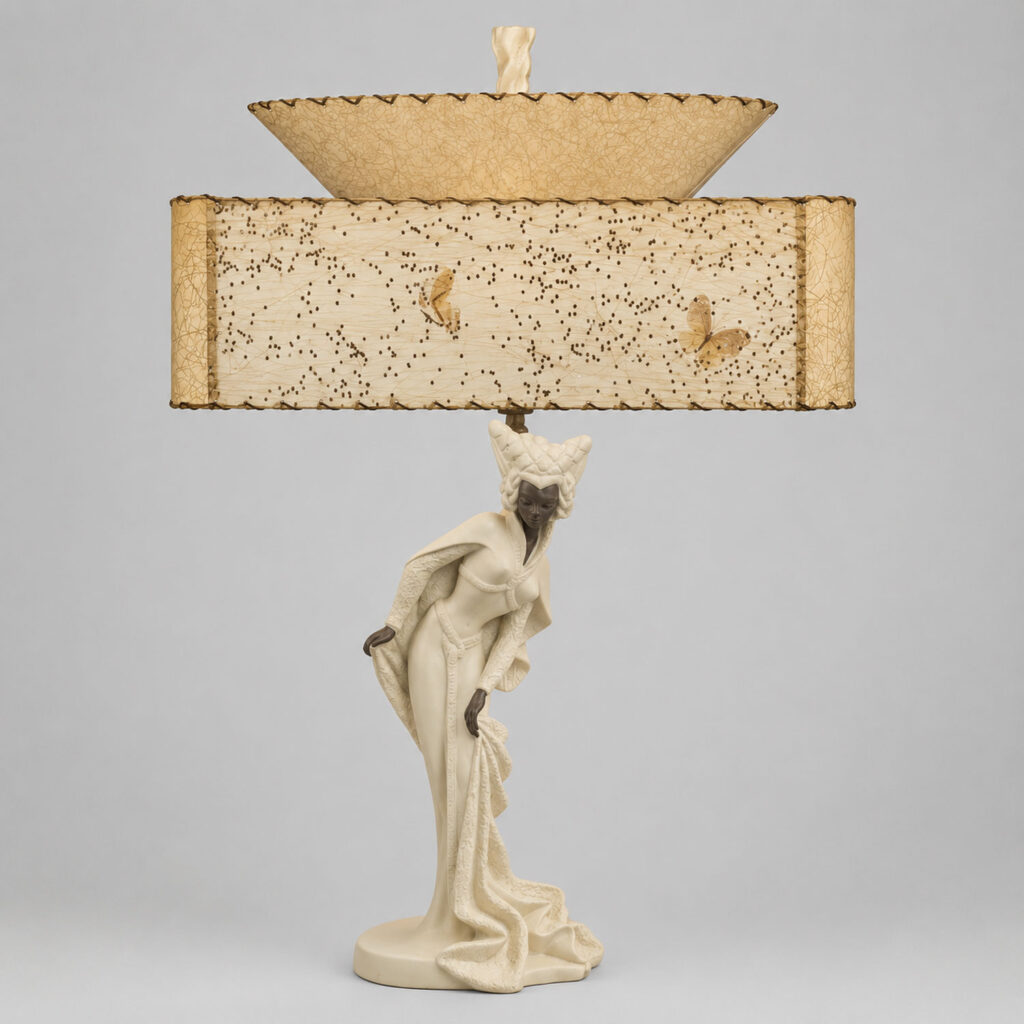
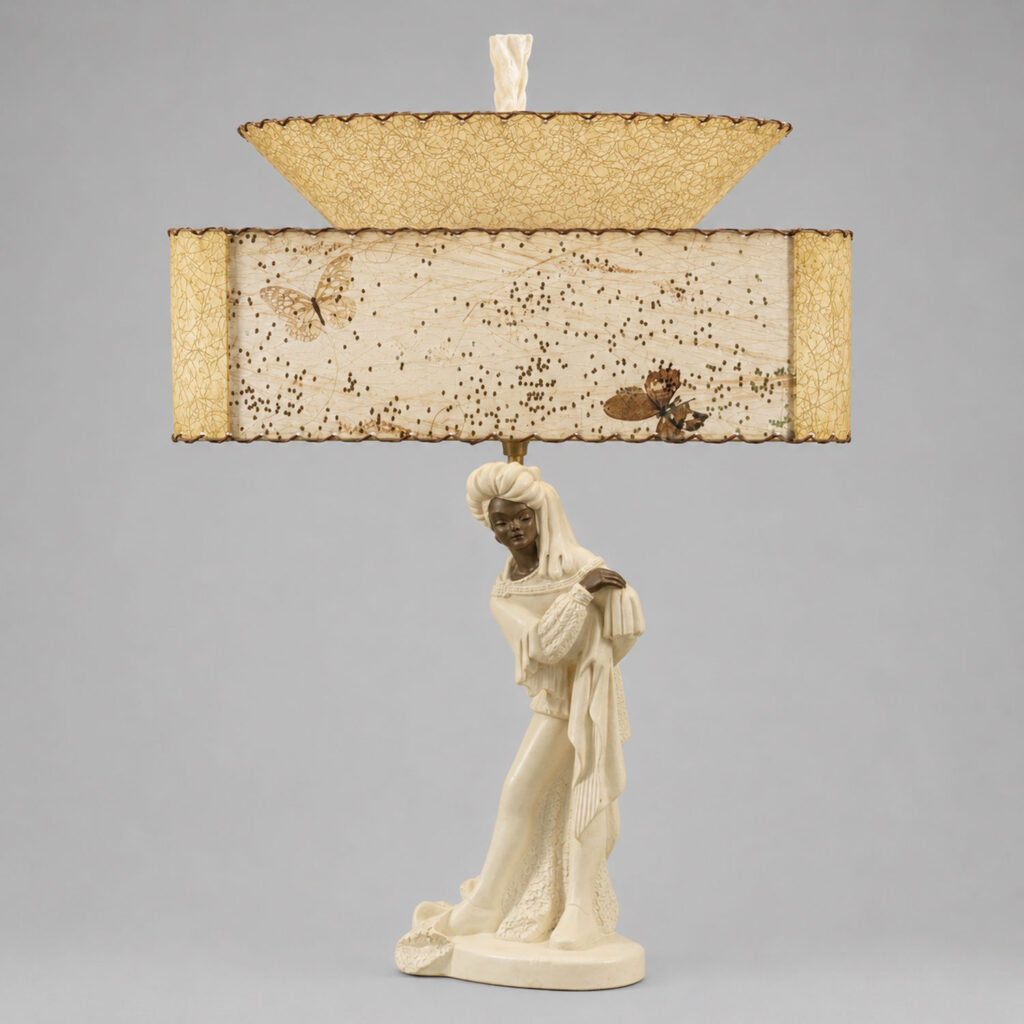
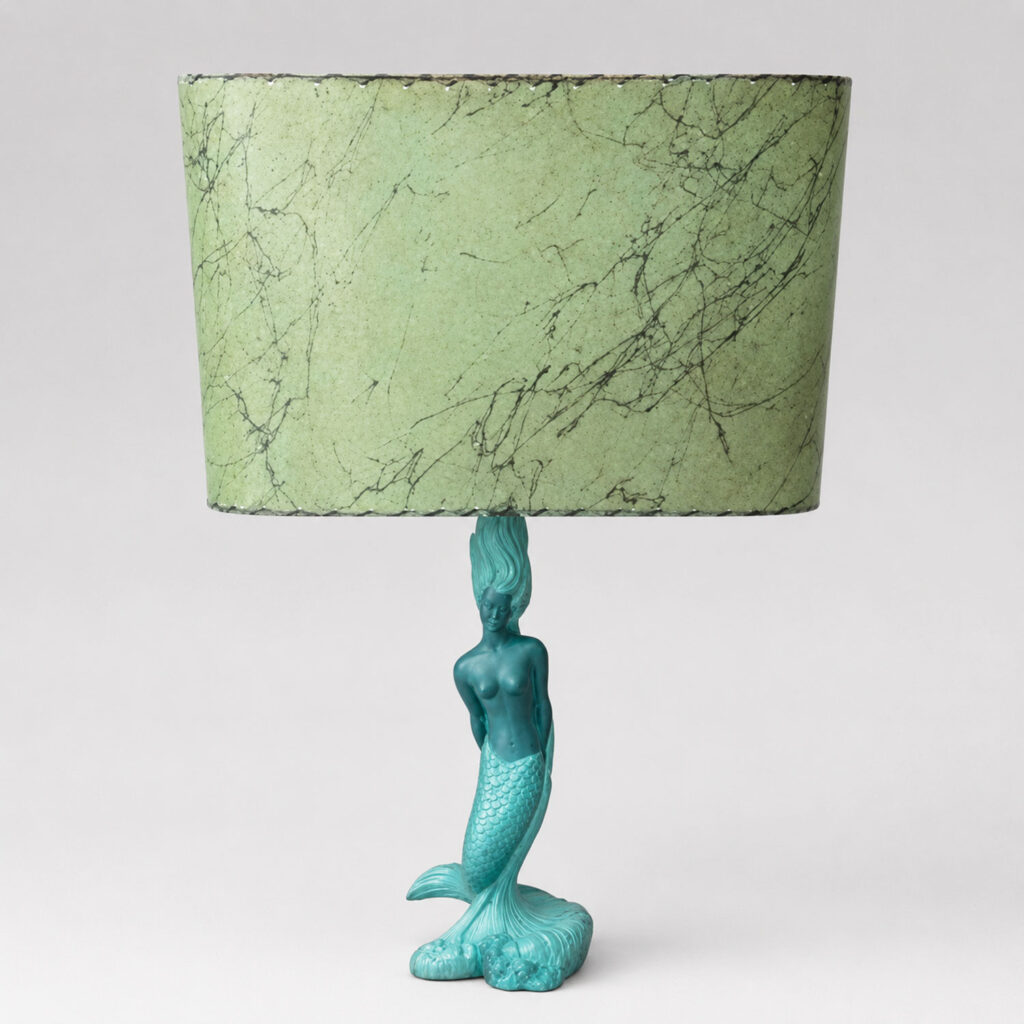
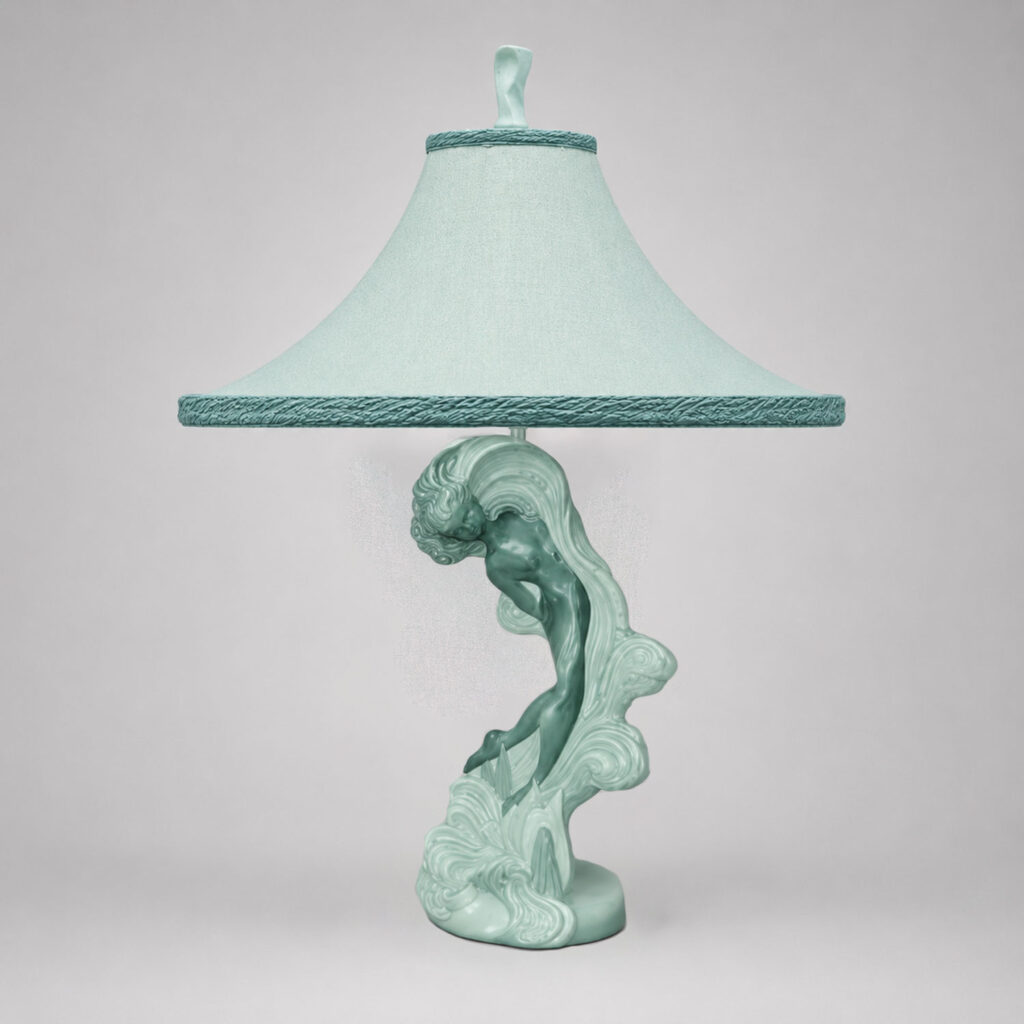
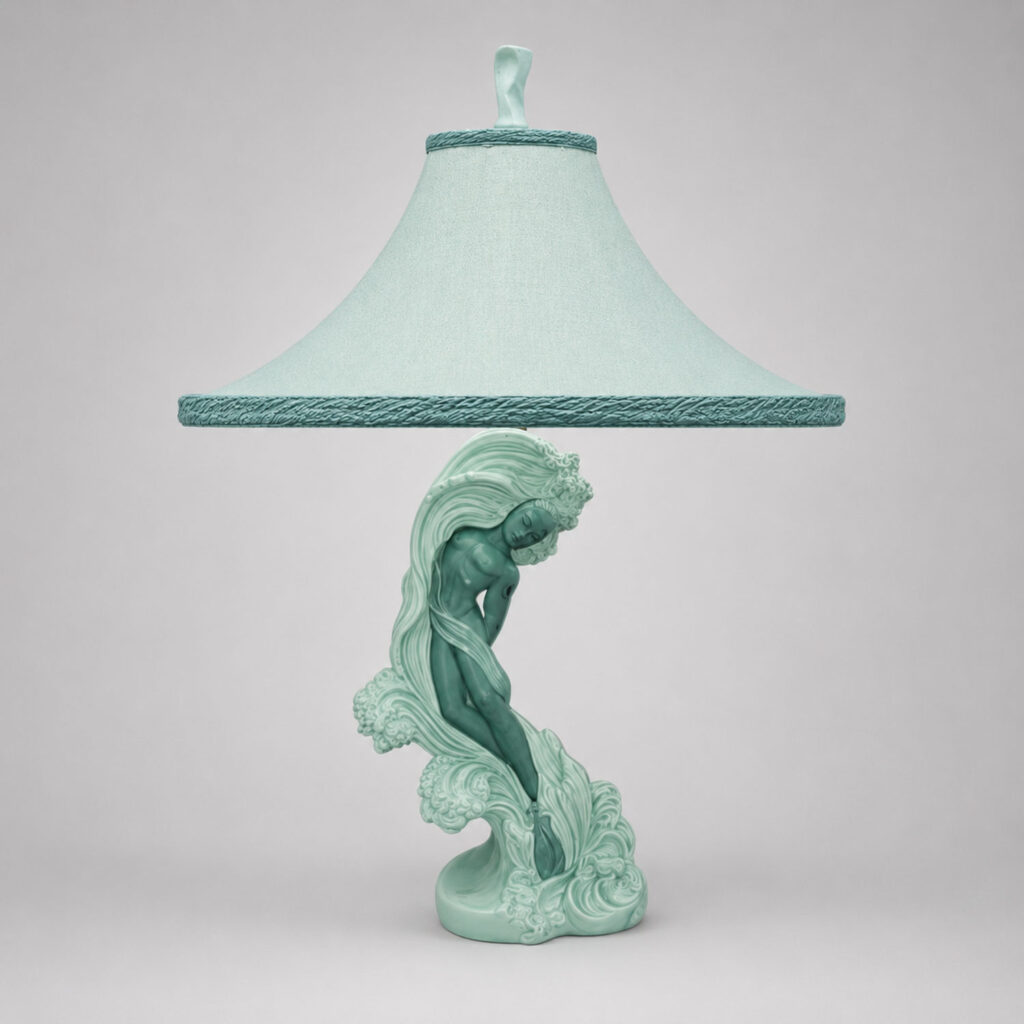
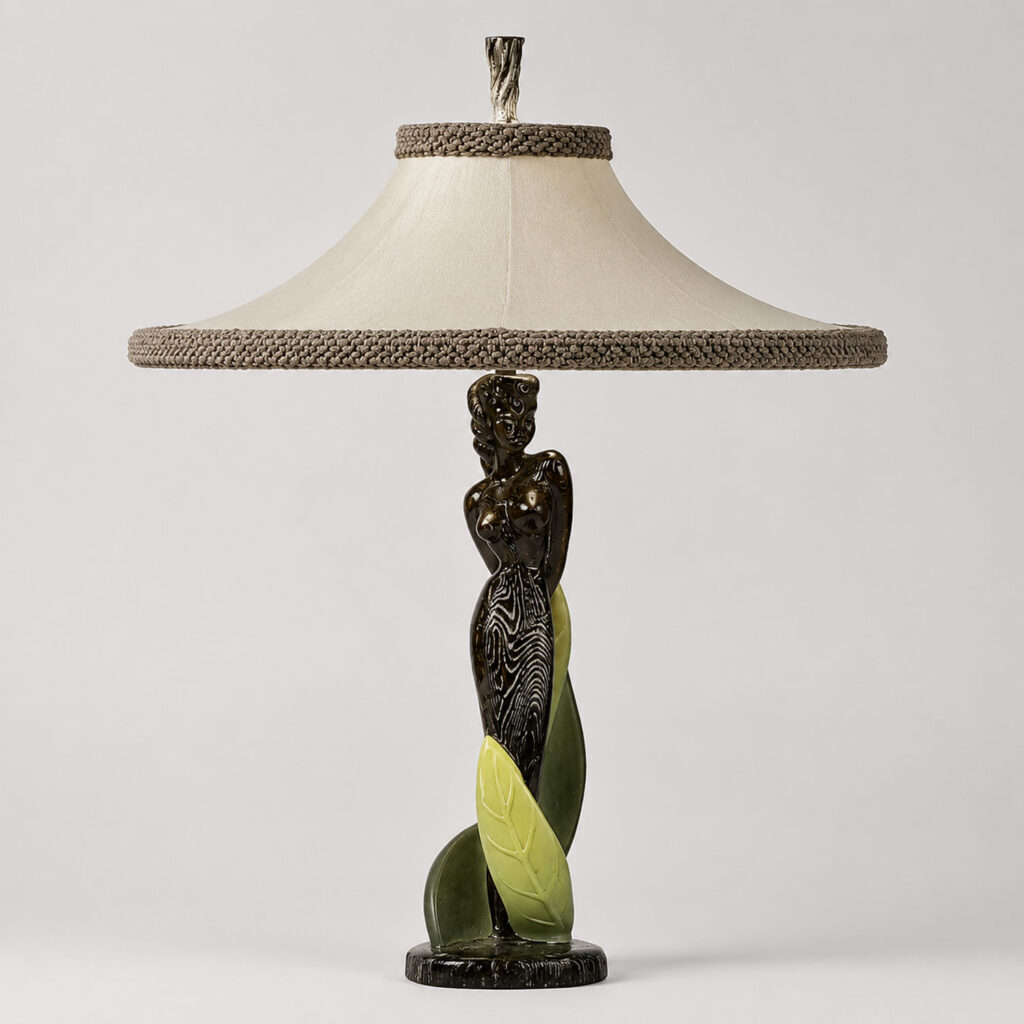
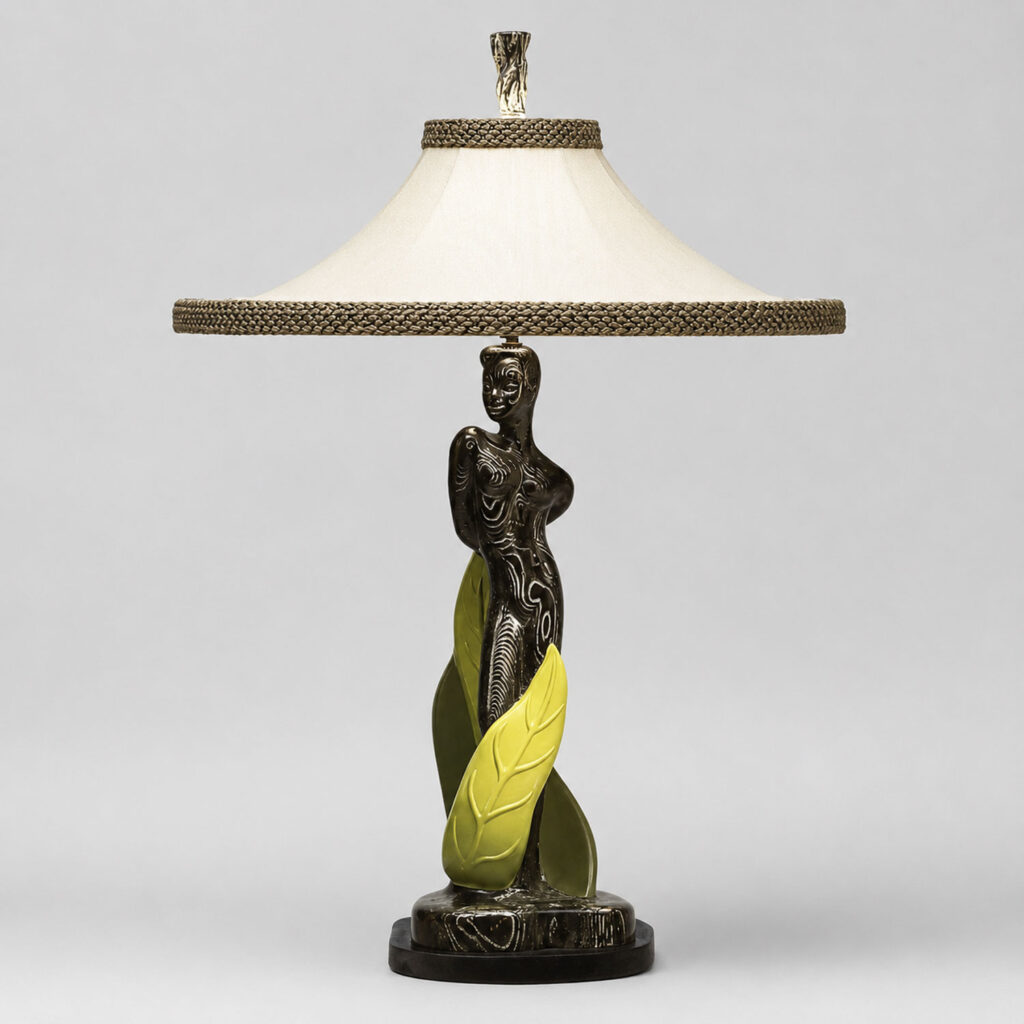
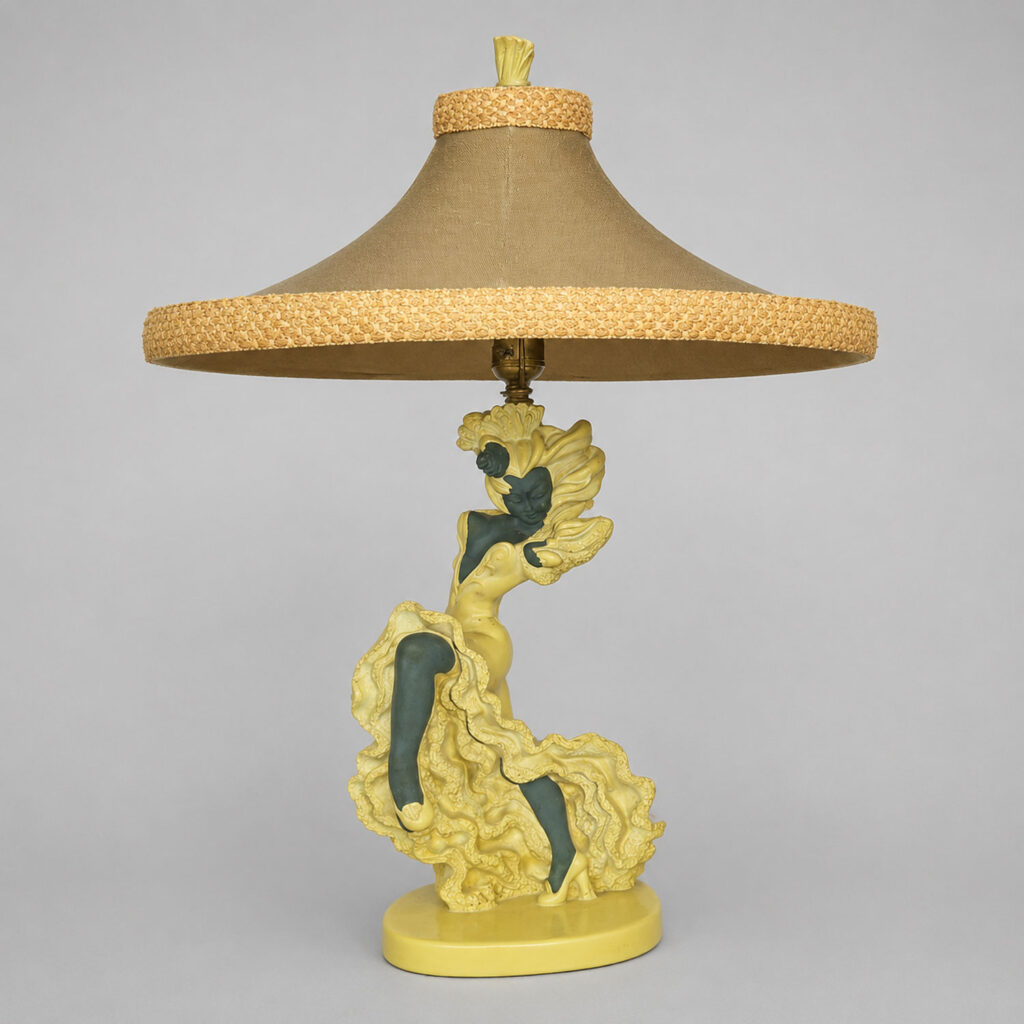
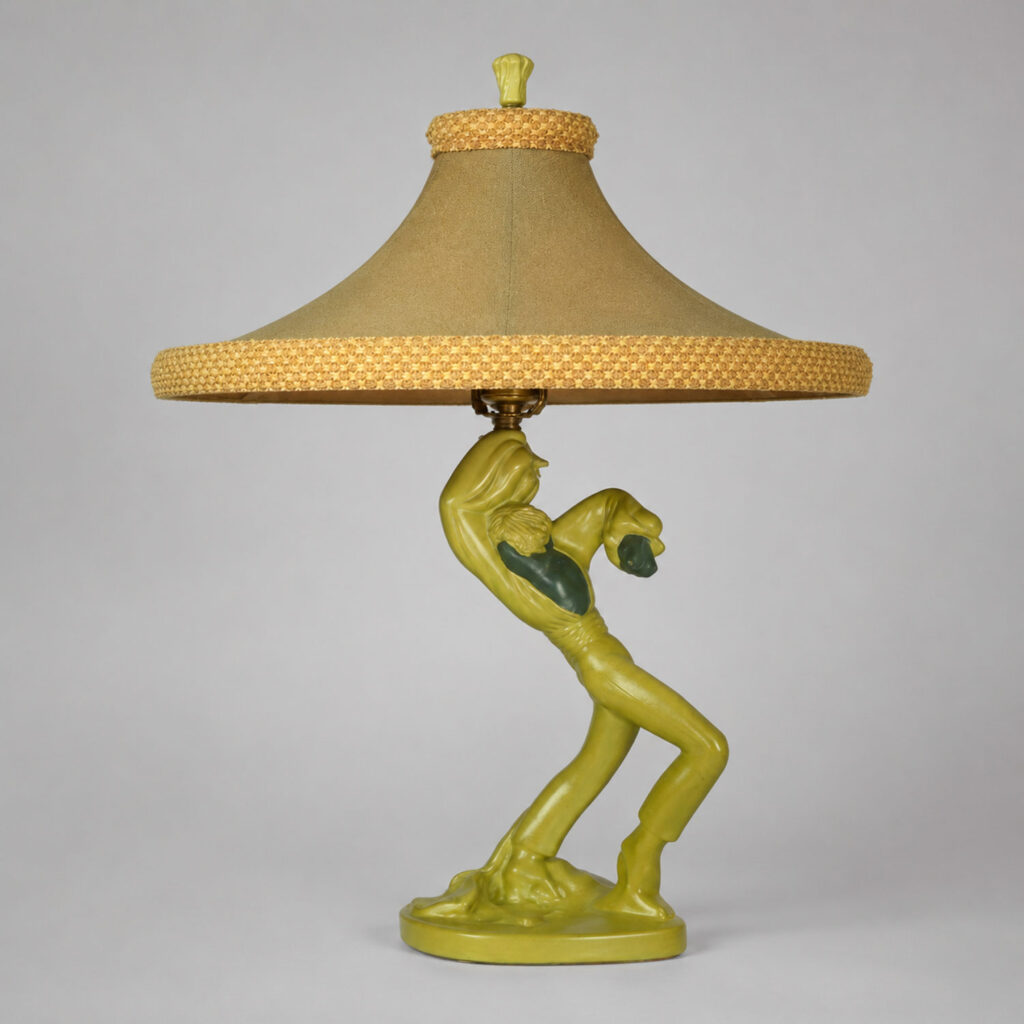
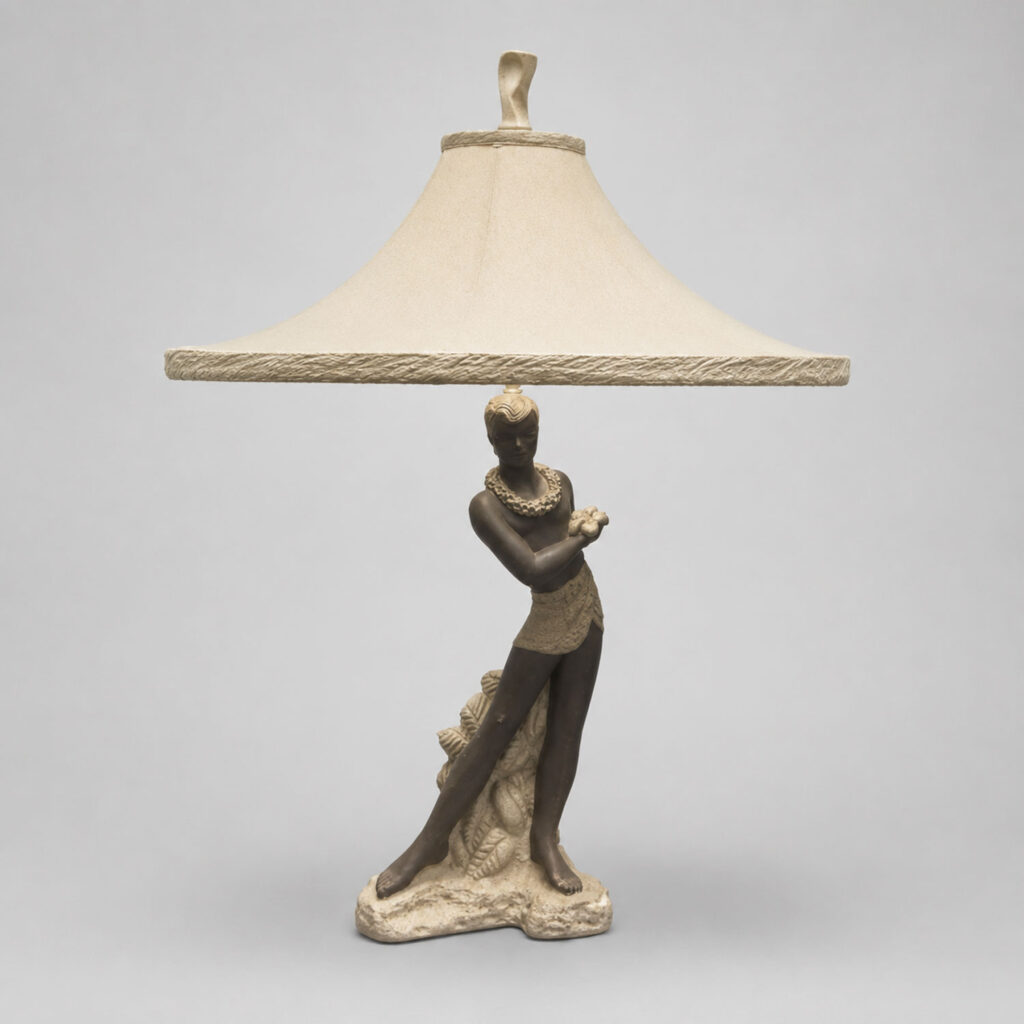
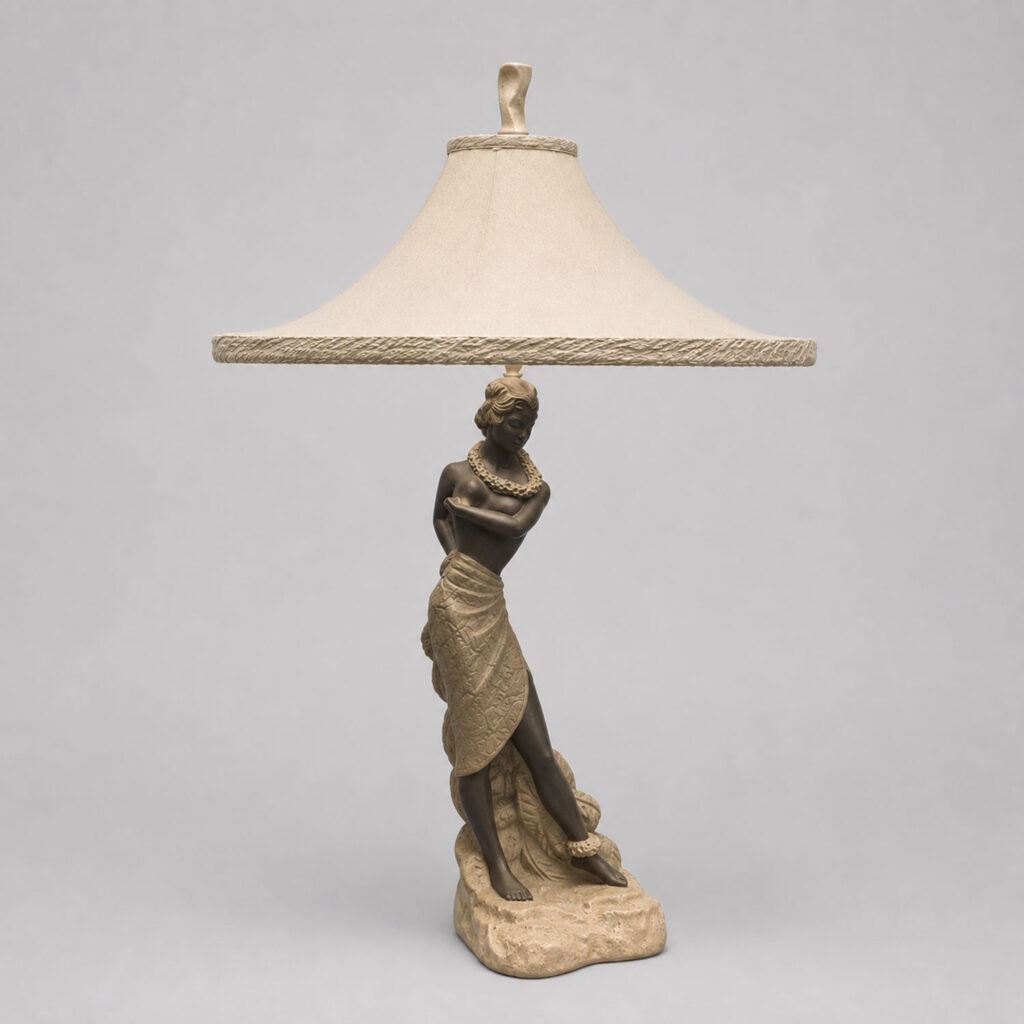
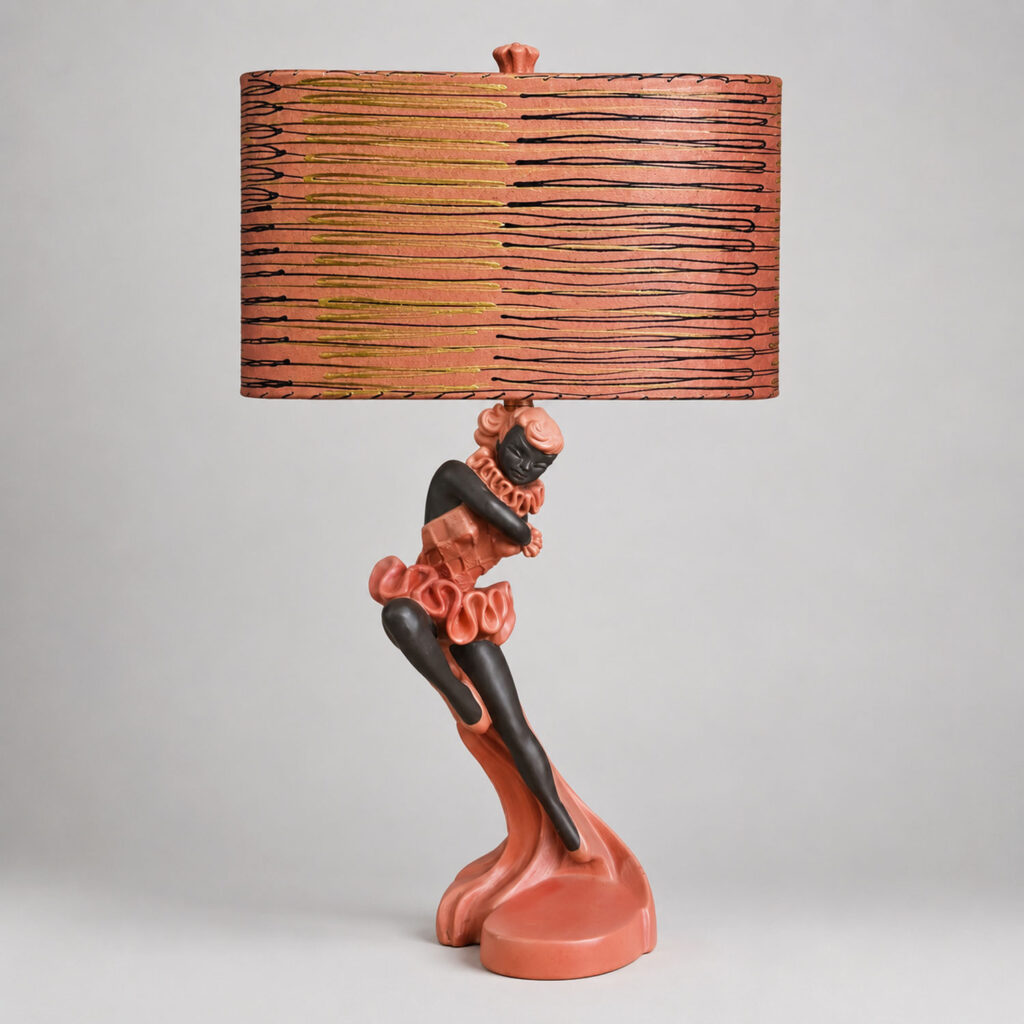
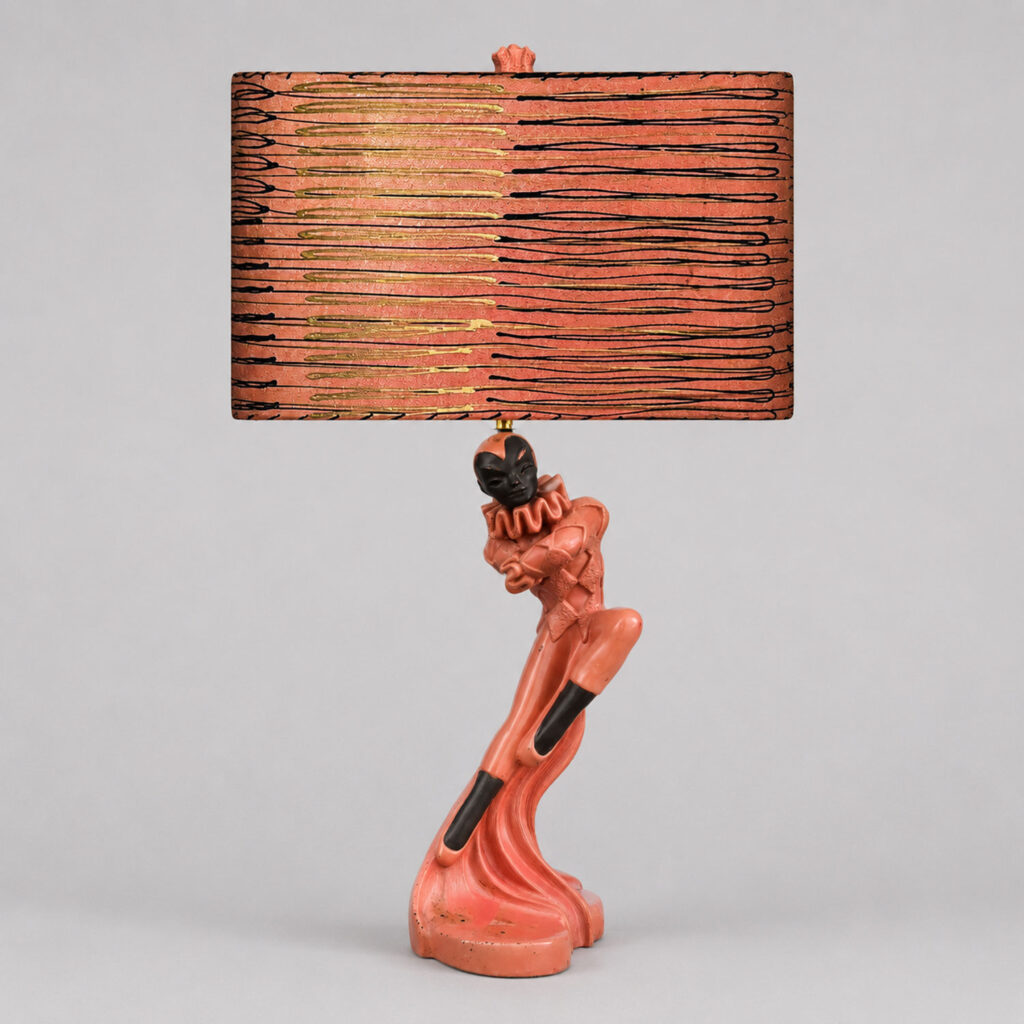
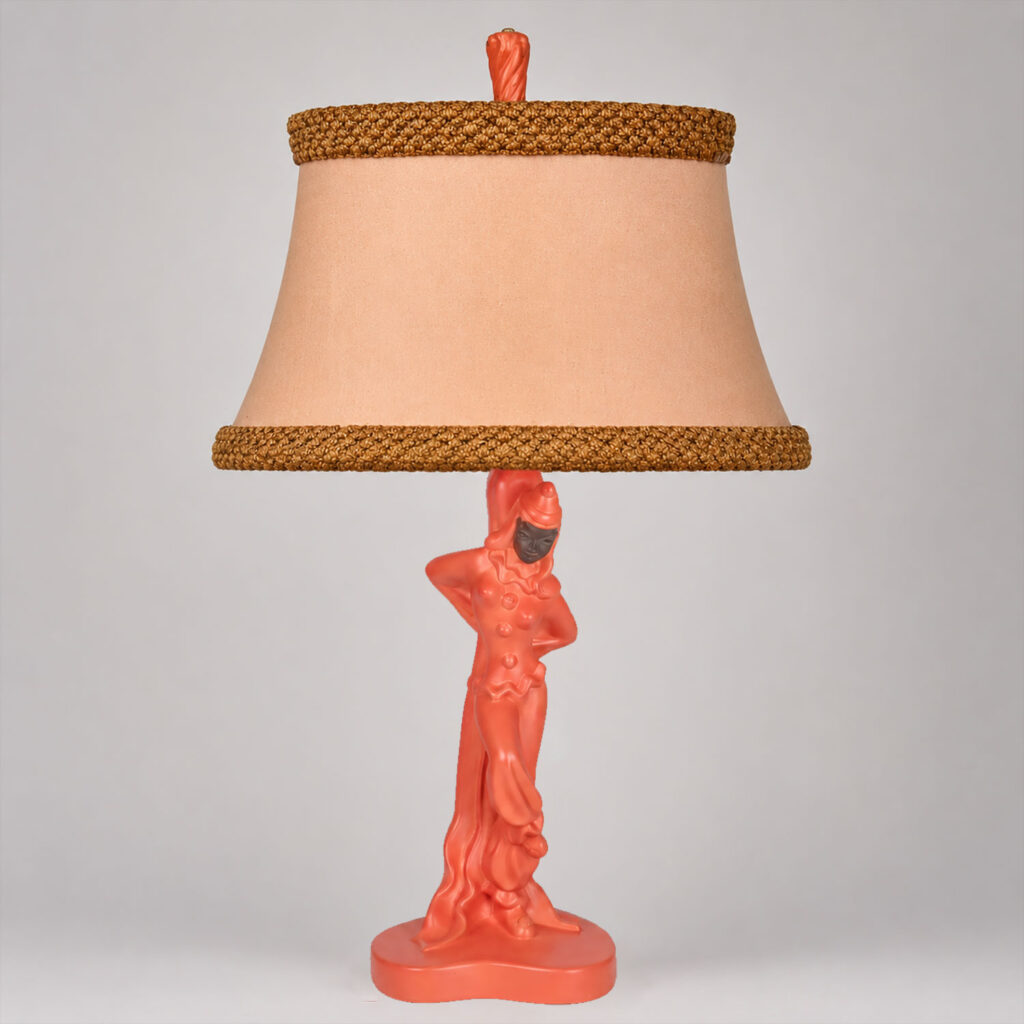
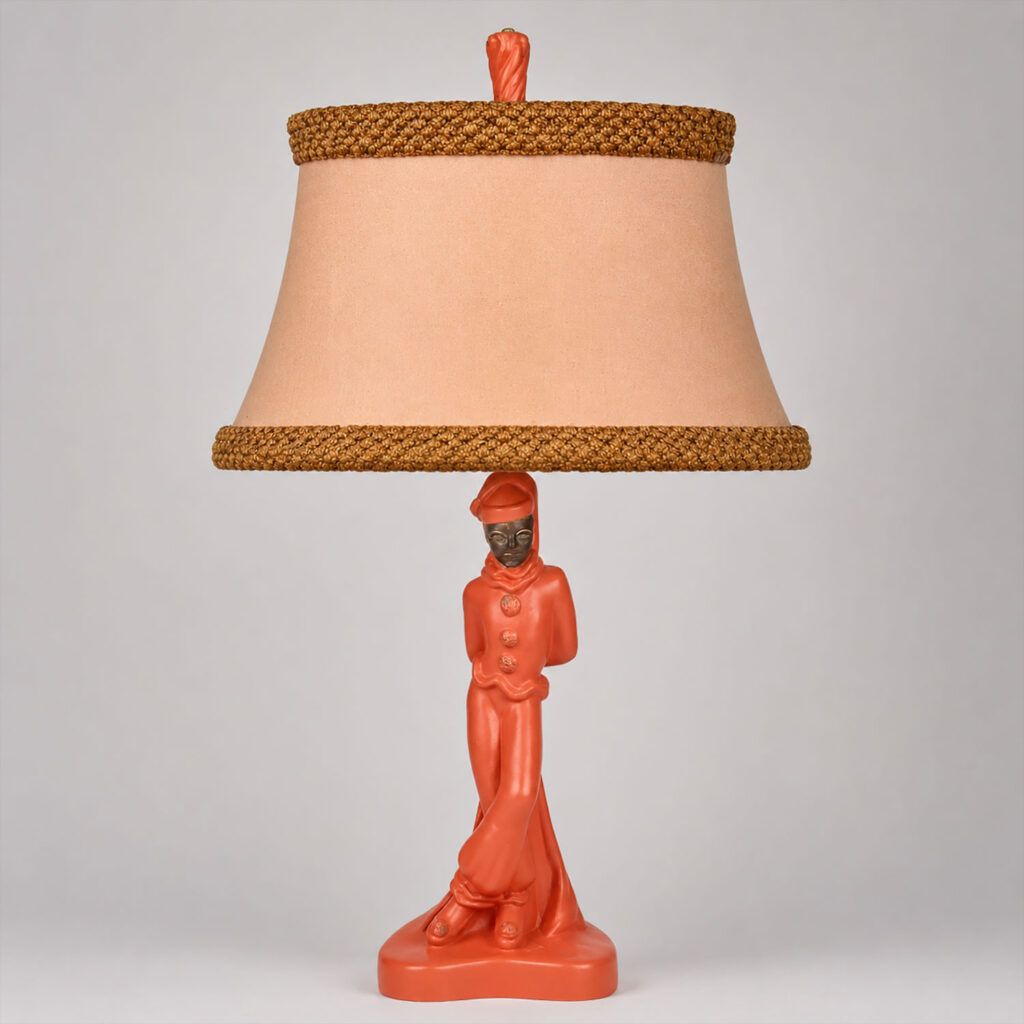
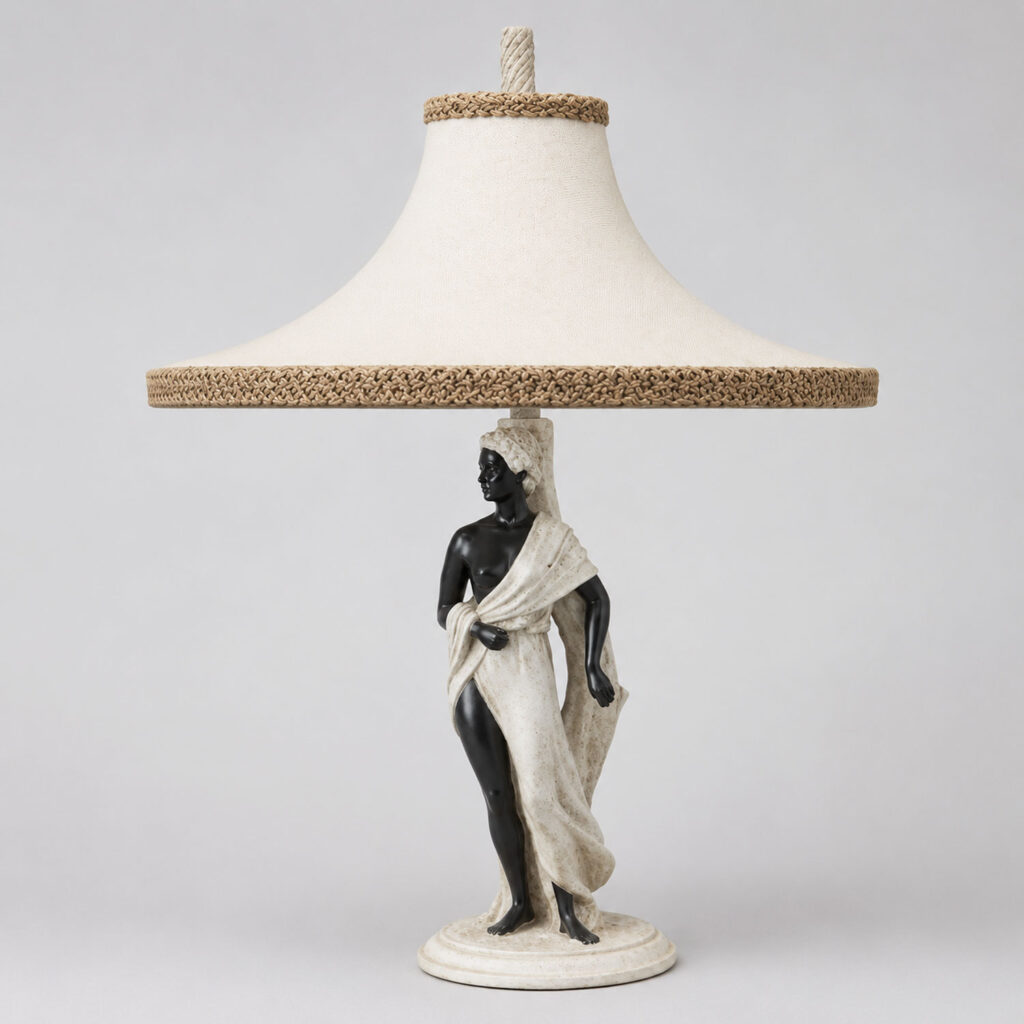
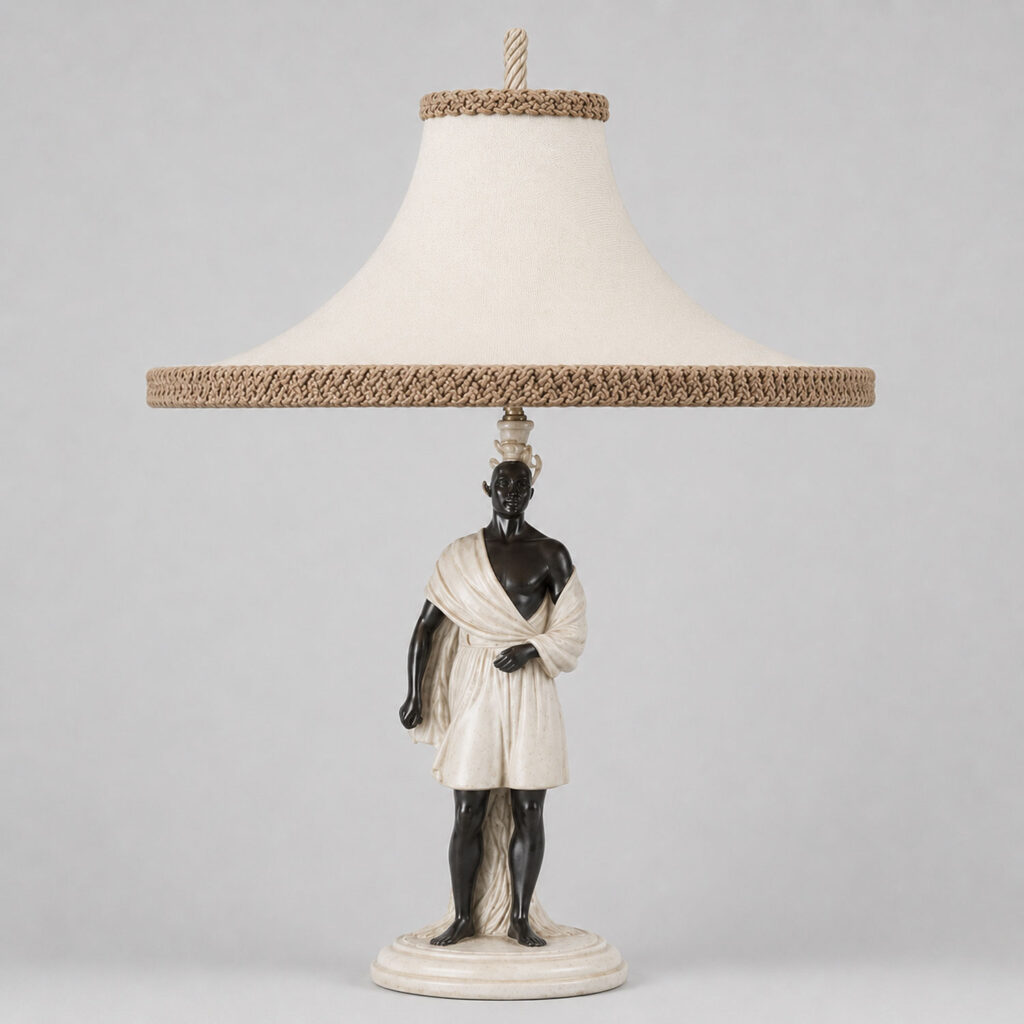
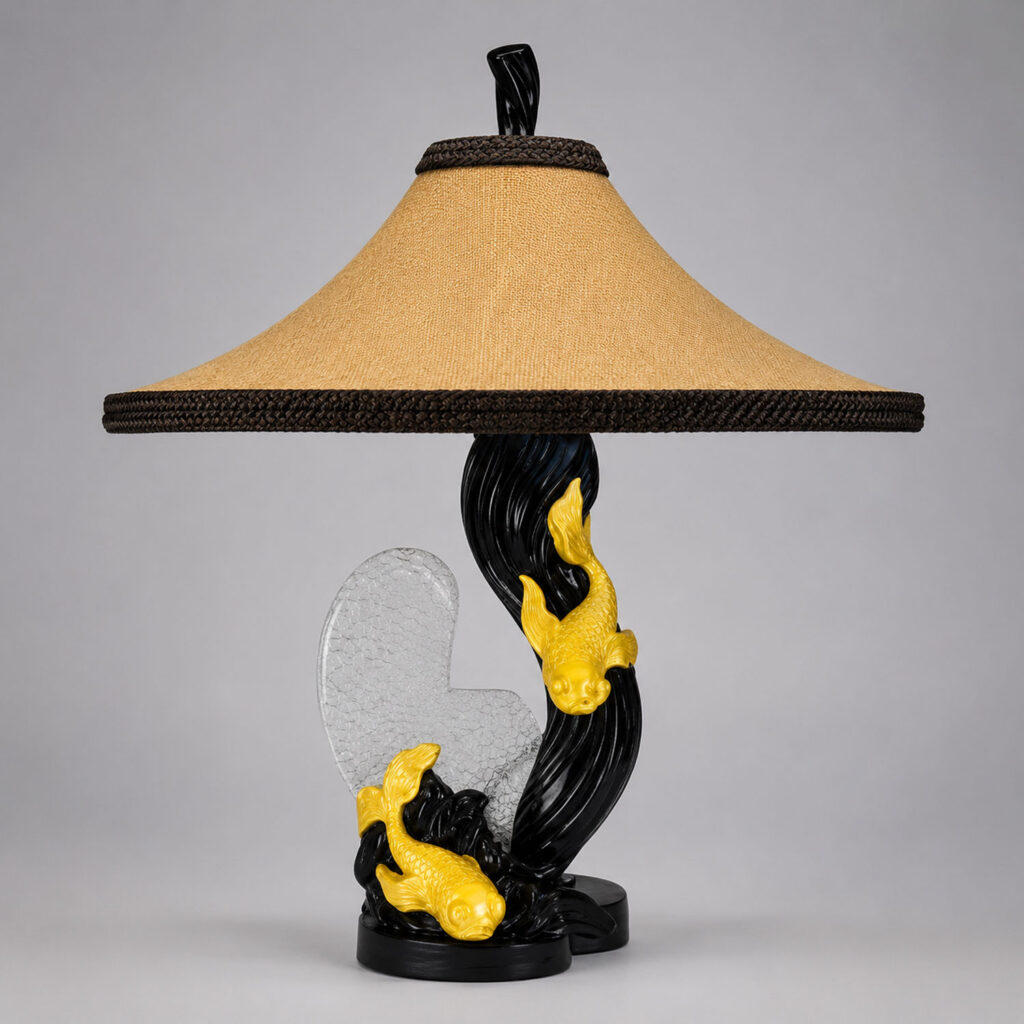
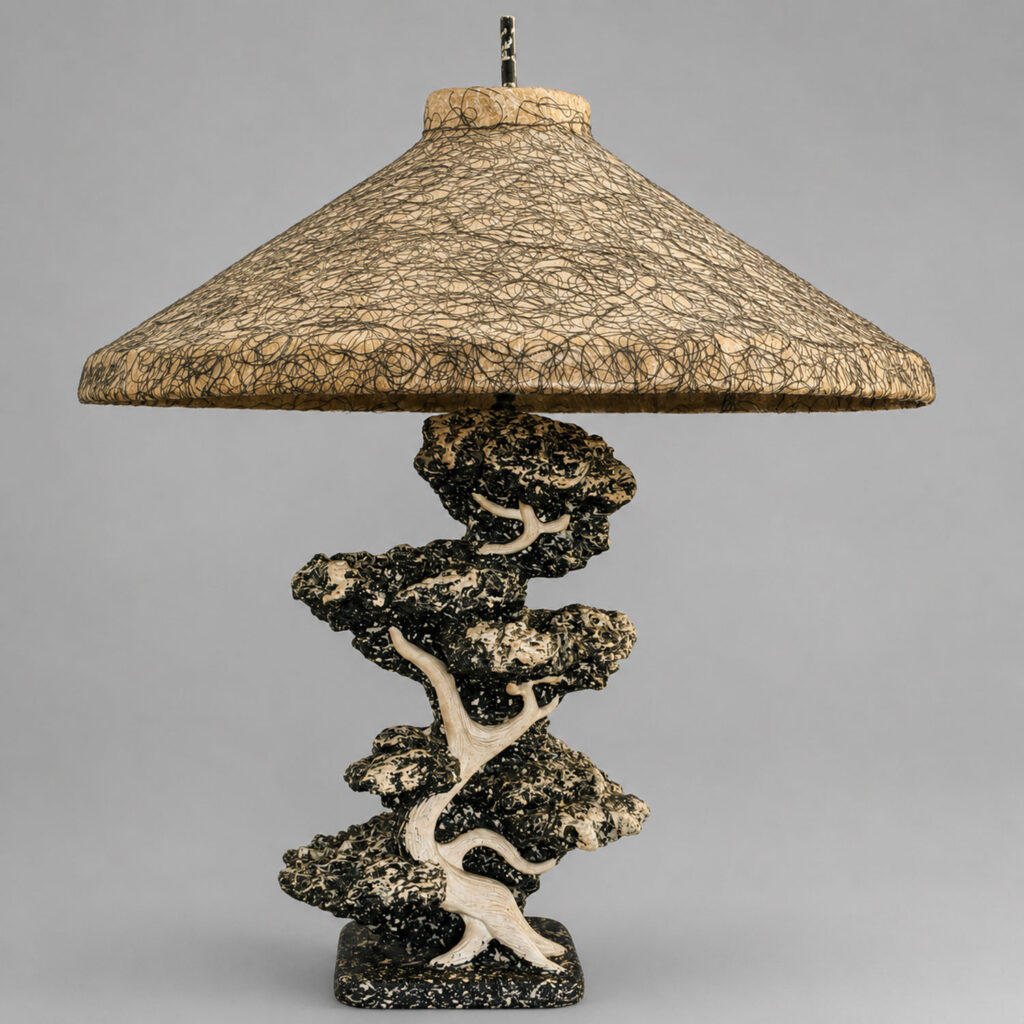
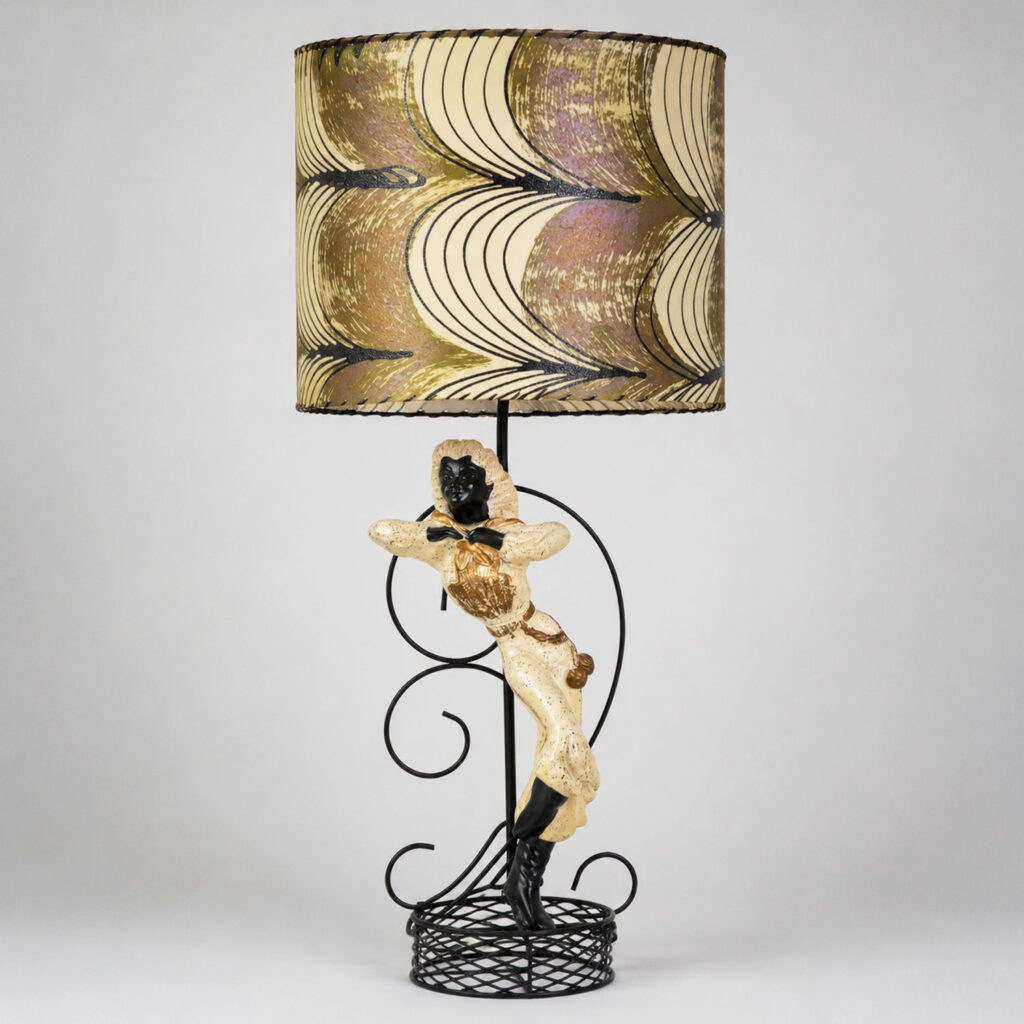
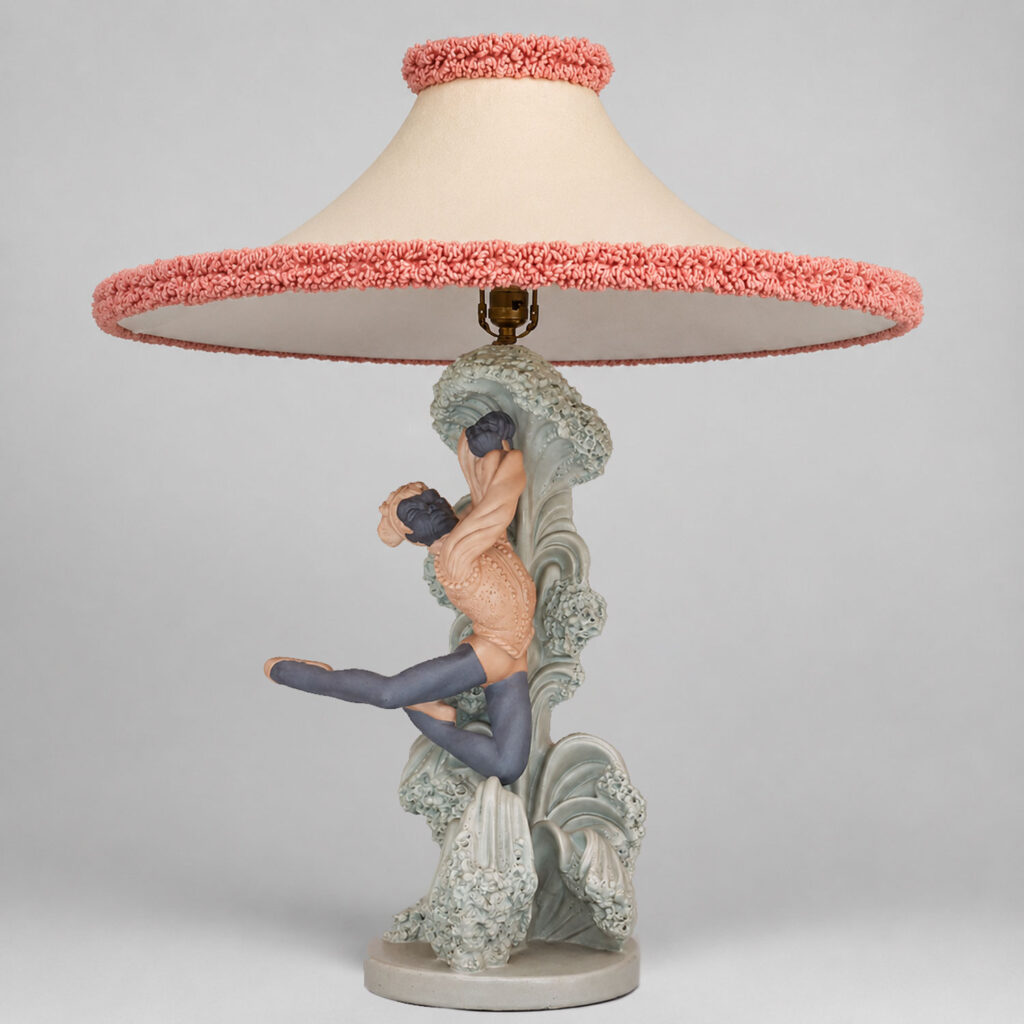
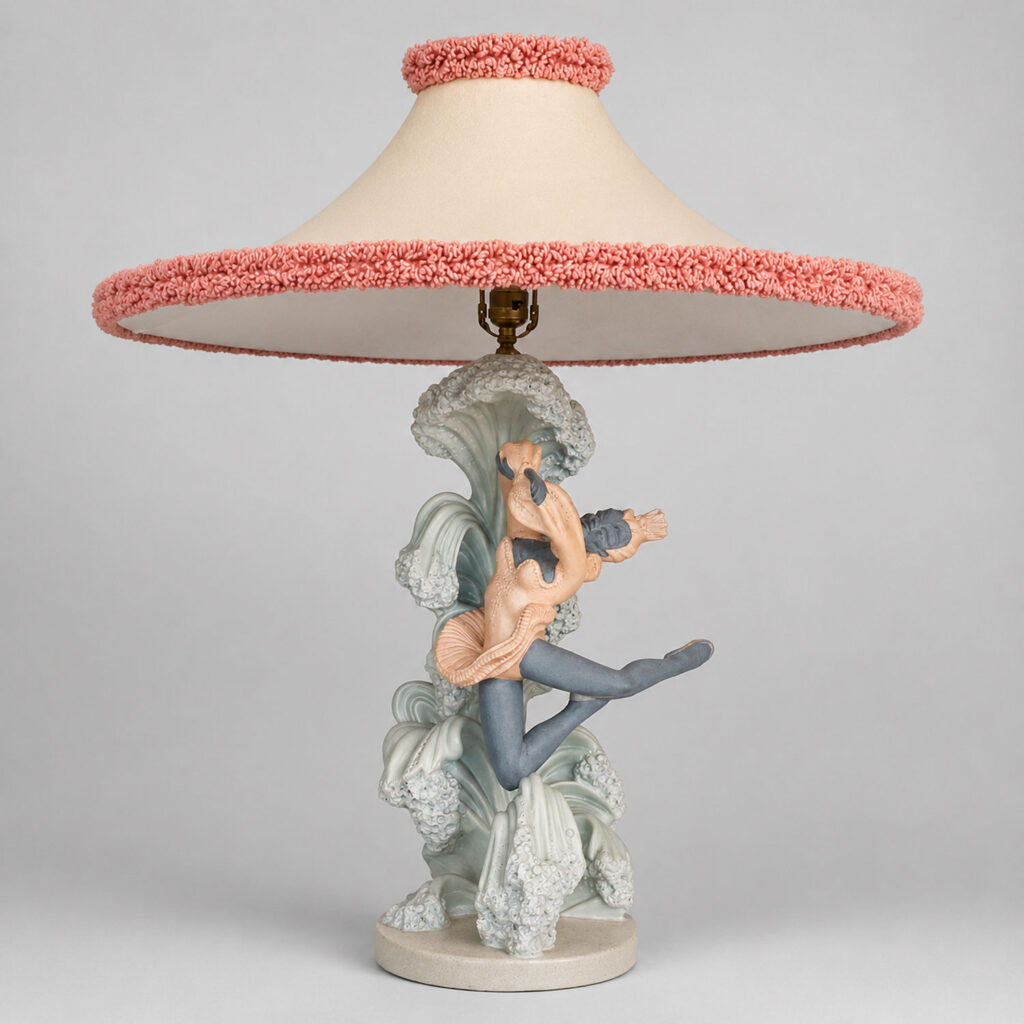
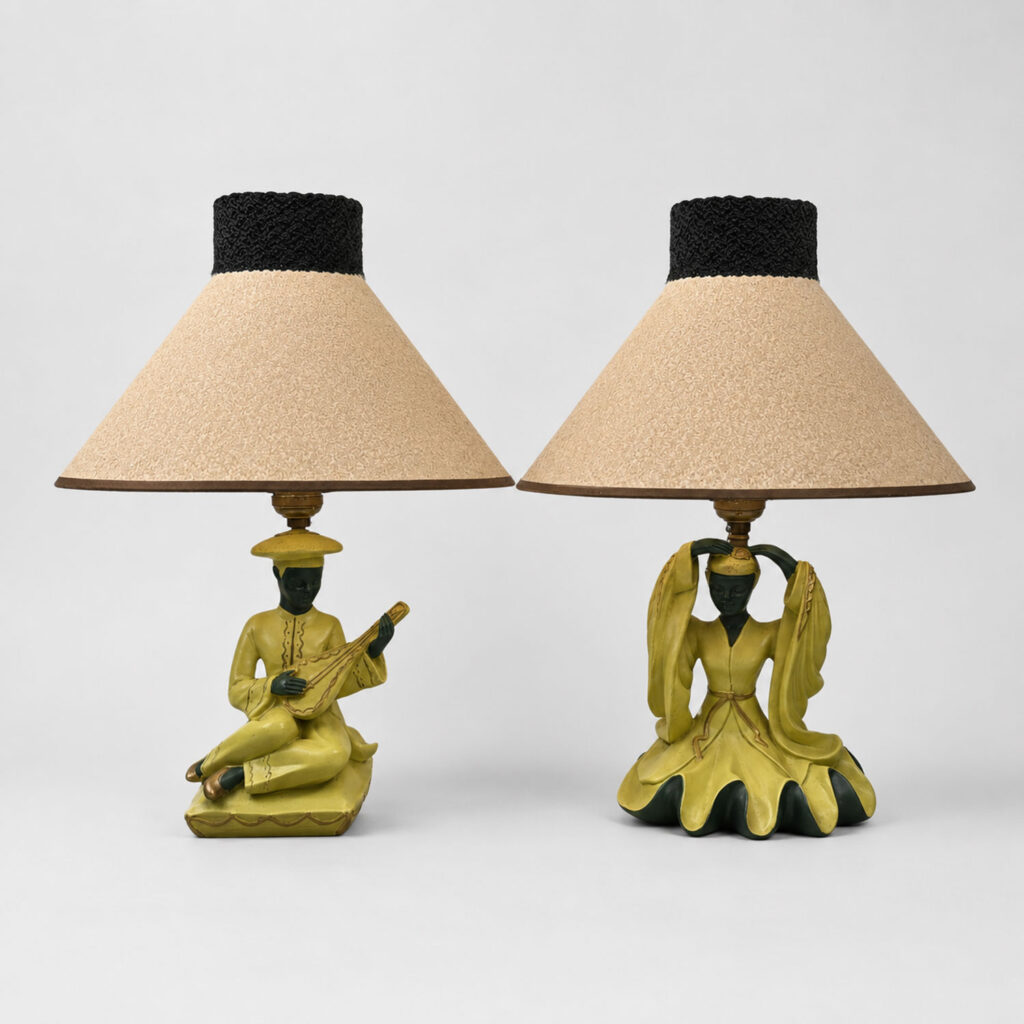
Their best-known work is chalkware or hand-painted plaster figural lamps from the late 1940s through the 1950s. The classic Reglor look is theatrical: dancers, fencers, matadors, mythological figures, Asian-inspired and Egyptian-inspired subjects, waves, drapery, exaggerated movement, and often very stylized male/female companion pairs. Many were painted in limited two-tone palettes—cream with coral, gray with black, lime with brown, pale turquoise with deeper blue—which gave them a graphic, almost stage-set quality. They were not subtle lamps; they were designed as decorative statements.
A distinctive part of the Reglor identity was the shade. Many original Reglor lamps had dramatic, wide, low shades—pagoda, drum, or saucer-like forms—often with textured trim, fiberglass, parchment-like material, lacing, or painted surface decoration. Some sources say Reglor made its shades in-house, which makes sense visually because the shade and base often read as a single designed object rather than a generic lamp base with an added shade.
The company reportedly built up a catalog of more than one hundred designs, and its lamps were sold through department stores and designer outlets. By the 1960s, Reglor seems to have broadened beyond figural lamp bases into other decorative items, including centerpieces and wall hangings, as tastes shifted away from the highly theatrical 1950s figural lamp toward more mainstream or restrained décor.
One of the most interesting things about Reglor is that it was connected to an important copyright case, Mazer v. Stein, decided by the U.S. Supreme Court in 1954. The case involved sculptural statuettes used as lamp bases, and the Court held that the statuettes could be protected as copyrightable works of art even though they were incorporated into functional lamps. That decision became important in the broader legal history of applied art and useful objects. The Supreme Court summarized the issue as whether sculptural male and female dancing figures, used as bases for electric table lamps, could be copyrighted as works of art; the Court held that they could.
That legal history also helps explain why Reglor lamps were apparently copied by competitors. The mid-century decorative lamp market was crowded, and many companies were producing figural plaster, ceramic, or chalkware lamps in overlapping styles. Reglor’s designs were distinctive enough that copies became an issue, and collector/dealer sources often mention that the company pursued legal action against imitators.
Production is generally said to have ended in 1975 after a fire destroyed the Montebello factory. That part of the story also appears mostly in dealer and collector histories, but it is repeated consistently across sources.
For collectors today, the most desirable examples are signed or clearly marked “Reglor of California,” retain original paint, have their companion mate if they were produced as a pair, and especially keep the original shade and finial. The shade matters more than people sometimes realize because so much of the Reglor design impact comes from the full silhouette: the elongated sculptural figure below and the broad, theatrical shade above. A Reglor base with the wrong shade can still be attractive, but it loses a lot of its original design intent.