



Sascha Brastoff was one of the most vivid and theatrical figures in American mid-century design. Born Samuel Brostofsky in Cleveland, Ohio, in 1917 or 1918, he built a career that moved fluidly between fine art, performance, costume, ceramics, sculpture, and commercial design. Long before his name appeared on dinnerware and decorative porcelain, Brastoff was already shaping himself as a creative personality. He studied art, dance, and performance, worked in display design, and spent time in New York, where he was connected to the Clay Club in Greenwich Village, an important early ceramics environment.
During World War II, Brastoff served in the military entertainment world rather than in a conventional combat role. He designed costumes and props for Special Services productions and became known for his flamboyant drag performance character, “G.I. Carmen Miranda.” That wartime persona was not a side note to his later career; it helped define the theatrical intelligence that runs through his ceramics. His work was never simply functional or restrained. Even a plate, bowl, ashtray, or vase could feel staged, costumed, and animated.
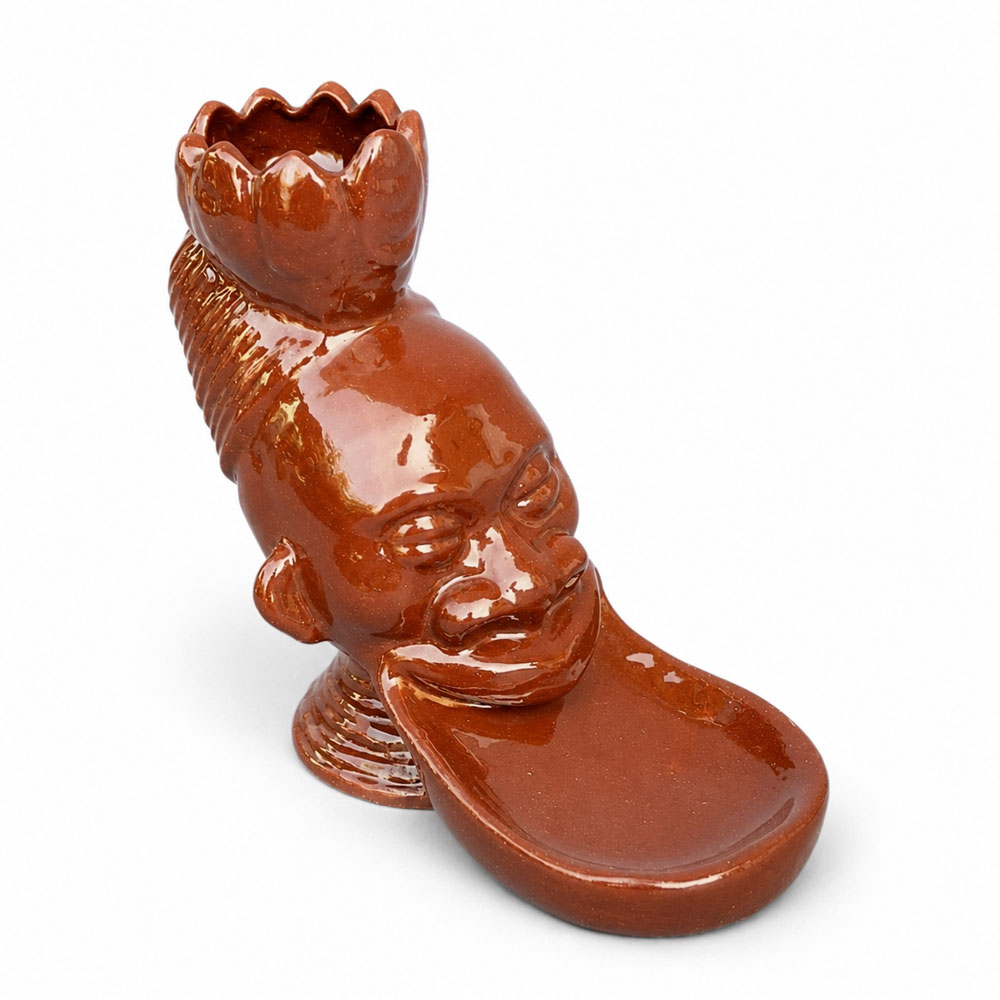
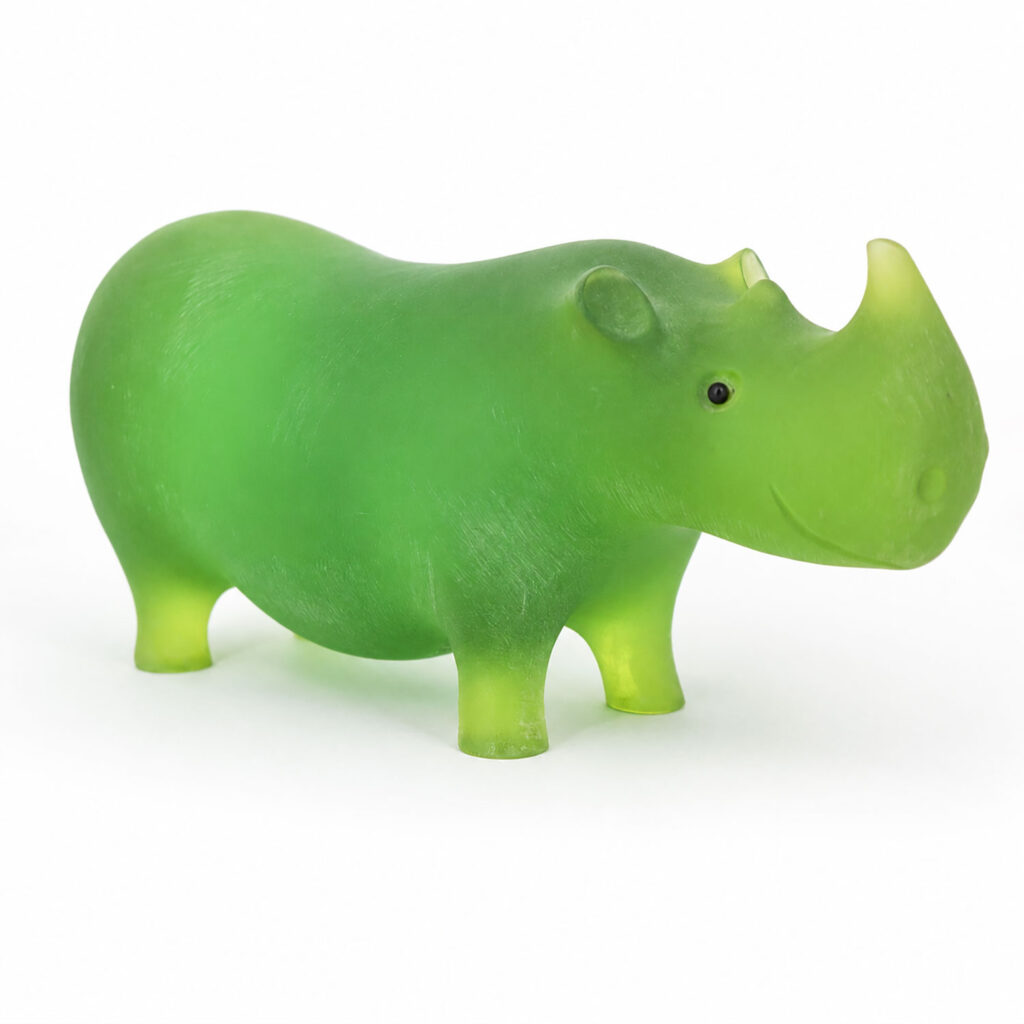
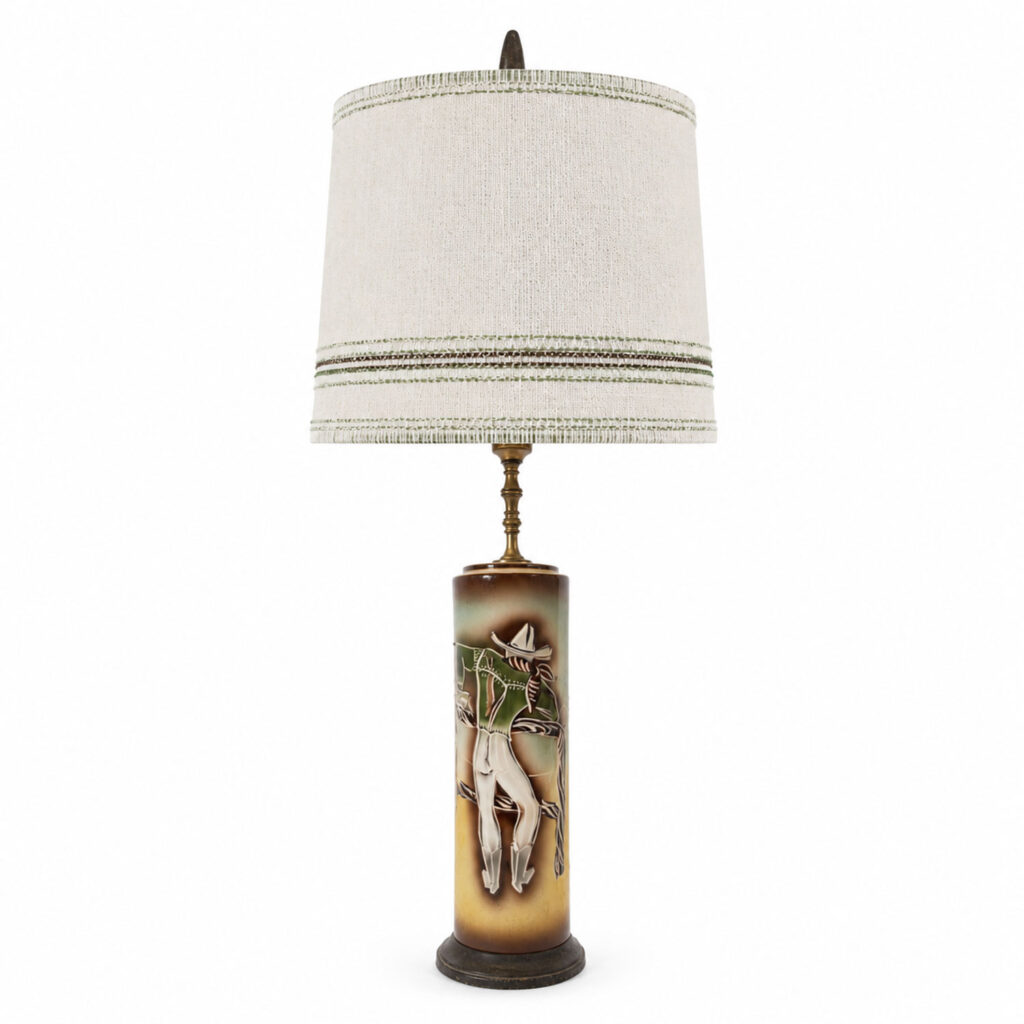
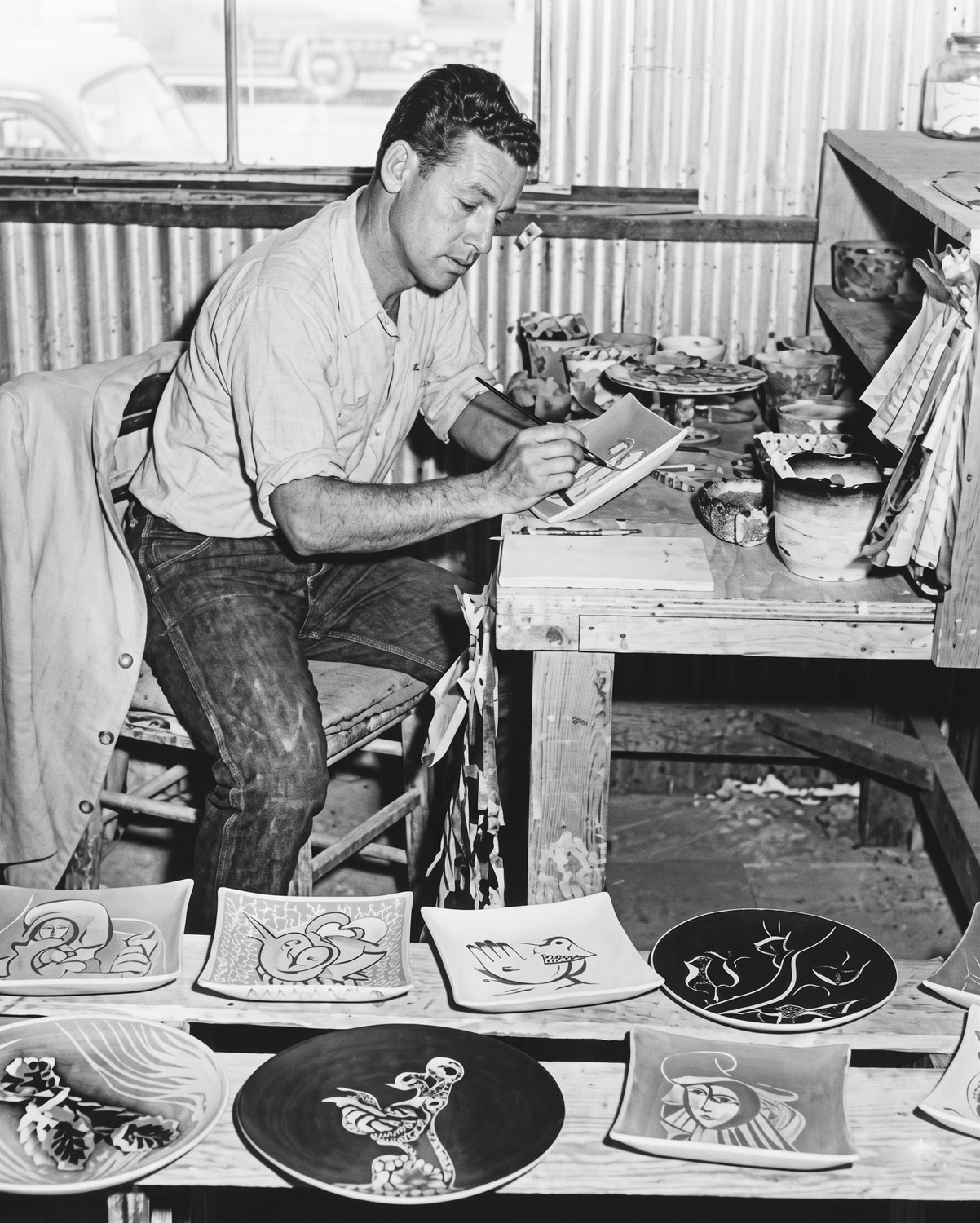
After the war, Brastoff settled in Los Angeles, where the combination of Hollywood patronage, postwar consumer design, and California craft culture gave him the right environment to build a business around his name. With the support of his longtime partner, Hollywood costume designer Howard Shoup, and financial backing associated with Winthrop Rockefeller, Brastoff developed a ceramics company that became known for hand-decorated porcelain tableware, serving pieces, lamps, ashtrays, figurines, sculptures, and decorative accessories. By the late 1940s, his studio was producing the kinds of richly decorated pieces that collectors now associate with the Sascha Brastoff name.
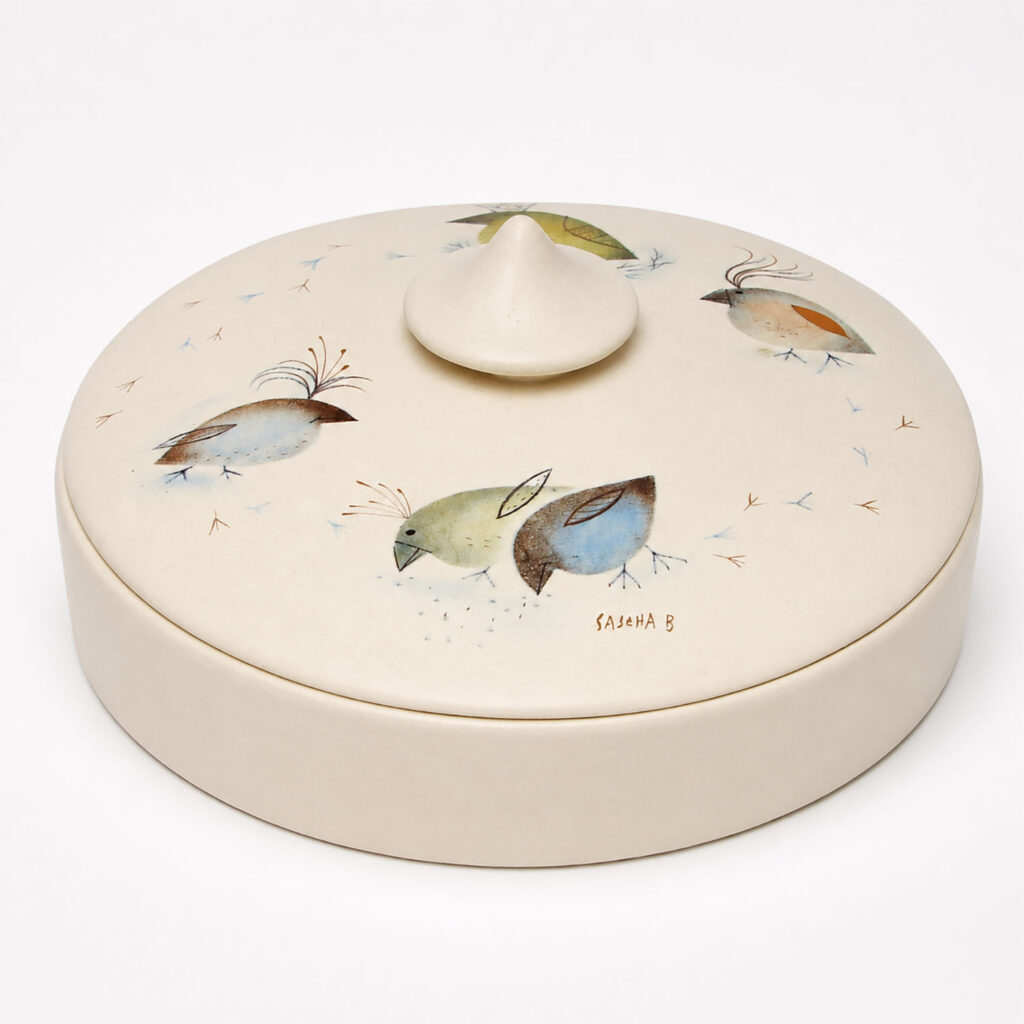
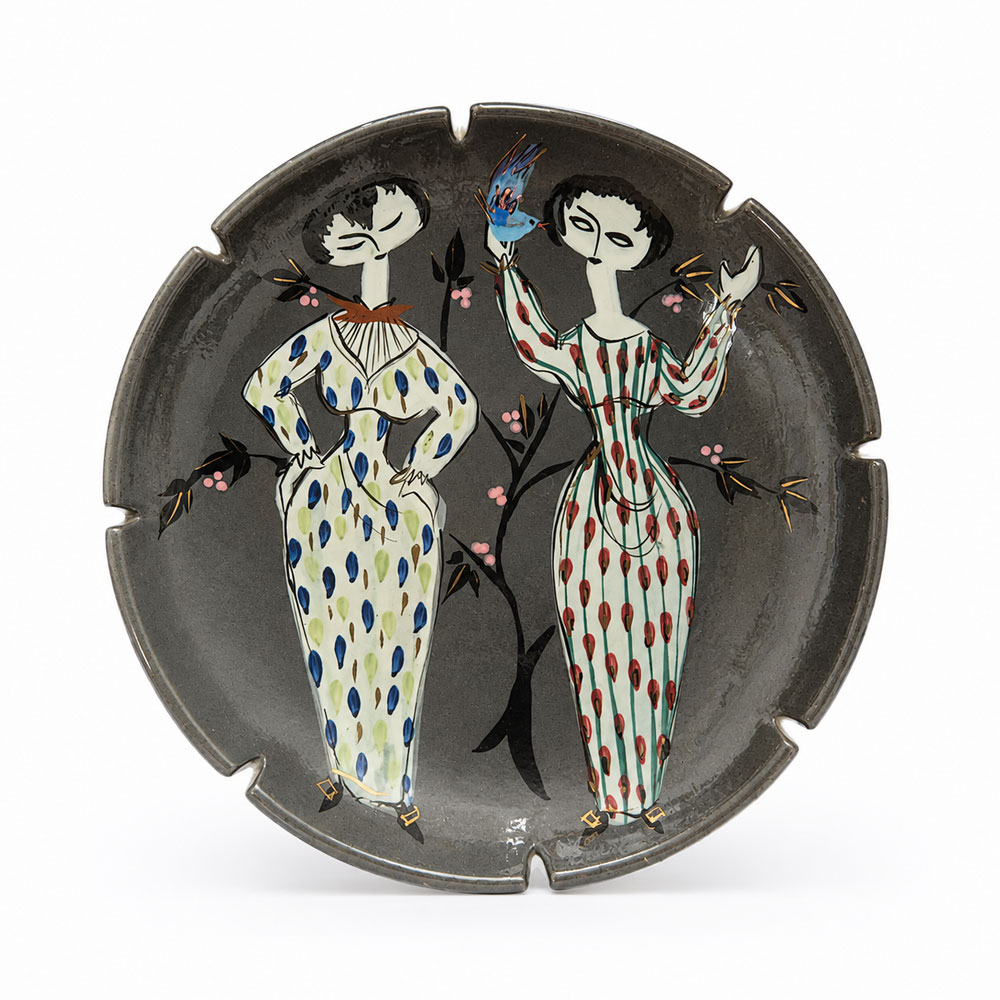
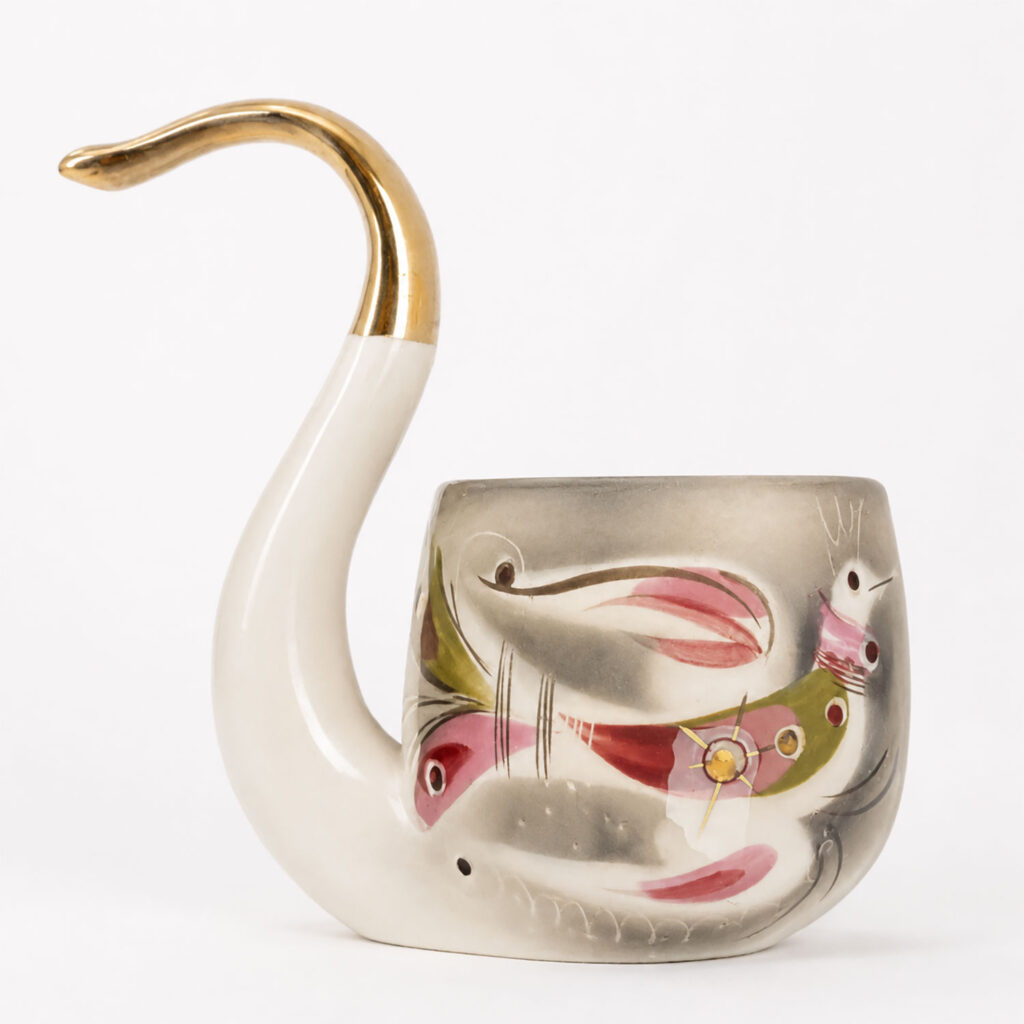
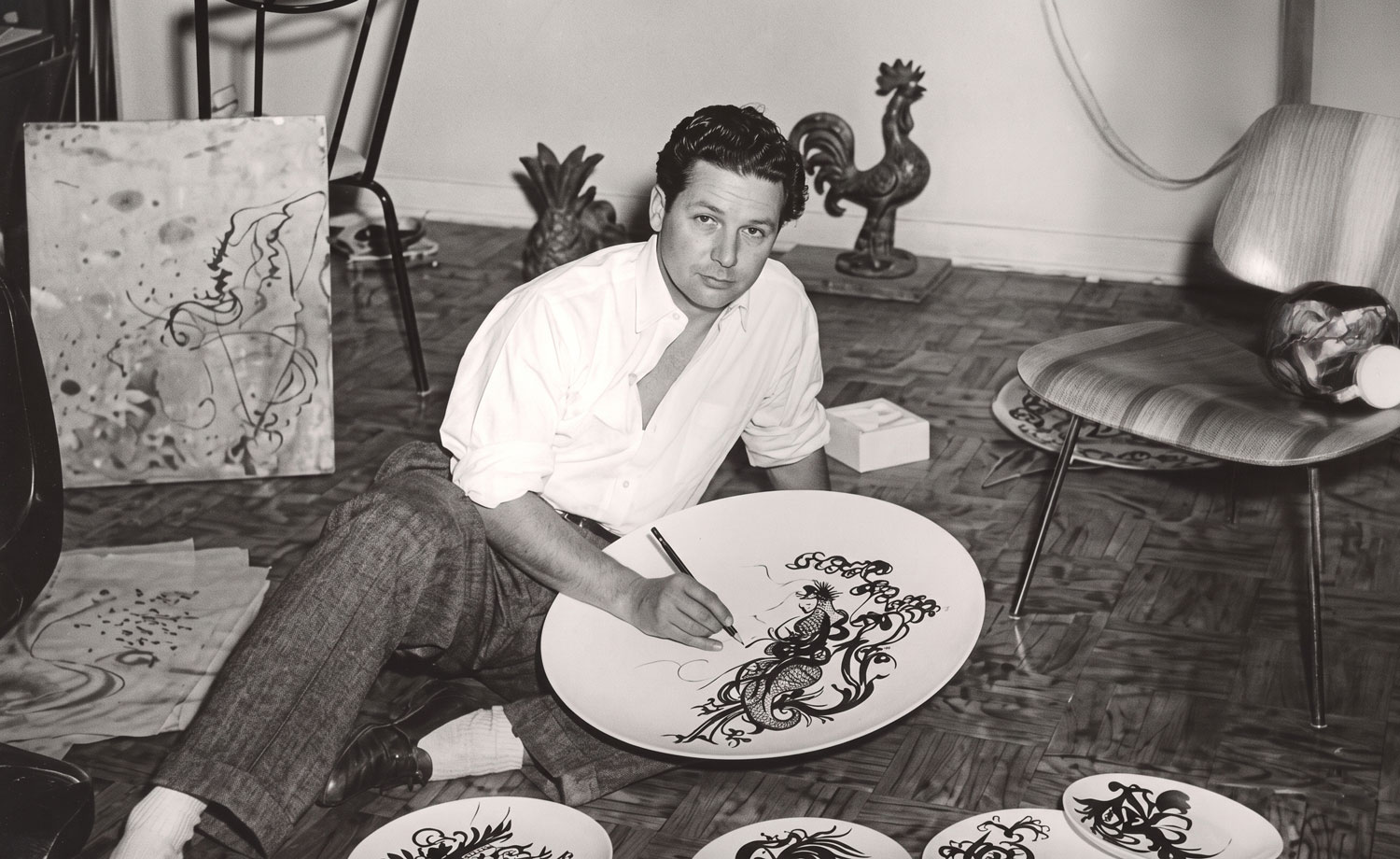
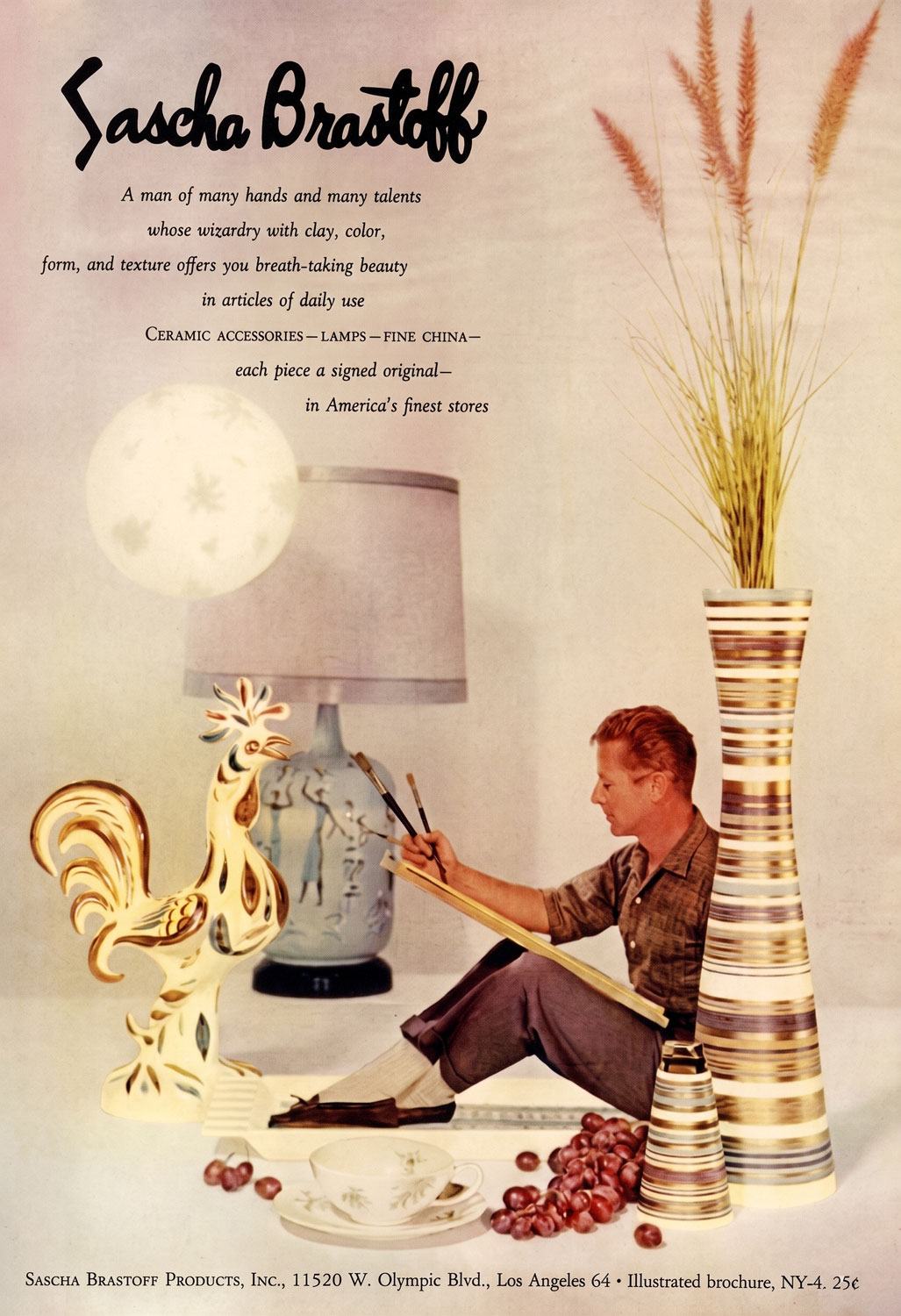
The company’s most important production years were roughly 1947 to 1962. During that period, Brastoff built an atelier-like operation in which trained decorators helped carry out his designs across a wide variety of forms. The work often used sgraffito, gold and metallic lusters, layered decoration, and multiple firings, giving the pieces a handworked quality even when they were produced in quantity. His best-known designs embraced birds, fish, horses, stylized figures, abstract patterns, and fantasy imagery, often combining modern line with theatrical surface decoration.
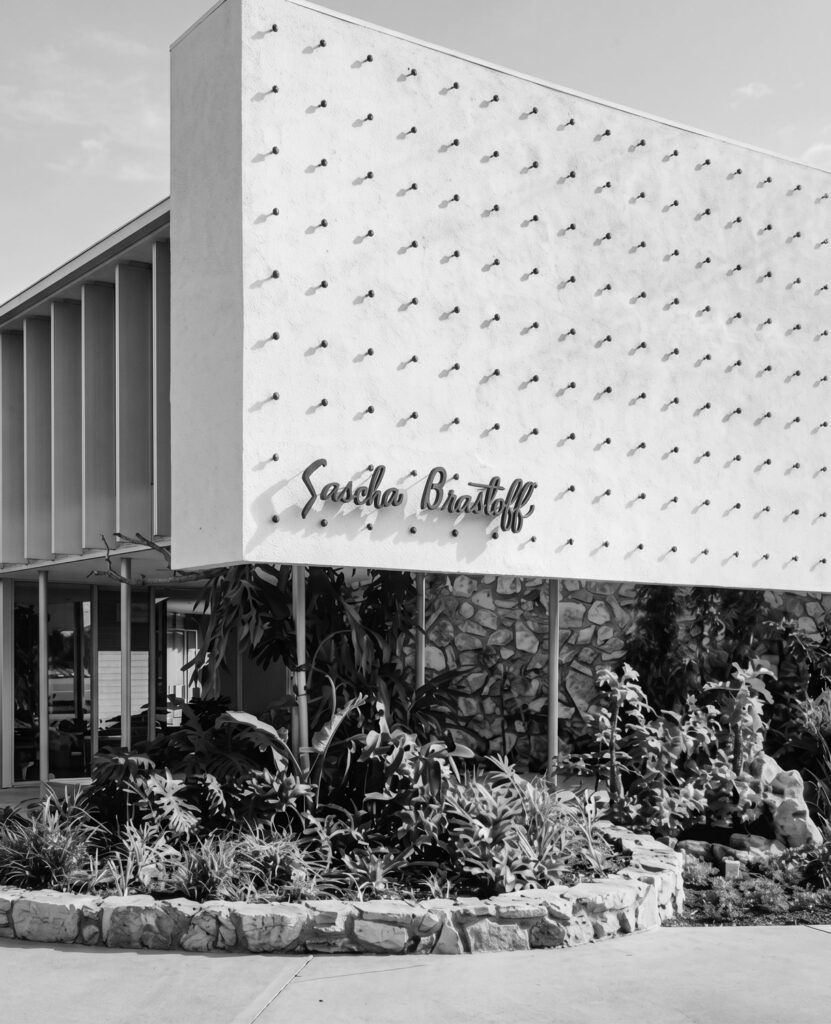
In 1953, the business reached a major point of expansion with the construction of a large factory and showroom on West Olympic Boulevard in West Los Angeles. The building was designed by architects A. Quincy Jones and Frederick Emmons, which placed Brastoff’s enterprise within the broader architectural and design culture of postwar Southern California. It was not just a pottery workshop; it was a modern design business with a public identity, a showroom presence, and a strong connection to the Hollywood and Los Angeles decorative arts world.
Brastoff’s ceramics do not fit neatly into the quieter version of mid-century modernism. His work was modern, but rarely minimal. It was decorative, witty, glamorous, and often deliberately excessive. The surfaces could be jewel-like, graphic, humorous, or exoticized in the way many 1950s designs were, but they almost always carried a sense of movement and personality. This is what separates Brastoff from many better-behaved commercial ceramics of the period. His pieces were designed to be noticed.
The rapid growth of the company also brought pressure. By the early 1960s, the business had become financially strained, and Brastoff’s health declined. In 1962, he left the company after what several accounts describe as a nervous breakdown or serious health crisis. This marked the end of his direct leadership of the ceramics operation, even though the company and the Brastoff name continued beyond his active involvement.
After Brastoff stepped away, the company continued to produce and reissue some designs for a time, but the work after his departure is generally treated differently by collectors. Pieces bearing the full “Sascha Brastoff” signature, particularly those associated with his active studio years, are usually considered more desirable than later or more broadly licensed production. Some collector sources note that the company moved operations to Hawthorne, California, in the mid-1960s and continued until the early 1970s, though Brastoff himself was no longer directing the firm in the way he had during its peak years.
Brastoff did not disappear creatively after leaving the company, but his life and work changed. He became more private and reportedly struggled with agoraphobia and ongoing health issues. Away from the demands of factory production, he continued to make art on a smaller and more personal scale, including painting, pastels, enamels, jewelry, and sculptural work. This later period is less visible than the ceramics years, but it reinforces the point that Brastoff was not only a pottery designer. He was a broader visual artist whose commercial ceramics were one part of a larger creative life.
Sascha Brastoff died in Los Angeles in 1993. Today, his work is valued not only for its mid-century style, but for its originality within the American decorative arts. His ceramics capture a very specific postwar world: Hollywood glamour, California optimism, studio craft, commercial ambition, and theatrical self-invention. In a period often remembered for clean lines and restrained forms, Brastoff offered something bolder. His pieces remind us that mid-century design was also full of color, humor, ornament, performance, and personality.