




Sascha Brastoff’s West Los Angeles Showroom
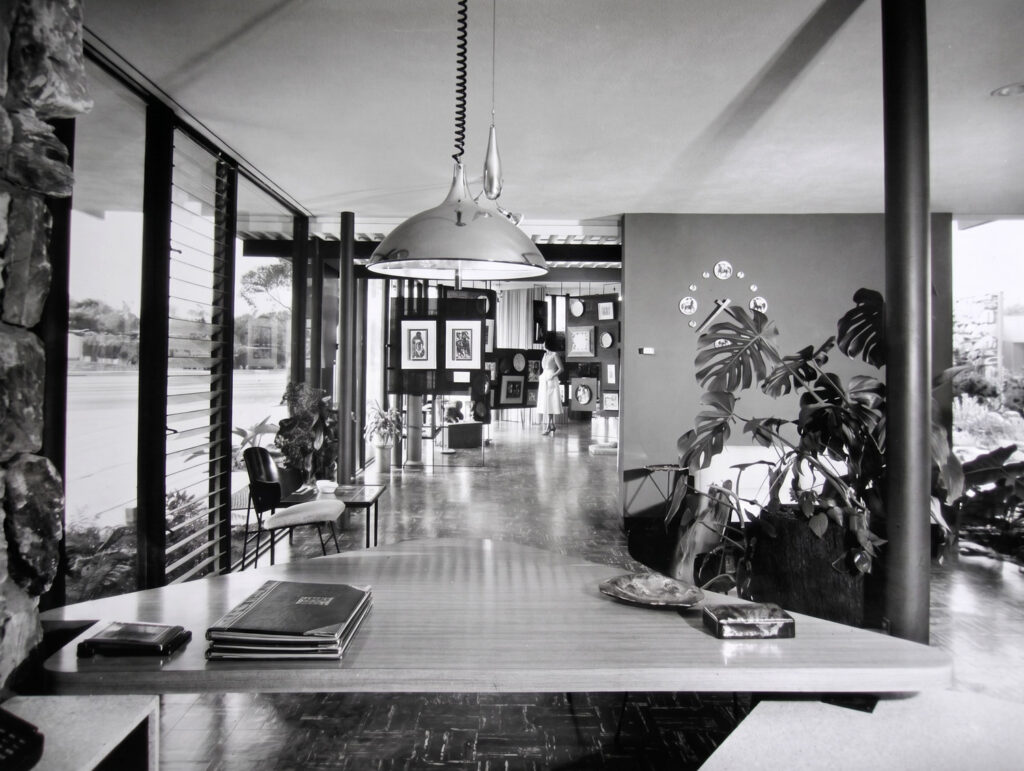
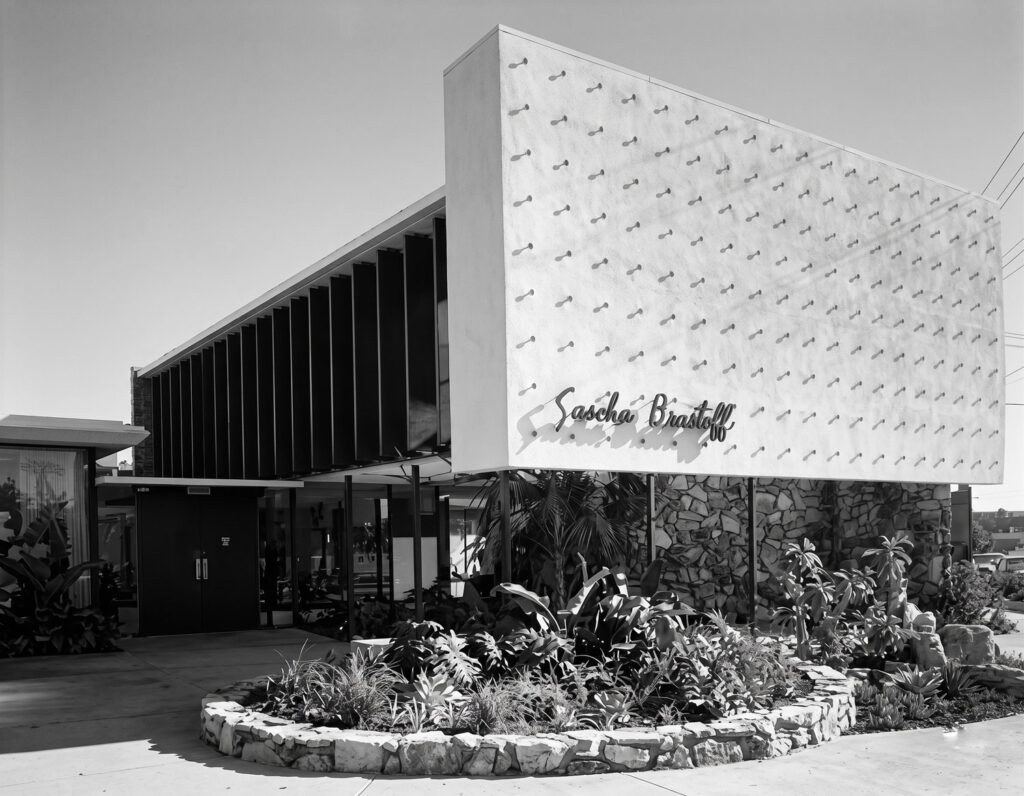
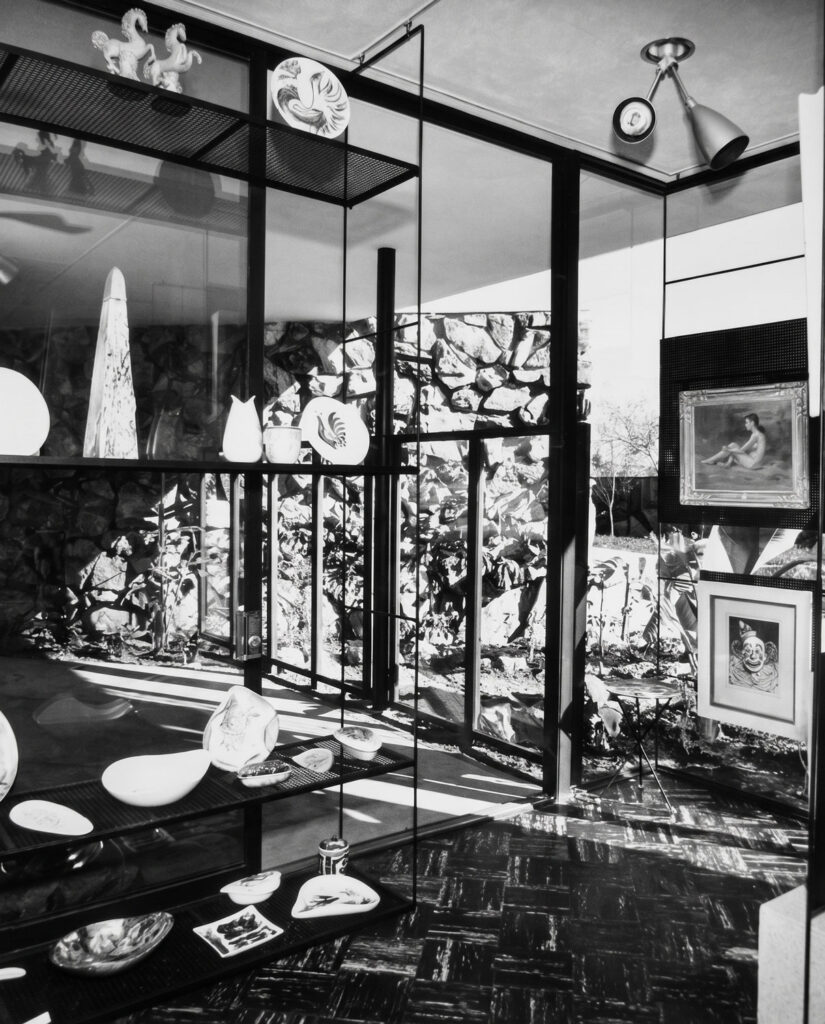
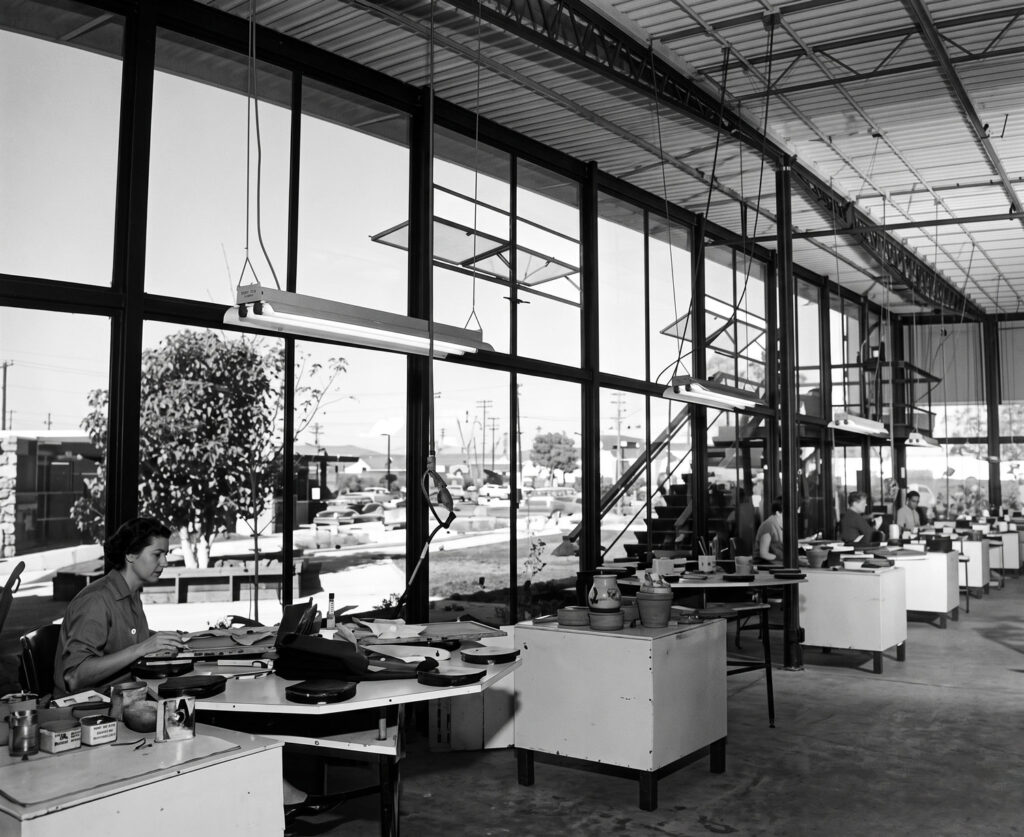
Sascha Brastoff’s Los Angeles showroom was more than a place to sell ceramics. It was part factory, part stage set, part modern design statement, and part public performance. That made sense for Brastoff, whose career moved easily between theater, costume design, ceramics, metalwork, and self-invention. By the early 1950s, his name had become attached not just to a line of dinnerware and decorative ceramics, but to a very specific idea of California modern glamour: theatrical, handmade-looking, slightly eccentric, and unmistakably of Los Angeles.
The best-known Brastoff showroom was part of the large factory and sales complex built in 1953 at 11520 West Olympic Boulevard in West Los Angeles. The building was designed by A. Quincy Jones and Frederick E. Emmons, two important figures in postwar Southern California modern architecture. It replaced an earlier Brastoff factory that had been destroyed by fire after only a short period of operation, and it marked the point at which the company moved from a small artist-driven enterprise into something much more ambitious. The new complex reportedly included about 35,000 square feet of space and eventually employed around 100 people.
What made the showroom unusual was the way it blurred the line between retail display and production. It was not simply a room with finished wares arranged on shelves. According to material from the A. Quincy Jones archive, part of the manufacturing facility was developed as a “continuing demonstration” of the work being done there, with visitor viewing areas that allowed customers to watch ceramic production. The building itself made the process visible, turning the making of ceramics into part of the brand experience.
That visibility mattered. Brastoff ceramics were often promoted as artist-designed and hand-decorated, even when produced in quantity. His tableware, vases, plates, figurines, and decorative accessories relied on surface effects that felt personal and animated: sgraffito lines, gold lusters, bold color, abstract patterning, and whimsical figural motifs. The showroom helped reinforce that identity. Buyers were not just purchasing a plate or vase; they were entering a world where ceramics were tied to studio practice, Hollywood display, and midcentury lifestyle marketing.
The Los Angeles setting was central to the appeal. Brastoff had worked for 20th Century Fox after World War II before focusing fully on ceramics, and his work retained a show-business sensibility. His showroom belonged to the same culture that produced modern furniture stores, decorator showrooms, roadside architecture, and destination retail spaces across Southern California. In that context, the Brastoff showroom was not an afterthought. It was a designed environment, meant to make the factory feel glamorous and the product feel immediate.
The architecture also gave the company a modernist frame. A. Quincy Jones and Frederick Emmons were associated with clean, functional, postwar design, and the Brastoff factory-showroom translated that language into a commercial setting. Reports of the building note details such as exposed pipes and ducts painted in different colors, not hidden away but incorporated into the visual experience. This was a very midcentury idea: production could be clean, modern, and even stylish.
At its peak, the showroom must have been an impressive expression of confidence. Brastoff’s name appeared on dinnerware and decorative ceramics sold to a growing middle-class market interested in modern design, entertaining, and self-expression. His work was more flamboyant than the restrained Scandinavian-influenced modernism often associated with the period. It had humor, movement, and a kind of theatrical polish. The showroom gave that personality a physical address.
The success did not last indefinitely. By 1960, the company was facing financial trouble, and in 1962 Brastoff left the business following a nervous breakdown. Wares continued to be produced under his name after his departure, and the factory operation later moved to Hawthorne, where it remained active into the early 1970s. The original West Olympic Boulevard building was demolished in 1981, leaving photographs and scattered references as the main record of what had once been one of the more distinctive design-retail spaces in midcentury Los Angeles.