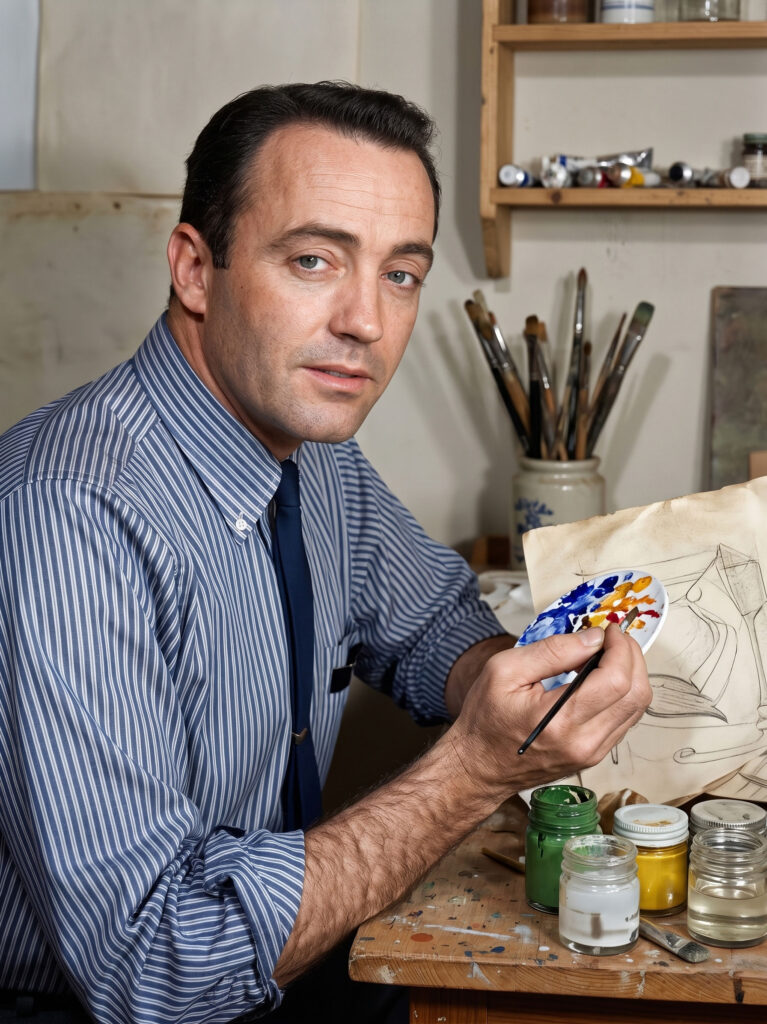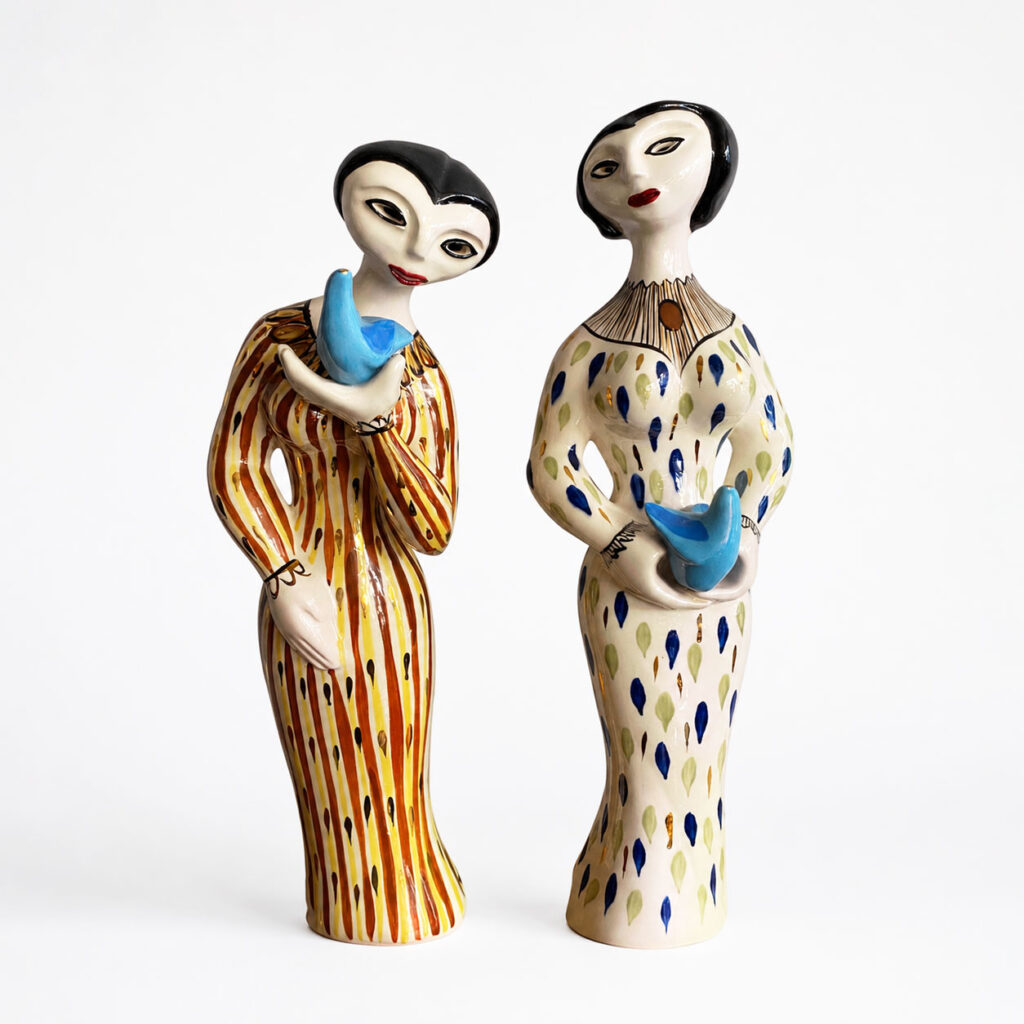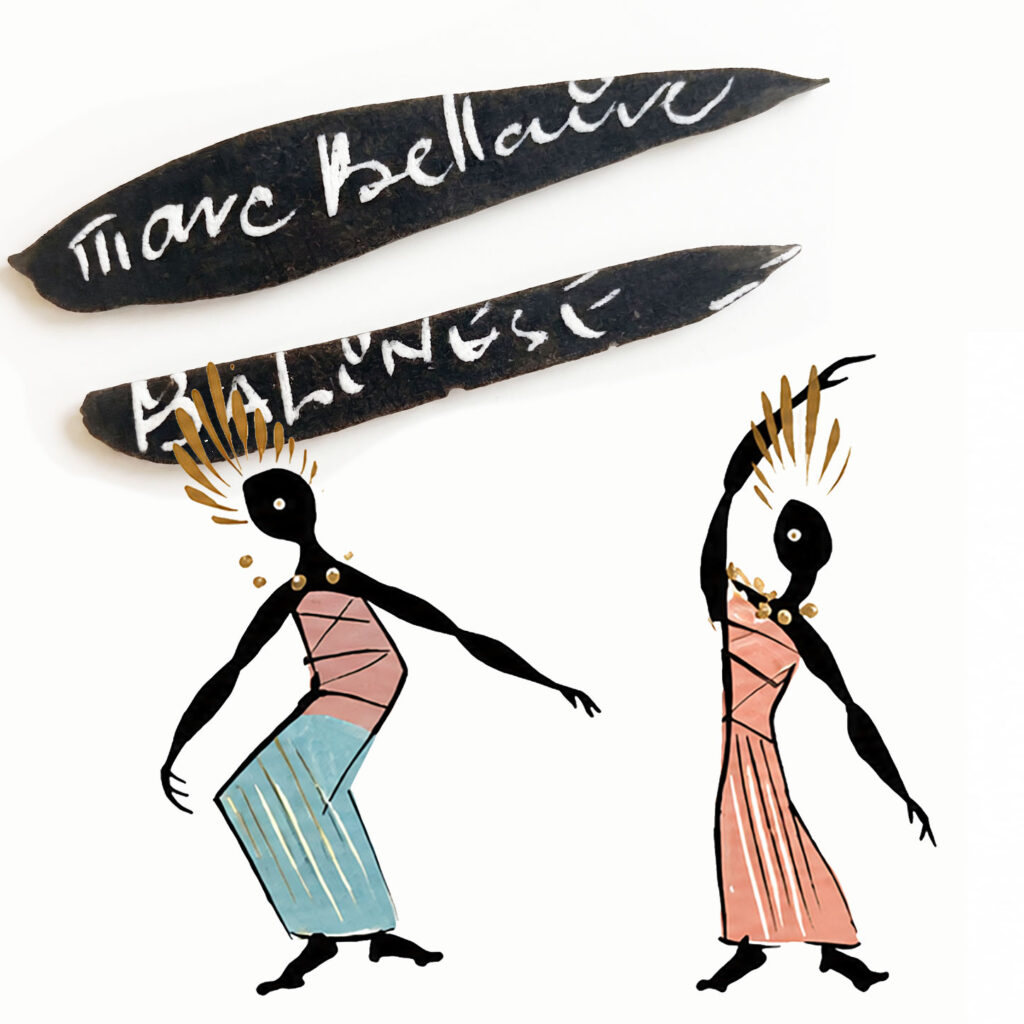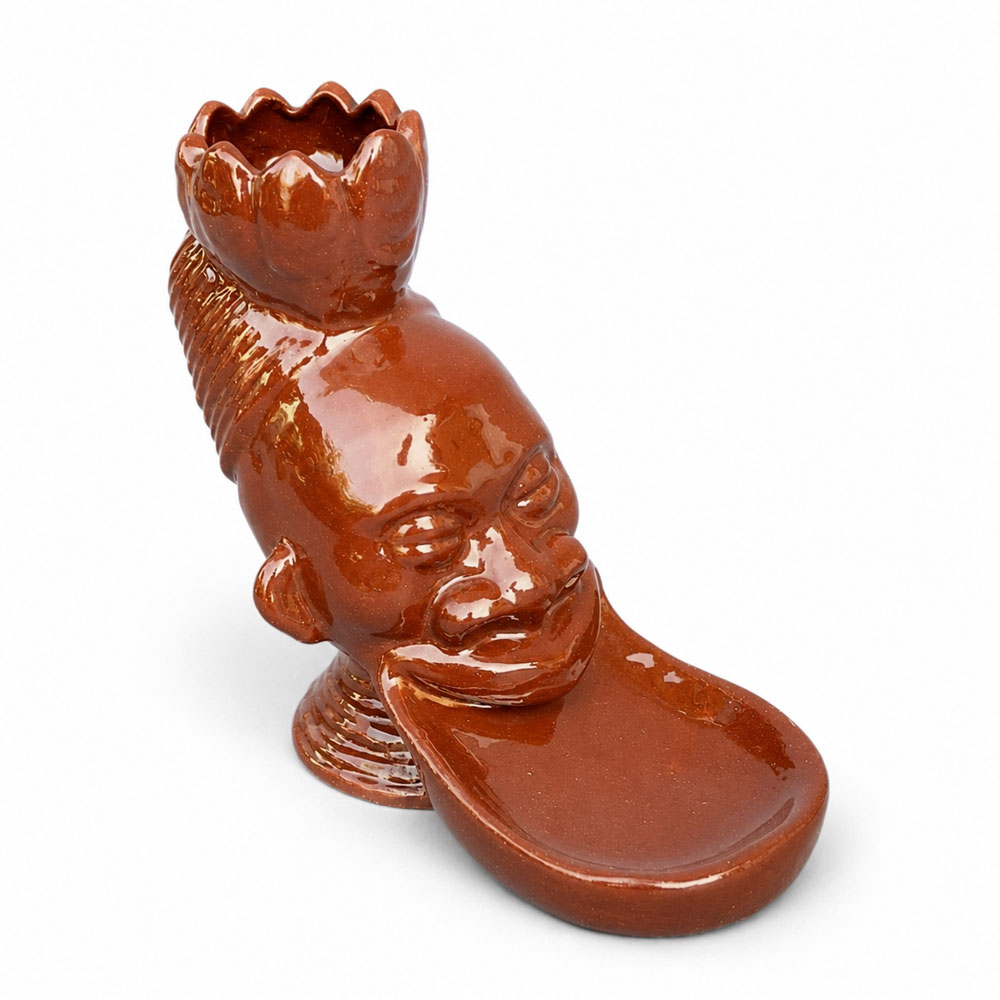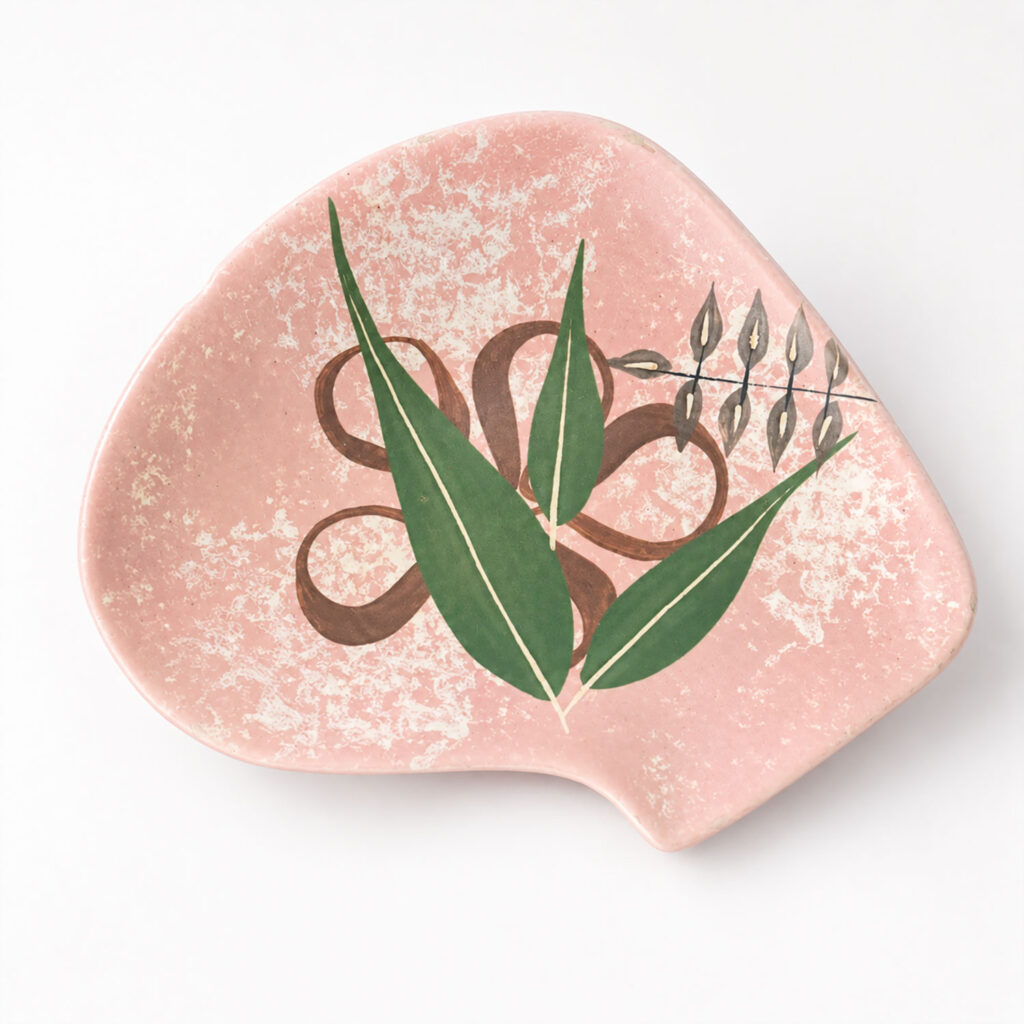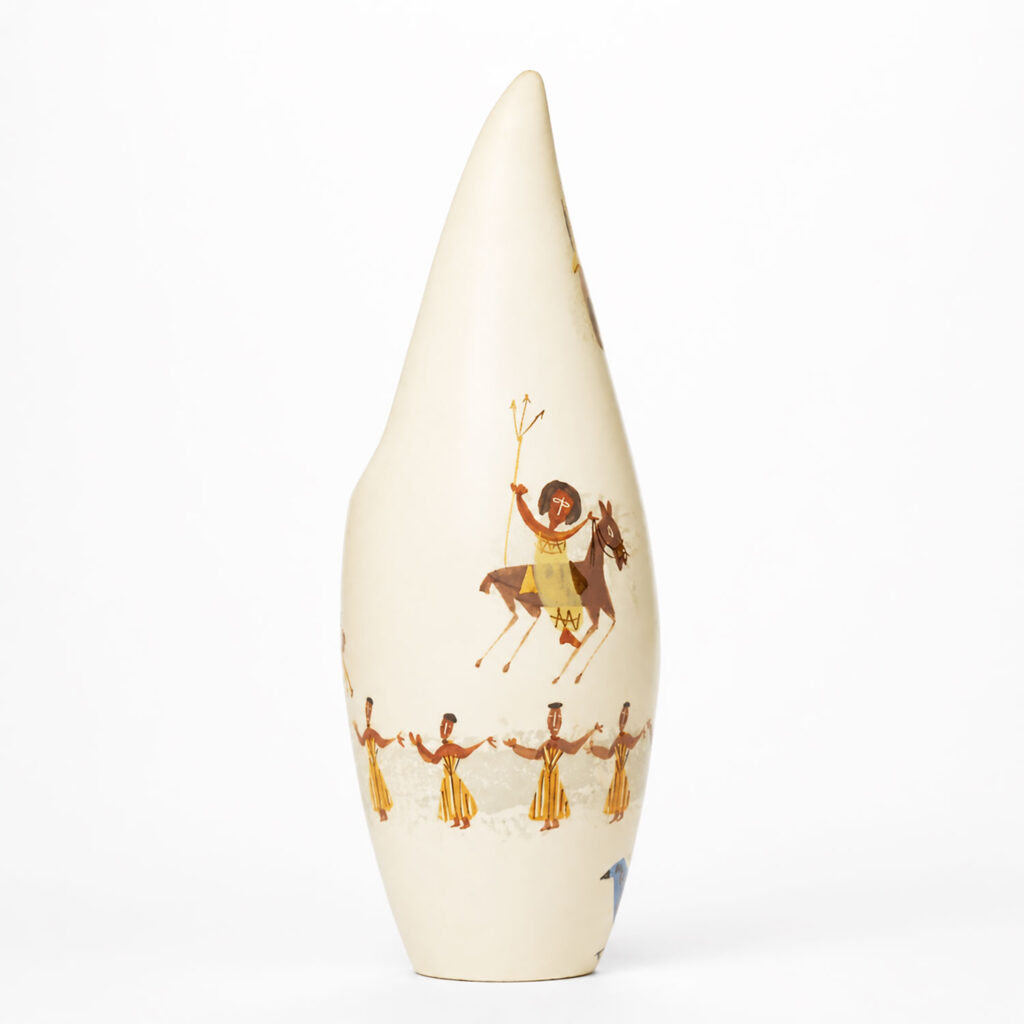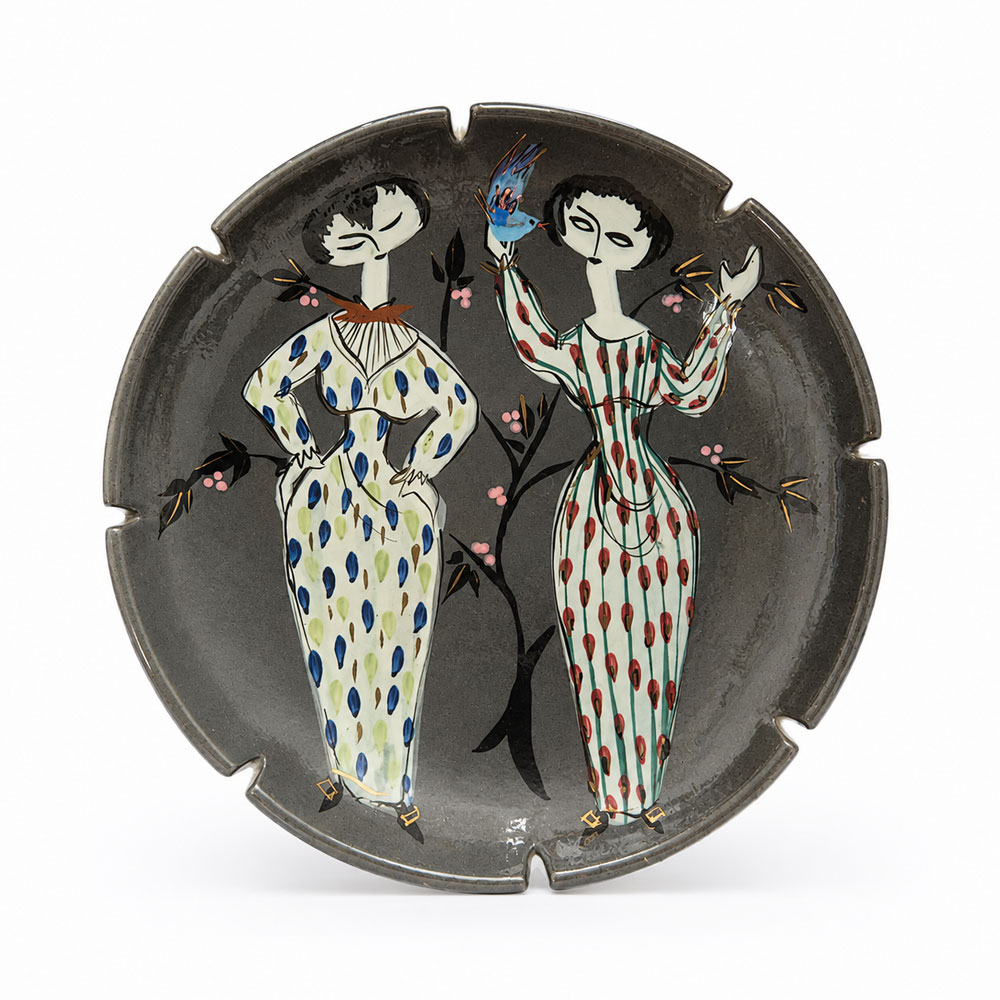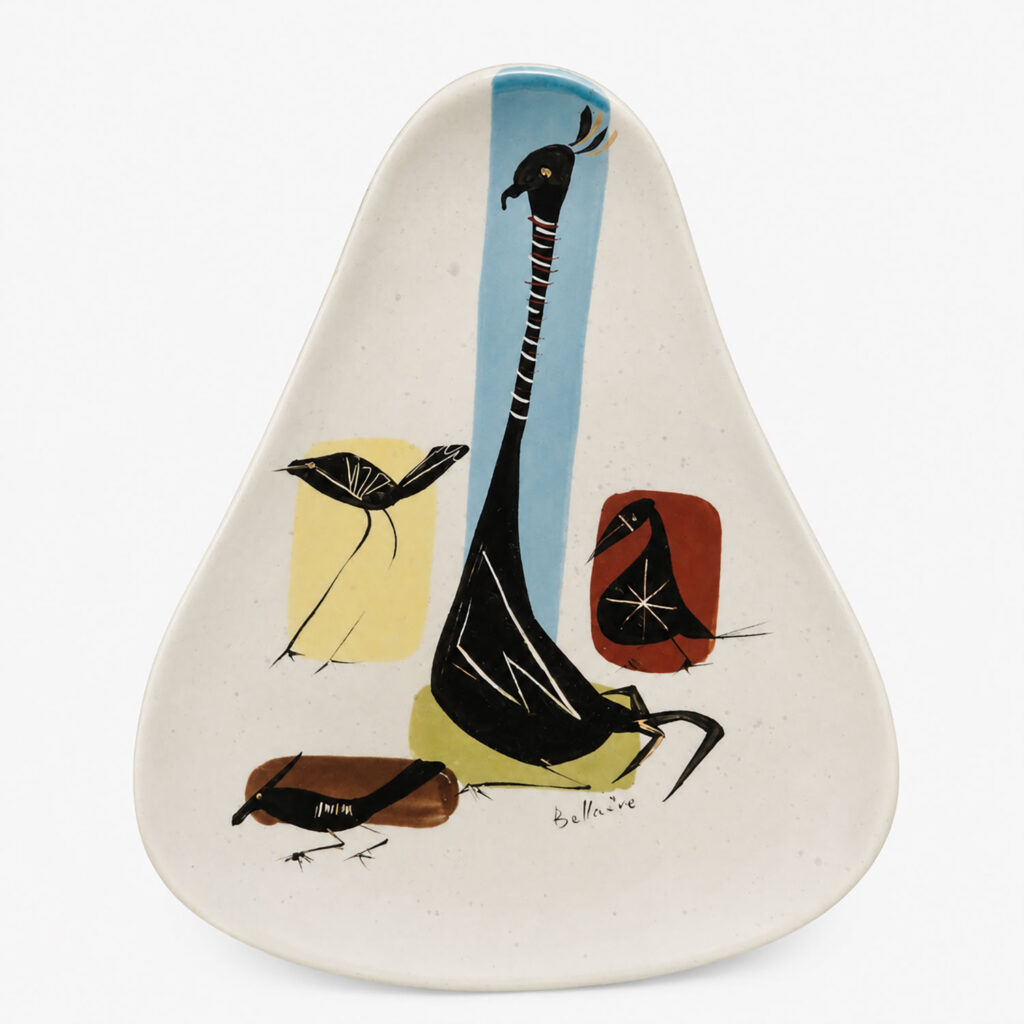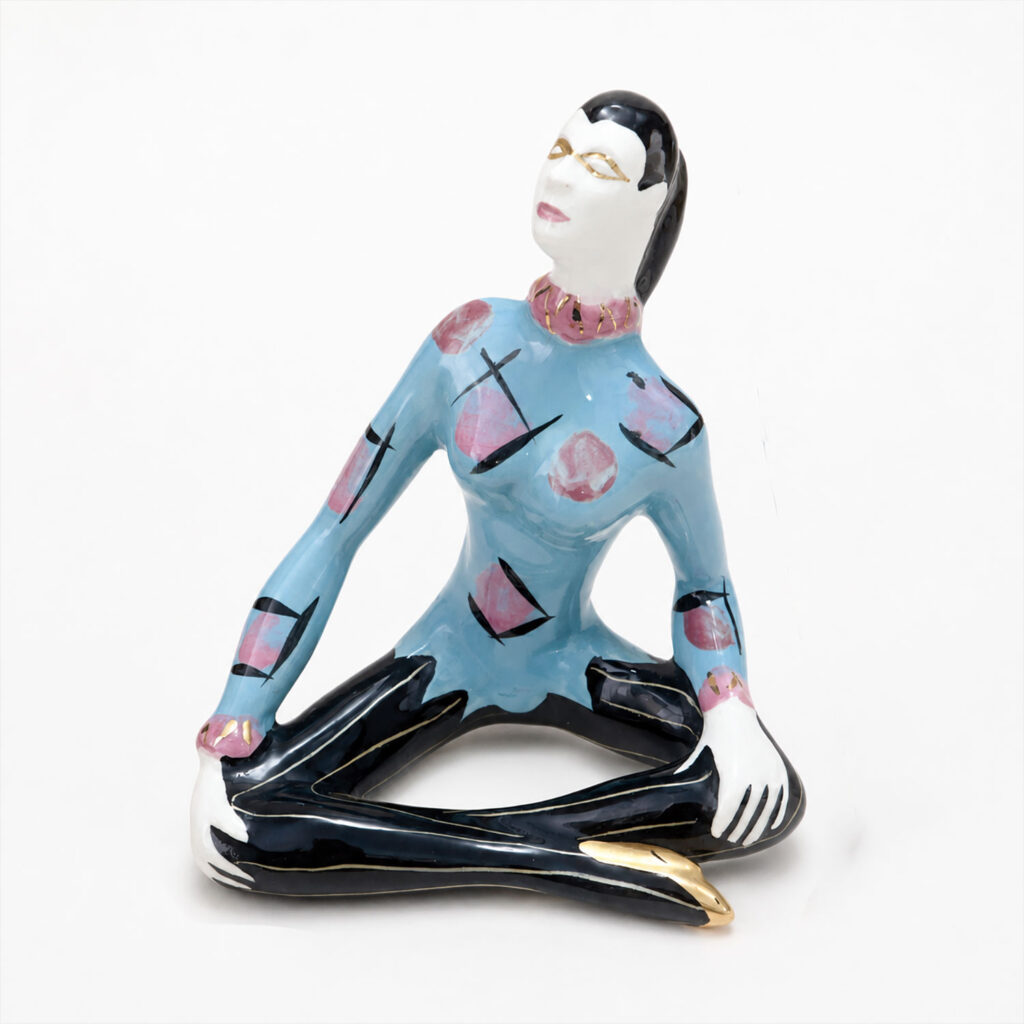




Marc Bellaire is best known today for his hand-decorated California pottery, a body of work that sits at the intersection of studio art, giftware, and the postwar market for modern decorative objects. His production pieces, including bowls, ashtrays, tiles, figures, candlesticks, vases, trays, and accessories, were made for the home, but they carried the visible energy of the artist’s hand. They were commercial objects, yet they were not anonymous. Texture, movement, brushwork, and irregularity were central to their appeal.
Bellaire was born Donald Edmund Fleischman on July 30, 1925, in Toledo, Ohio. His professional name appears to have come from his mother’s surname, Bellaire, giving him a public identity that suited the design and giftware worlds he later entered. His early life included art study, commercial design work, and, after World War II, window display at LaSalle & Koch, a Toledo department store. That experience with display, arrangement, color, lighting, and retail presentation helps explain the kind of designer he became. Bellaire understood pottery not only as clay, but as something to be staged, sold, gifted, collected, and lived with.
During World War II, he served in the U.S. Navy under his birth name, Donald E. Fleischman. His service records place him in the medical branch, where he advanced from Hospital Apprentice First Class to Pharmacist’s Mate Third Class, temporary. He later served aboard the USS Rushmore, LSD-14, at the end of the war and into the immediate postwar period. In later accounts, Bellaire connected his interest in ceramics to the therapeutic value of working with clay. Clay was physical, responsive, and forgiving. It could be shaped, pressed, reworked, and handled directly. That idea became part of his teaching philosophy and also helps explain why his pottery emphasized movement and touch rather than factory perfection.
After the war, Bellaire continued his art education at Wayne University in Detroit, the American Academy of Art in Chicago, and the Art Institute of Chicago. He also studied privately with Alexander Zlatoff-Mierskii, a Russian-born painter and teacher. By 1948, Bellaire had moved to Los Angeles, where he entered a world that blurred art, performance, film, commercial design, and display. He studied dance, performed at the Greek Theatre, signed with MGM, and was later connected in publicity accounts to An American in Paris. His film career was brief, but the theatrical quality of his later ceramics demonstrations suggests that performance remained part of how he worked.
Around 1950 or 1951, Bellaire began producing the pottery that would make his name. By 1951, he had built a studio in Culver City to meet national demand for his hand-decorated ceramic wares. His pieces used underglaze decoration, engobe glazes, sprayed and spattered backgrounds, textured surfaces, brushwork, freehand figures, and improvised tools such as toothbrushes, sponges, netting, lace, fabric, and foam rubber. These methods gave his pottery a loose, lively surface that distinguished it from more mechanical giftware.
Bellaire’s work fit perfectly into the postwar giftware market. After World War II, Americans were furnishing new homes, entertaining more casually, and buying decorative objects that suggested modern taste. Department stores, gift shops, interior decorators, and specialty retailers helped create demand for colorful, informal, expressive objects that could sit on coffee tables, patios, bars, shelves, and sideboards. California ceramics carried a special appeal in this market. They suggested sunlight, leisure, travel, cocktails, patios, and relaxed modern living. Bellaire’s work brought that California feeling into a form that felt personal and hand-touched.
By the early and mid-1950s, Bellaire was recognized as one of the leading names in ceramic giftware. He was identified as one of the top American giftware designers during the period from 1951 to 1956 and was named Top California Ceramic Designer by Interiors magazine in 1953. His pieces circulated through national retail channels and later appeared in stores and galleries such as Neiman Marcus and La Quinta Trading Company. Although later collector accounts sometimes place him in Sascha Brastoff’s orbit, the contemporary record does not establish a direct teacher-student or employer-employee relationship. The comparison is still useful. Both men emerged from the same Los Angeles world of performance, display, giftware, personality-driven design, and hand-decorated ceramics.
Bellaire’s production pottery appears to have been concentrated in a relatively brief period. Around 1956, his career shifted away from a fixed California production studio toward teaching, lecturing, writing, exhibiting, and public demonstration. This shift does not necessarily suggest failure. More likely, the pottery line had established his name and opened the door to a broader career. His style depended on hand decoration, surface texture, brush movement, and improvisation, all qualities that made large-scale production difficult. A national teaching circuit allowed him to turn the “Bellaire touch” into a method that others could learn.
That teaching career was closely tied to the postwar hobby ceramics boom, a movement sustained largely by women through local studios, clubs, recreation departments, guilds, home kilns, and small businesses. Bellaire’s books, including Underglaze Decoration and Brush Decoration, and his work with Ceramics Monthly helped spread his techniques beyond the objects he made himself. He taught students how to use ordinary tools to create modern surfaces and encouraged them to value movement, confidence, and individuality over rigid copying.
This is why Bellaire’s pottery should be understood as more than collectible California giftware. His production lines were the visible part of a larger system of design, teaching, retail, and demonstration. The pieces that survive today show the same qualities he promoted throughout his career: lively surfaces, approachable modernism, decorative usefulness, and the mark of the hand. His later work as a lecturer, writer, muralist, gallery owner, and desert artist expanded that identity, but the commercial pottery remains the clearest record of the moment when Marc Bellaire translated his ideas into objects for the postwar American home.