



Design for the Masses: Bellaire Teaches Ceramic Arts
Marc Bellaire is usually discussed as a mid-century California ceramics designer, and understandably so. His signed bowls, trays, lamps, vases, and ashtrays have the kind of graphic personality collectors remember: dancers, birds, animals, fish, musicians, abstract figures, and patterned surfaces that feel closer to modern illustration than traditional pottery decoration. But Bellaire’s influence was not limited to the pieces that came out of his own studio. He also participated in the broader postwar ceramics hobby movement, teaching ceramic painting and publishing instructional books that helped translate his decorative approach for home and studio ceramic painters.
That teaching role is an important part of understanding Bellaire. In the 1950s, ceramics were not only a commercial design field; they were also a popular amateur and semi-professional activity. Ceramic studios, supply shops, classes, hobby kilns, and instruction books gave people a way to paint, glaze, and personalize ready-made forms. Bellaire’s work fit naturally into that world because his strength was not only in shape, but in surface. His ceramics showed how a simple blank form could become lively through line, pattern, color, and rhythm.
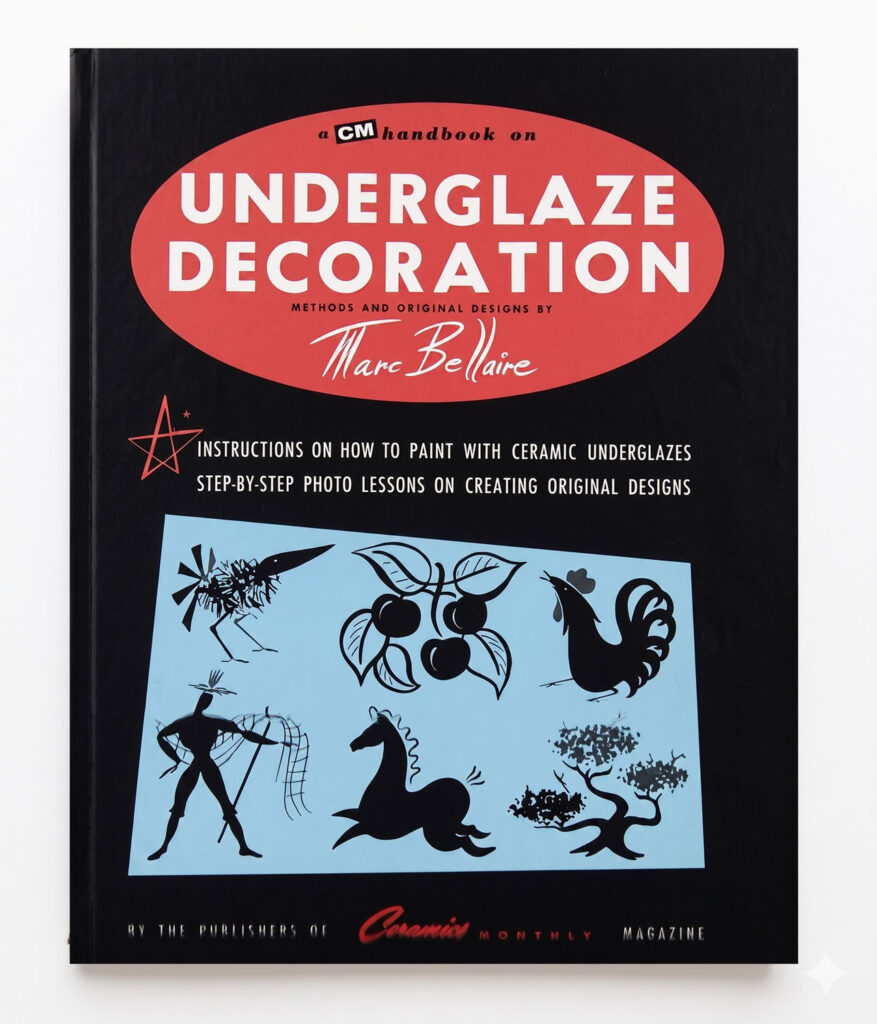
Bellaire’s published instructional work makes that connection clear. A CM Handbook on Underglaze Decoration: Methods and Original Designs by Marc Bellaire was originally published in 1957 by Professional Publications and prepared by the staff of Ceramics Monthly. Library records identify it as a handbook focused on Bellaire’s methods and original designs. Later descriptions summarize the book as instruction on painting with ceramic underglazes, including step-by-step photo lessons for creating original designs.
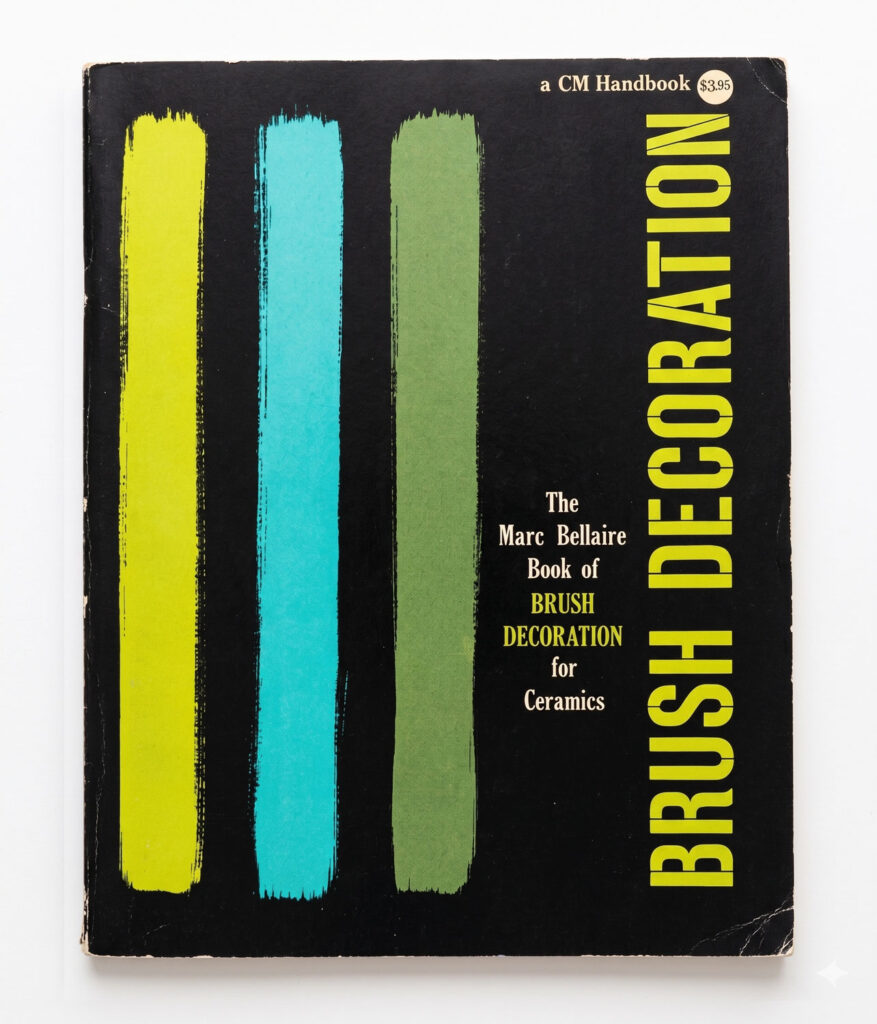
He also published Brush Decoration: The Marc Bellaire Book of Brush Decoration for Ceramics, dated 1964 in library records, again connecting his name directly with instruction rather than only finished wares. These books suggest that Bellaire’s decorative vocabulary had a life beyond his own production studio. His designs became teachable methods: how to think about a blank ceramic surface, how to build a motif, how to use a brush line, and how to make decoration feel modern rather than fussy.
Period references also point to Bellaire teaching classes. A 1957 Ceramics Monthly listing references “Marc Bellaire Classes,” placing him within the active instructional ceramics culture of the time. That detail matters because it positions him not just as a maker whose work was copied after the fact, but as someone who was actively showing others how to approach ceramic decoration while the mid-century ceramics boom was happening.
This also changes the way we can look at Bellaire’s finished pieces. The repeated dancers, birds, fish, and abstracted figures were not simply decorative themes; they were part of a visual system. His work often depends on a few core moves: a strong outline, simplified anatomy, repeated marks, lively color placement, and a balance between empty space and patterned detail. Those are exactly the kinds of principles that can be taught. A Bellaire dish does not require realistic modeling or elaborate sculptural form to succeed. Its effect comes from how the surface is organized.
That may be one reason his work still feels approachable. Bellaire’s ceramics have a professional designer’s confidence, but they also retain the appeal of hand decoration. The line is visible. The choices are readable. You can see the logic of the design, even when the result is playful or theatrical. His instructional books likely appealed to people who wanted to move beyond simple floral decals or conventional china painting and toward something more modern, graphic, and expressive.