




Dancers and Décor: Marc Bellaire’s Balinese Line
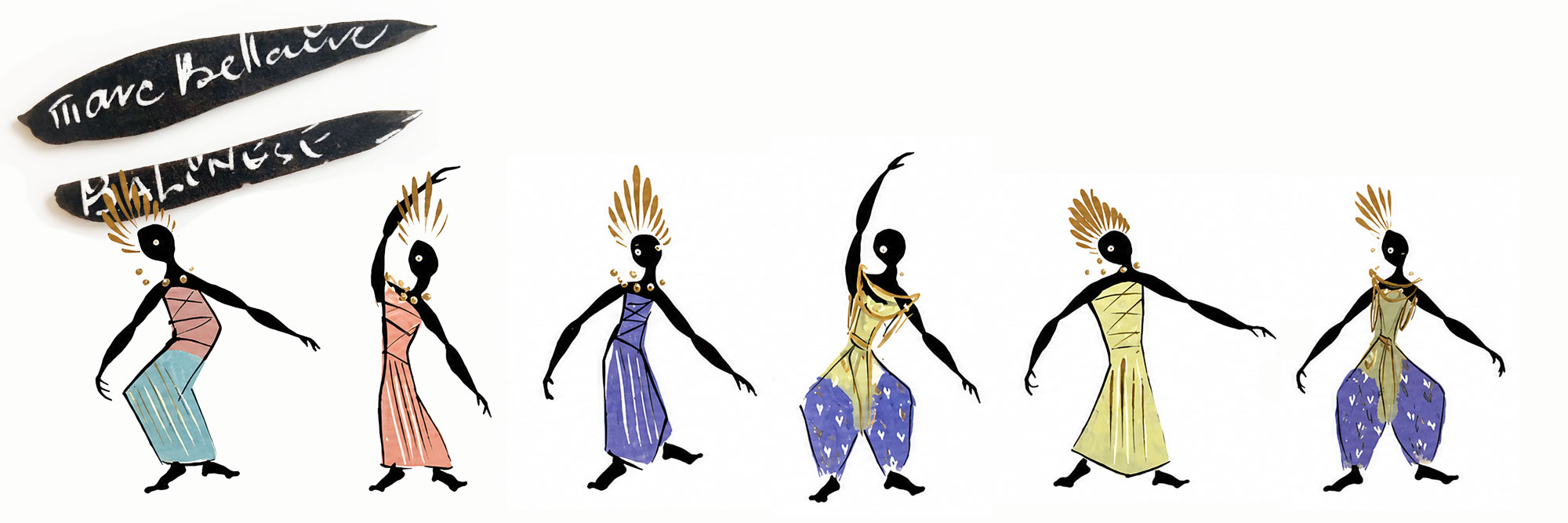
Marc Bellaire’s Balinese line belongs to a very specific moment in American decorative ceramics. Produced in the postwar period, it reflects the 1950s appetite for travel-themed design, when American homes filled with objects inspired by Hawaii, the South Pacific, India, North Africa, and Southeast Asia. These references appeared across ceramics, textiles, barware, restaurants, and giftware, often as stylized impressions rather than accurate cultural representation.
Bellaire was well suited to this market. His work was graphic, theatrical, and highly decorative. Rather than relying on quiet forms or restrained glazes, he built many of his lines around painted scenes and named themes. Balinese fits within that larger body of work, alongside patterns such as Kashmir and Luau, where place becomes a visual idea: costume, movement, pattern, and atmosphere.
The Balinese line typically features dancers or musicians rendered in Bellaire’s loose, illustrative style. The figures are elongated and animated, with strong outlines and patterned clothing. The effect is not documentary. It is mid-century fantasy, shaped by the American fascination with “exotic” performance and distant places. In that sense, the line says as much about postwar American taste as it does about Bali.
This was also the era of the decorated serving piece. Small bowls, dishes, pitchers, ashtrays, and trays were not just useful objects; they were part of entertaining culture. A themed ceramic could sit on a coffee table or bar cart and suggest sophistication, travel, or modern leisure. Bellaire’s Balinese pieces were made for that world.
Today, the line is interesting for both its design and its context. The pieces are lively and visually strong, but they also reflect a period when American manufacturers freely turned cultural imagery into décor. That tension is part of their history. Bellaire’s Balinese line remains a vivid example of mid-century California giftware: colorful, theatrical, commercially savvy, and deeply rooted in the postwar American imagination.


