



Hollydale Potteries of California
Hollydale Pottery was one of the smaller and less documented Southern California dinnerware producers, active from the mid-1930s into the late 1950s. The company is generally associated with the Los Angeles area, with references placing it in the South Gate/Hollydale/Harbor City orbit rather than in one neatly documented factory location. One of the few specific early records places the firm at 1461 Industrial Avenue, where a January 1937 fire reportedly destroyed the plant, including a building valued at $25,000 and pottery valued at $6,000. Hollydale either rebuilt or relocated nearby, and like many California potteries of the period, continued producing useful, brightly glazed earthenware for a market hungry for informal, colorful table settings.
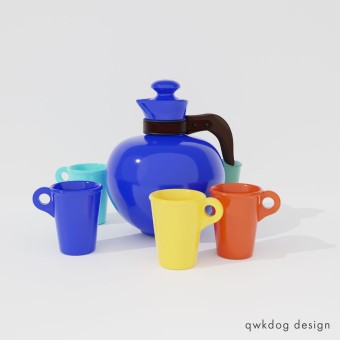
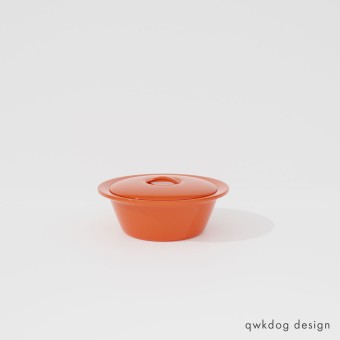
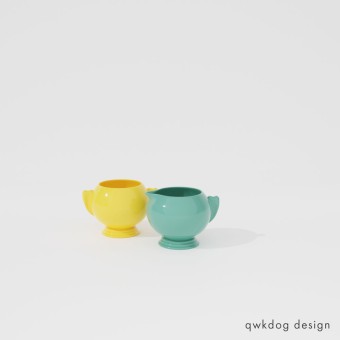
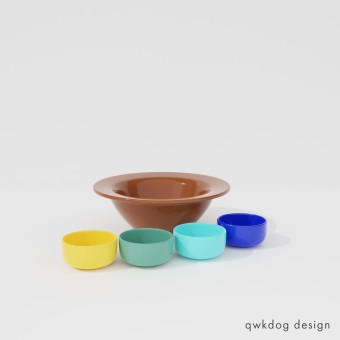
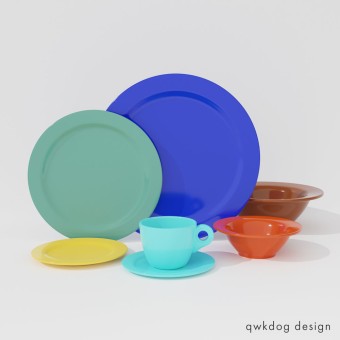
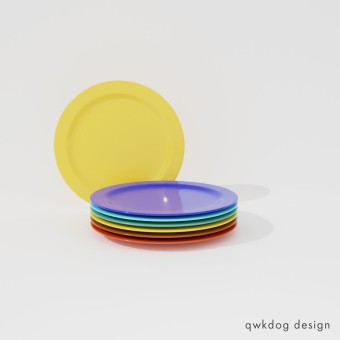
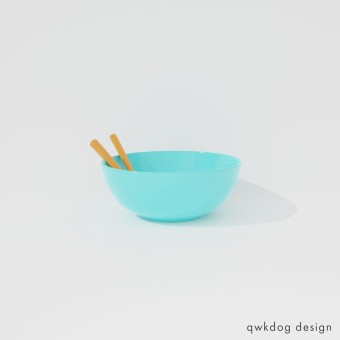
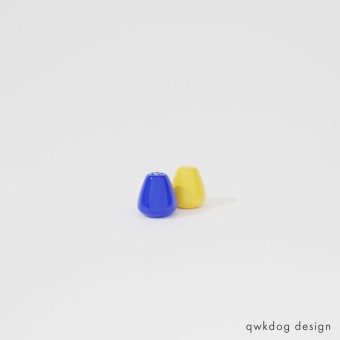
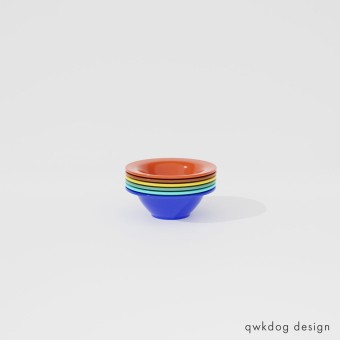
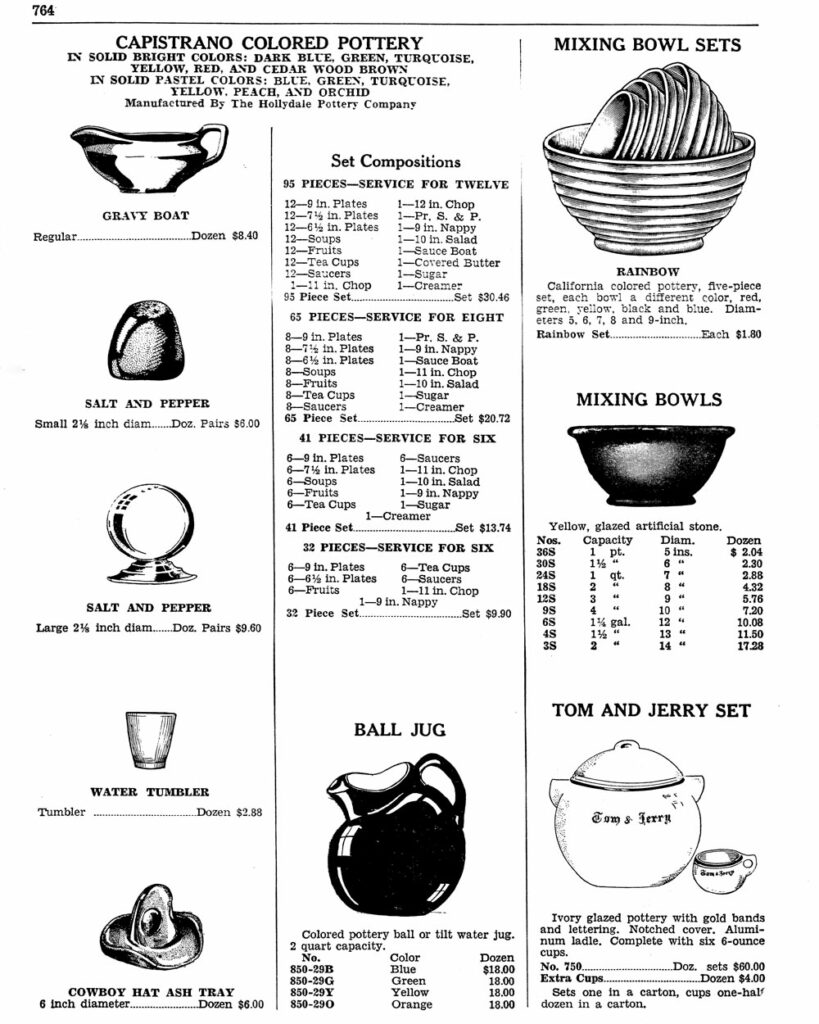
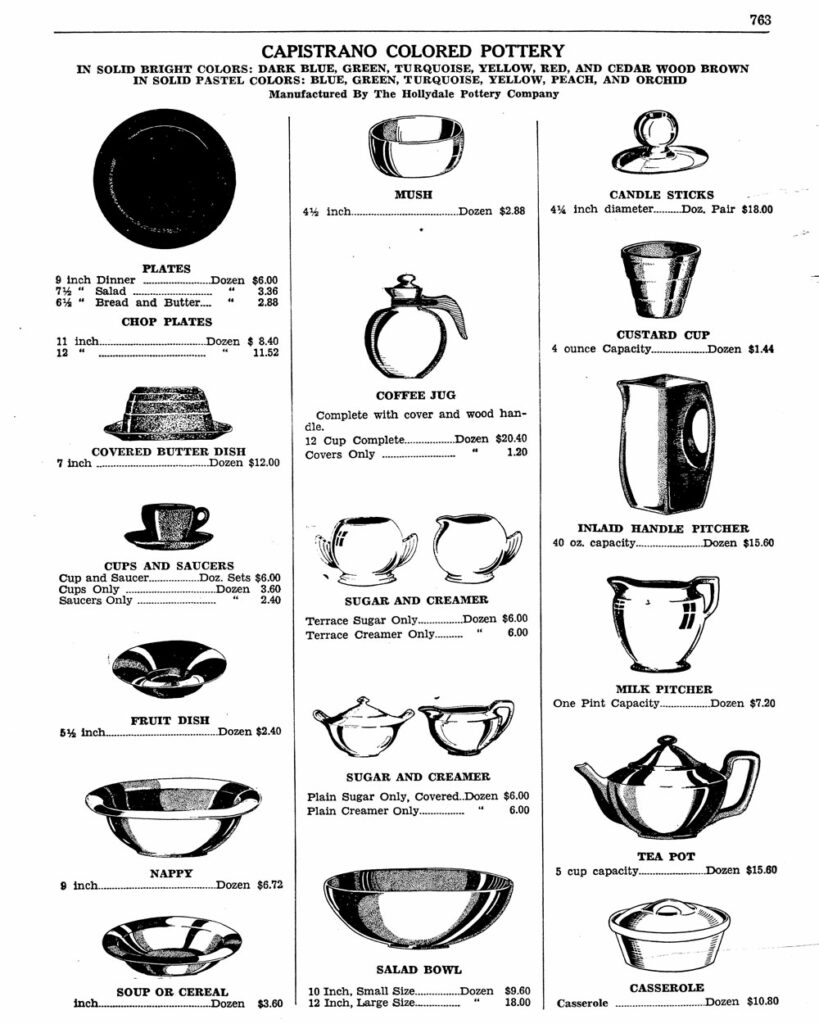
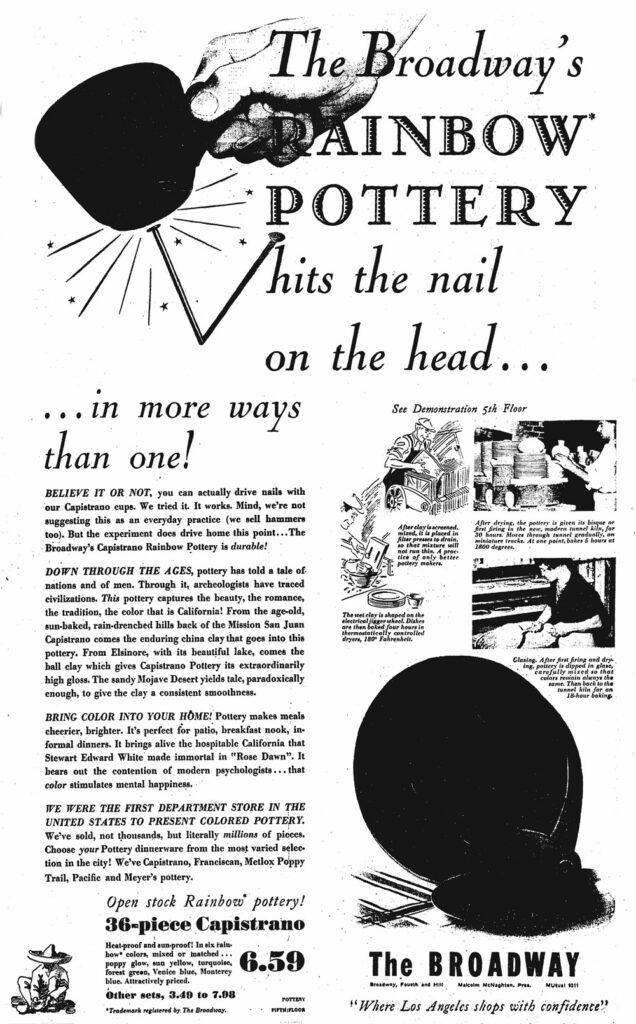
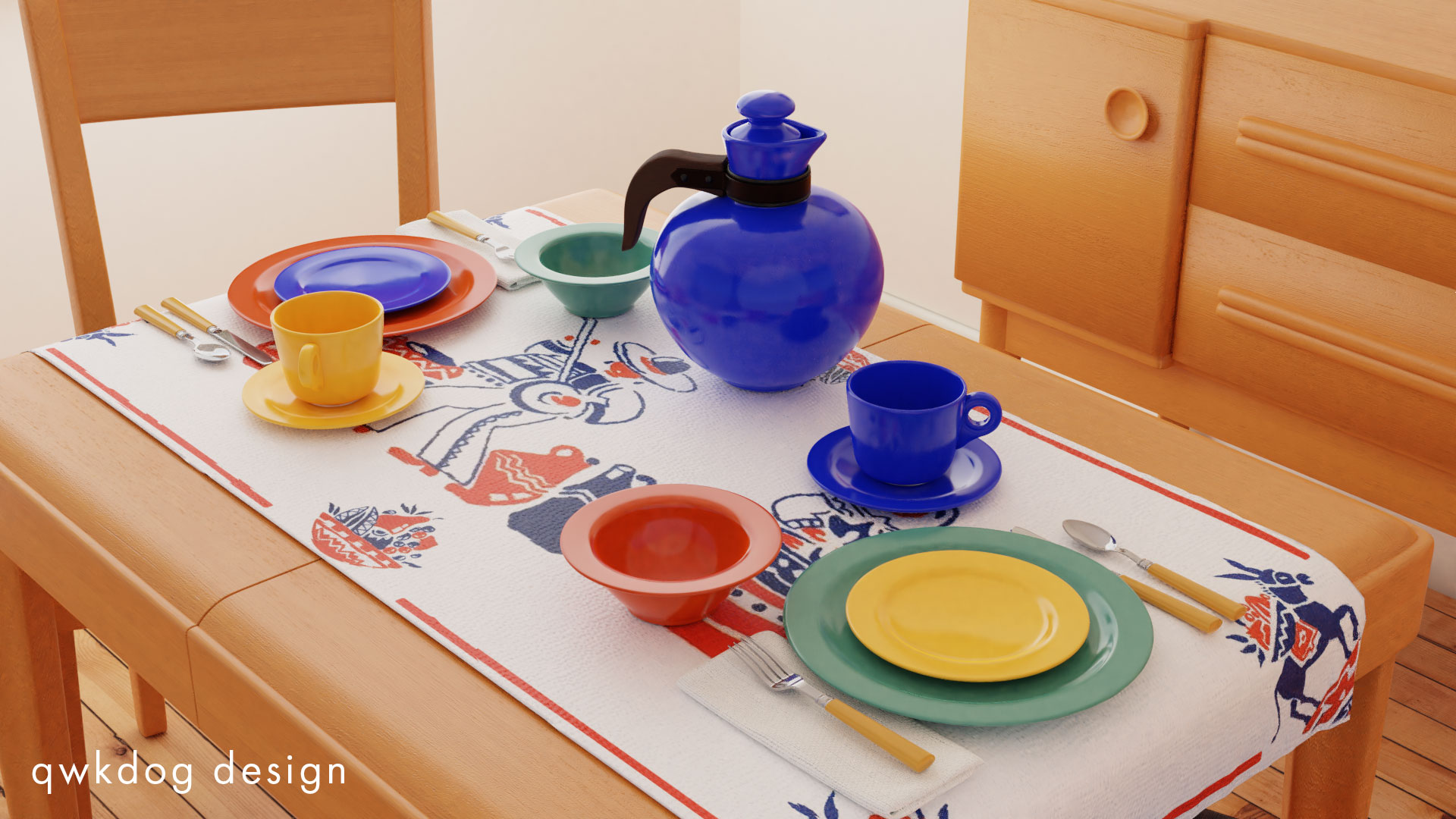
Hollydale’s first major dinnerware line appears to have been Capistrano, introduced around 1936 during the height of the California colorware craze. Early Capistrano was straightforward solid-color dinnerware, made in the same broad market as Bauer, Pacific, Catalina, Vernon, and Gladding-McBean. By 1940, Capistrano was being offered in six colors: orange, turquoise, green, yellow, rust, and blue. Retailers sold smaller 20-piece sets in core colors, larger 32-piece assortments, and open stock. Sears also used Capistrano as a promotional premium in some markets, offering sets with the purchase of a Coldspot refrigerator. Some pieces carry a Hollydale backstamp, but much of the line is unmarked, which has made attribution uneven.
The Capistrano name later appeared on a different molded “swirl” form, closer in spirit to the ripple and fluted dinnerware patterns that became popular in the early 1940s. Newspaper advertising from the period refers to this version as the “Capistrano Pottery Swirl Pattern.” Visually, it is quite separate from the earlier plain colorware and belongs to the same molded-dinnerware world as Franciscan Coronado and related California patterns.
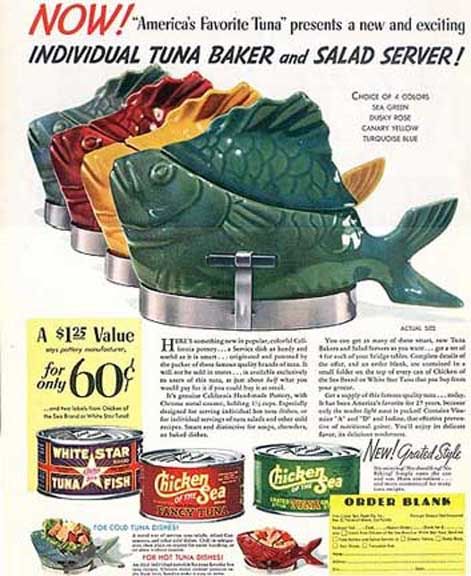
Hollydale’s most widely recognized pieces today may be the Chicken-of-the-Sea promotional wares: fish-shaped lidded tuna bakers or salad servers, individual casserole dishes, and matching fish salt-and-pepper shakers. These pieces are often misattributed to Bauer, probably because their glazes and playful utility fit so comfortably into the broader California pottery look. They were, however, Hollydale products made for Chicken-of-the-Sea promotions, and they remain one of the company’s most memorable lines.
A grape-leaf embossed line known as Del Coronado is also associated with Hollydale, though the attribution is not entirely straightforward. Some examples have been reported with Santa Anita marks, suggesting that the line may have involved contract production, shared molds, a distributor arrangement, or later collector naming conventions. Until stronger primary documentation turns up, Del Coronado is best treated as a related California pottery line with Hollydale associations rather than a fully settled Hollydale pattern.
By the 1950s, Hollydale had moved into postwar casual modern dinnerware with Malibu Modern. The line appears in colors such as chartreuse, turquoise, gray, maroon red, and dark green, and survives in plates, pitchers, creamers, sugar bowls, and coffee or tea servers. Malibu Modern gives Hollydale its clearest midcentury identity: still functional and affordable, but more sculptural and contemporary than the 1930s colorware that preceded it. Hollydale seems to have disappeared by the late 1950s, around the same time many smaller California potteries were struggling against rising costs, changing taste, and imported dinnerware. Its output is scattered and often unmarked, but the surviving pieces show a company that followed the full arc of Southern California dinnerware fashion, from Depression-era colorware to promotional novelty ware to postwar modern table settings.
Hollydale Capistrano