



Meyer’s California Rainbow
Very little is known about Meyer Pottery of California, often listed by collectors as Meyers or Meyer’s Pottery, beyond its production of solid-colored dinnerware, art pottery, and garden pottery in the mid- to late 1930s. The company is generally associated with Vernon, California, and some collector references connect it to K&M Pottery Co. or Garcia Meyers Pottery Company, but the documentary record remains thin. What survives most clearly is the ware itself: sturdy, brightly glazed, and very much part of the Southern California colorware boom.
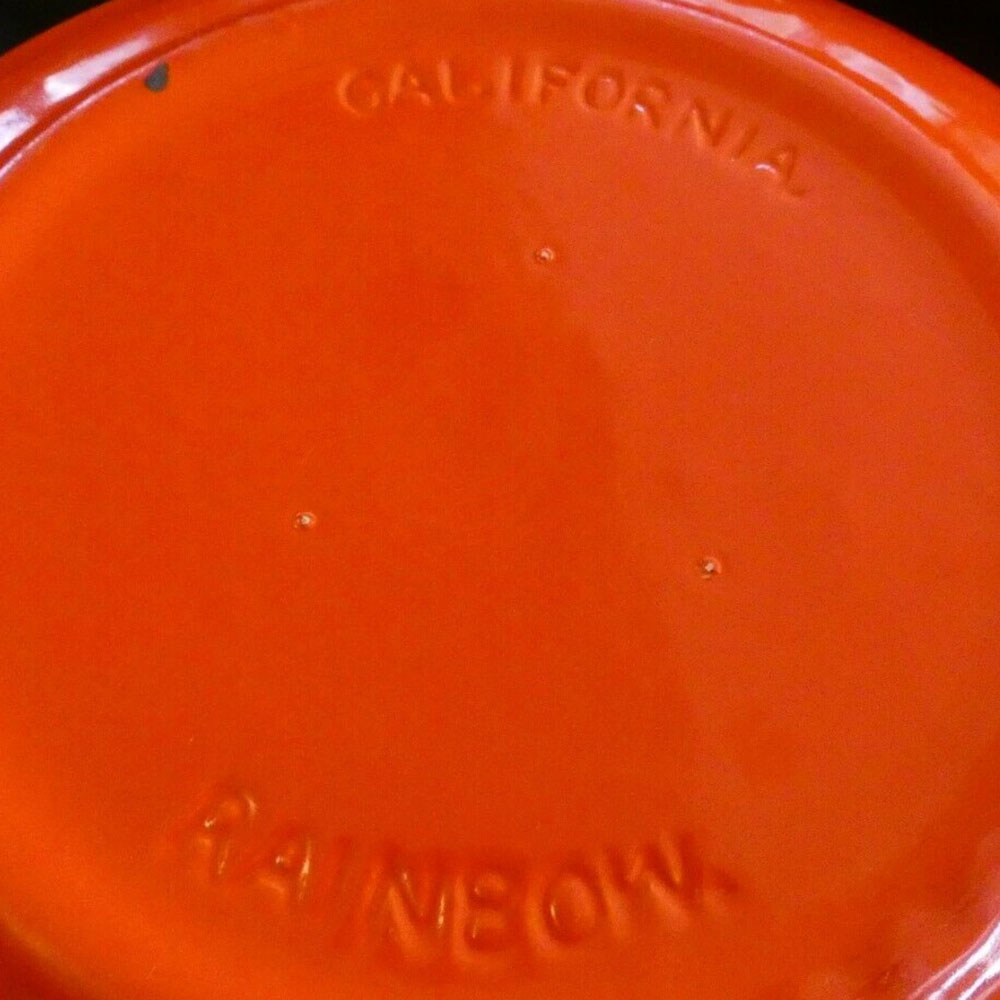
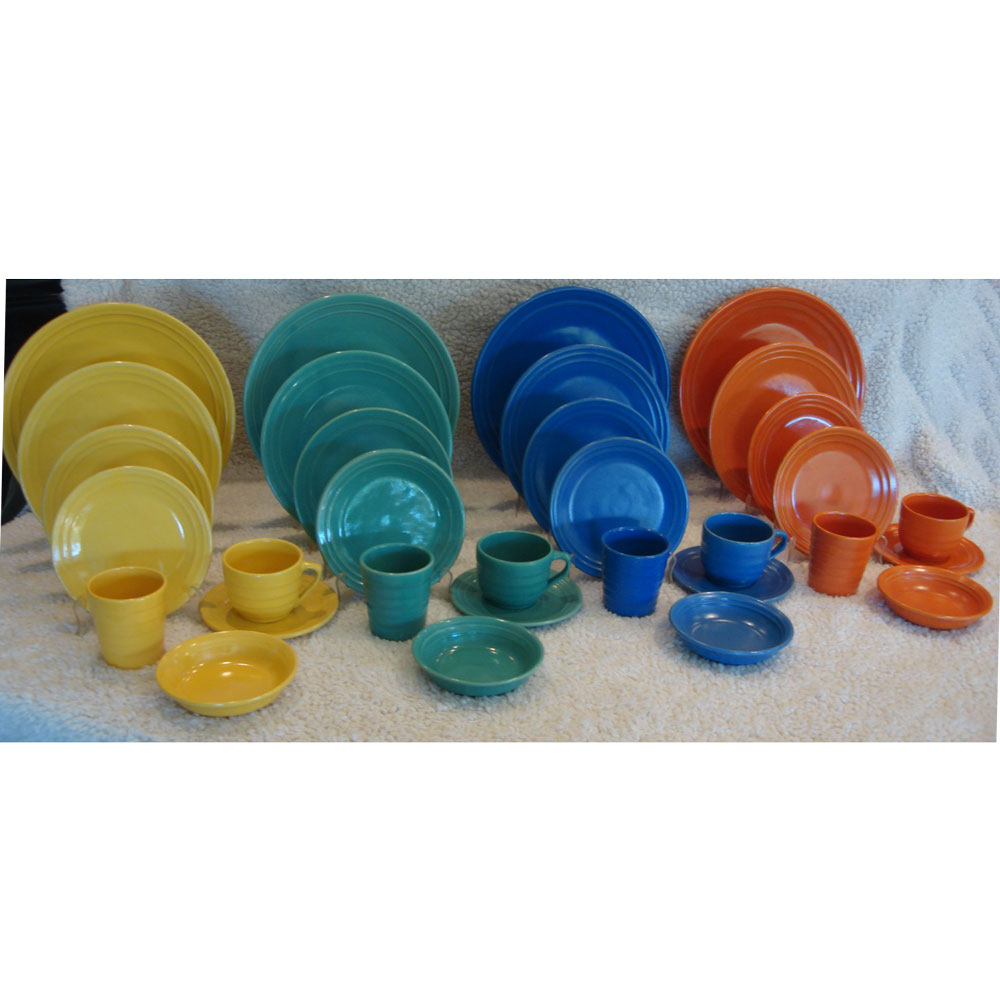
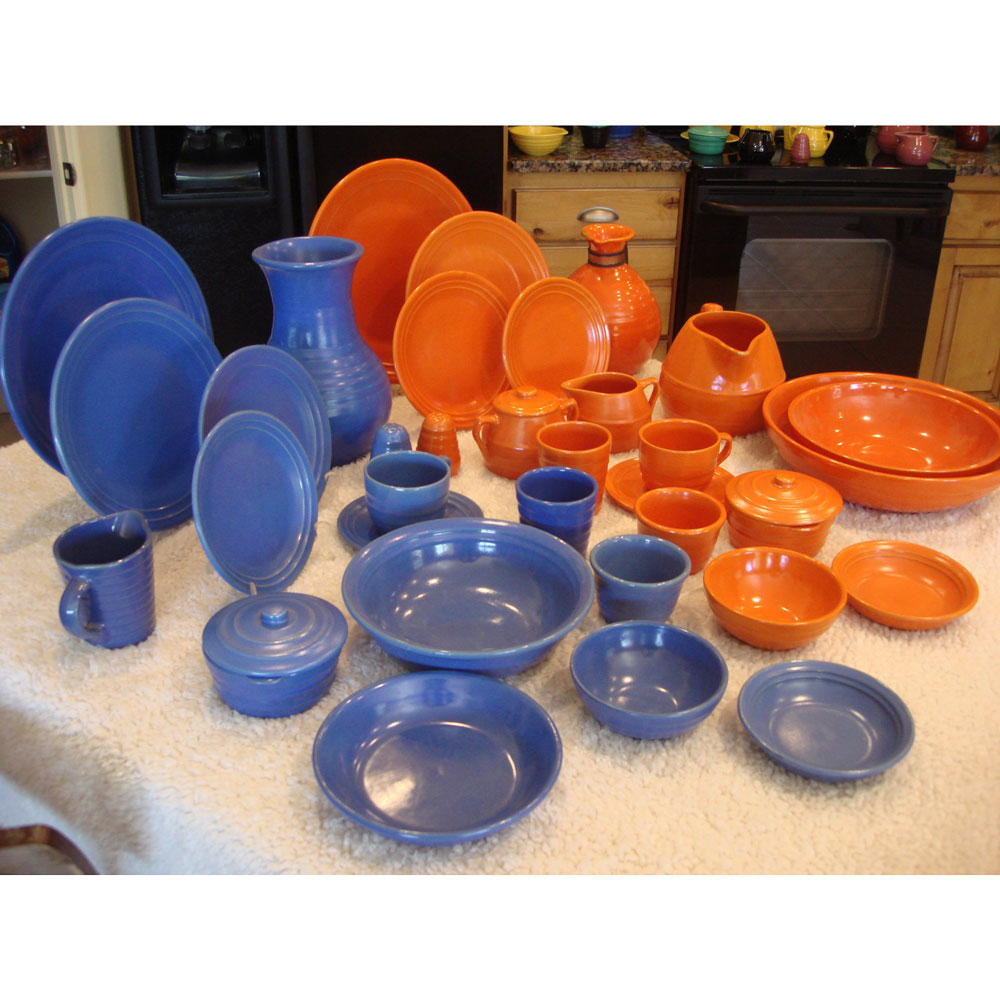
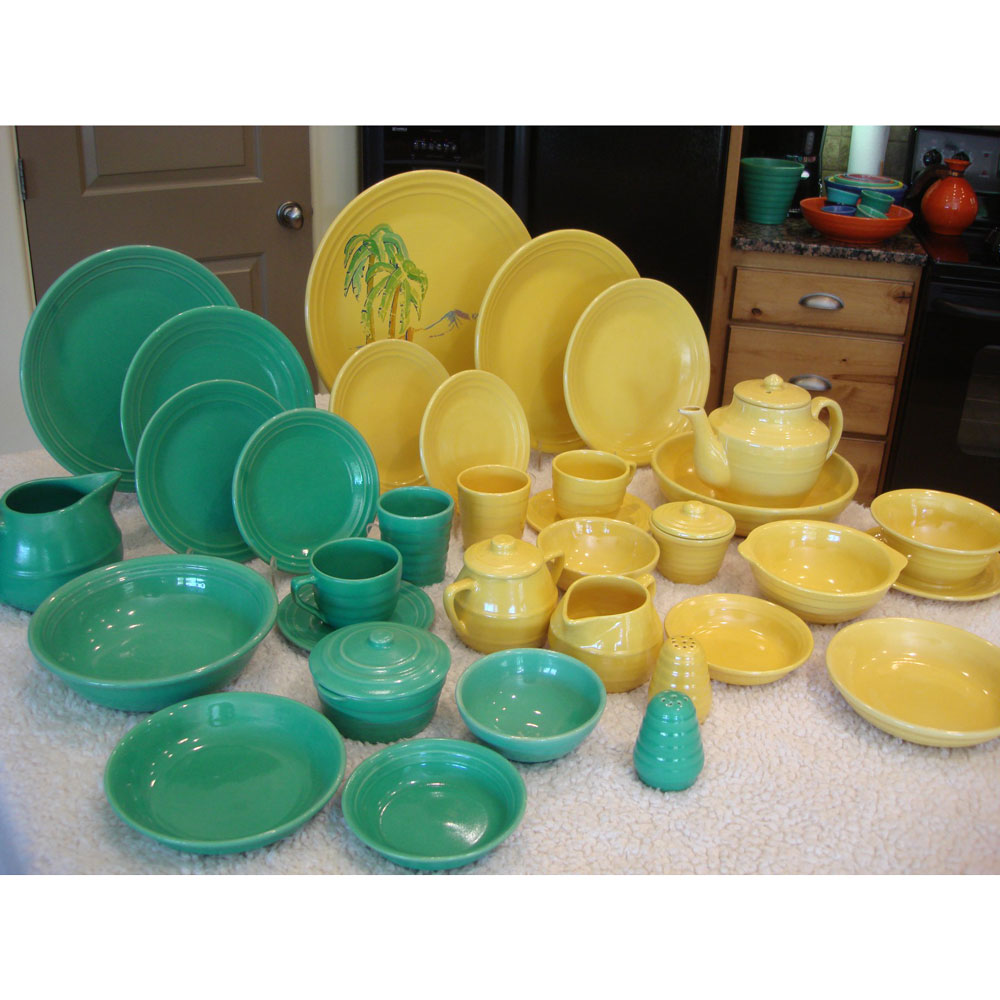
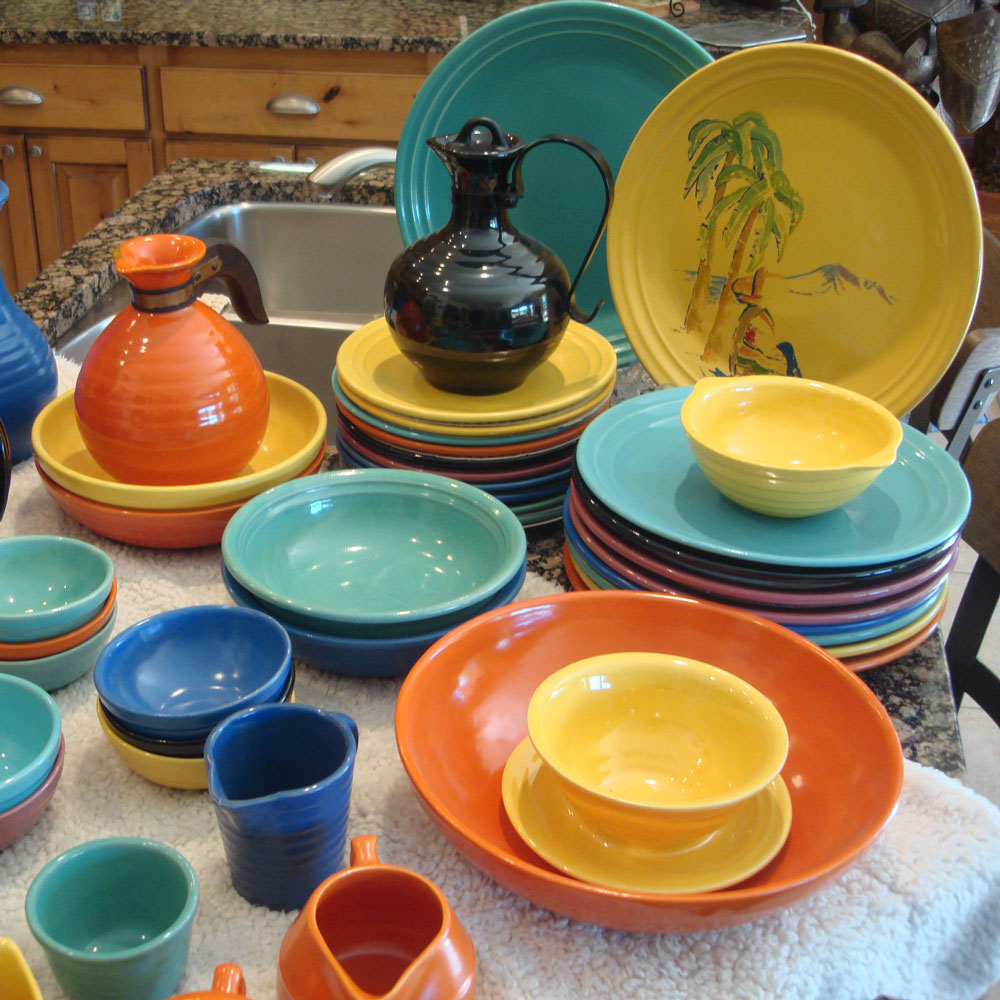
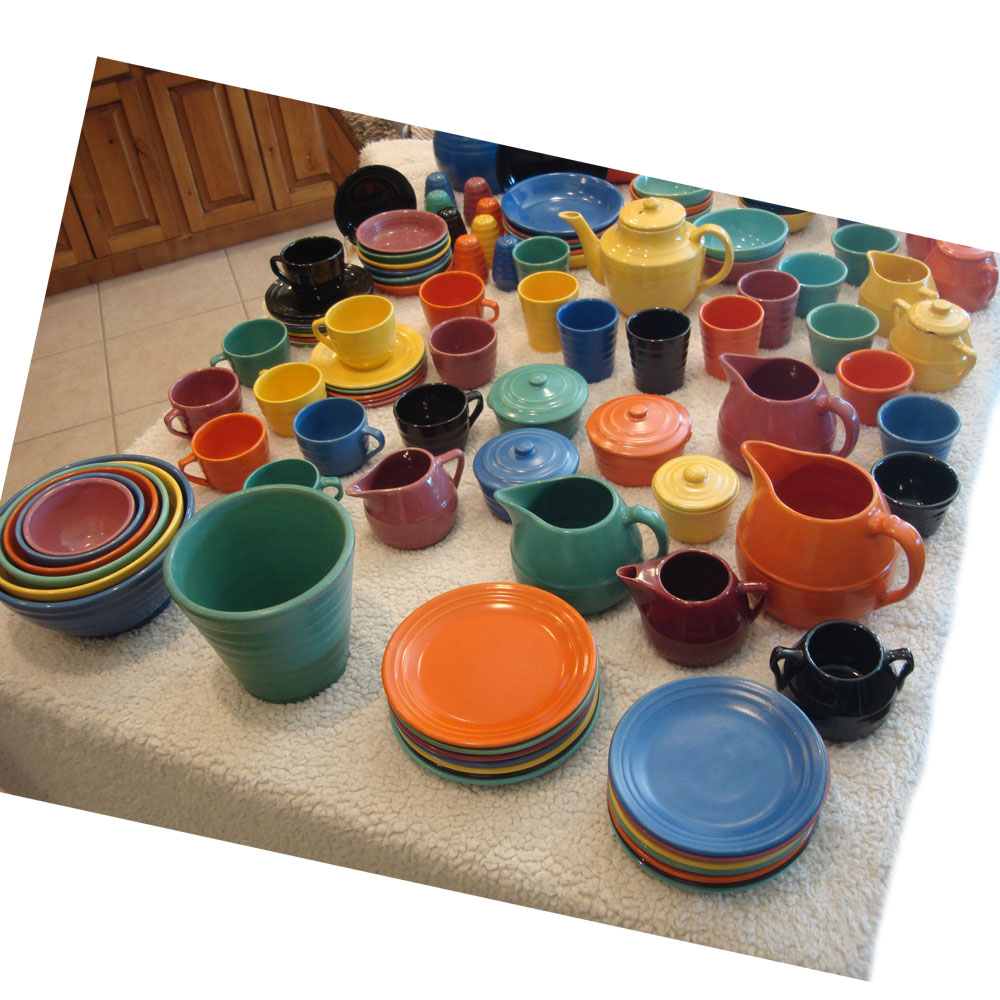
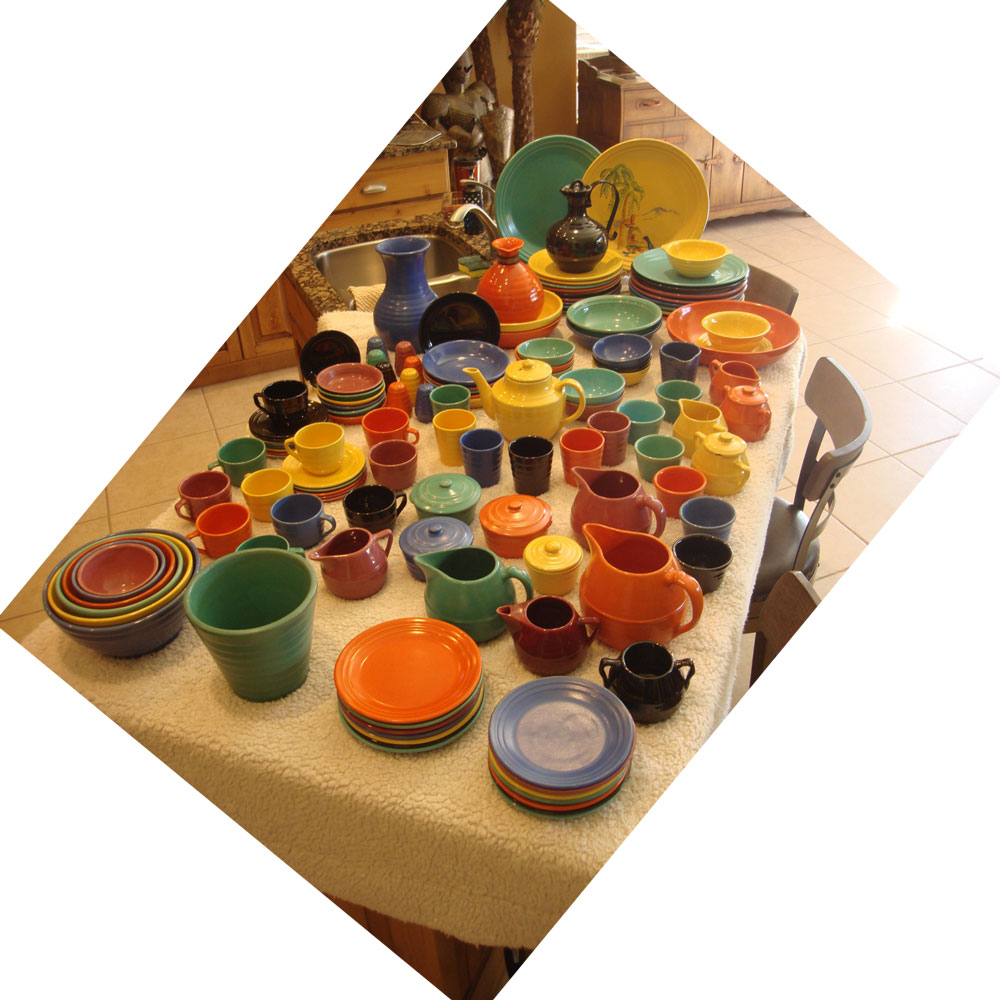
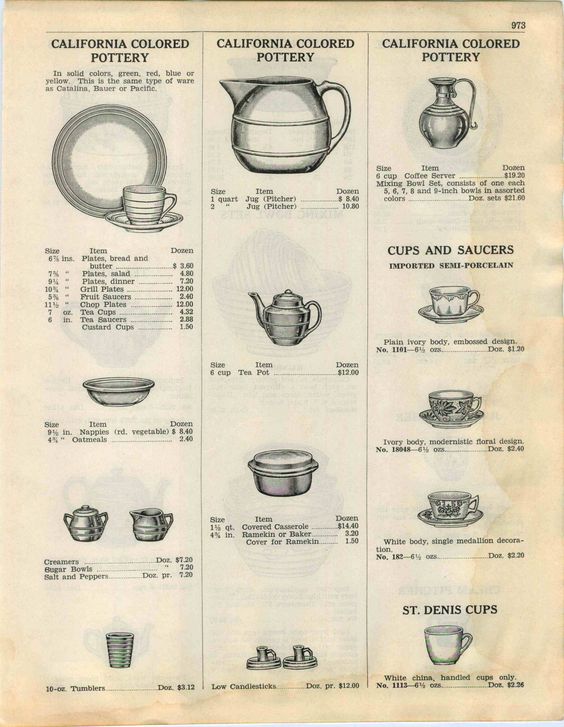
Its best-known dinnerware line was California Rainbow, a solid-color tableware line that borrowed heavily from the broader design vocabulary established by larger California potteries such as Pacific and Bauer. The forms are simple, useful, and familiar: plates, bowls, serving pieces, and carafes in saturated glazes, with just enough molded or banded detail to place them firmly in the 1930s colorware market. The California Rainbow mark is usually easiest to find on larger pieces, especially plates, though it can be faint or partly obscured by glaze. Many smaller and serving pieces are unmarked, which has made identification difficult and probably contributes to misattribution.
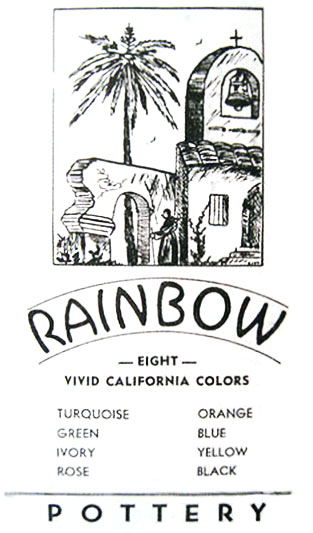
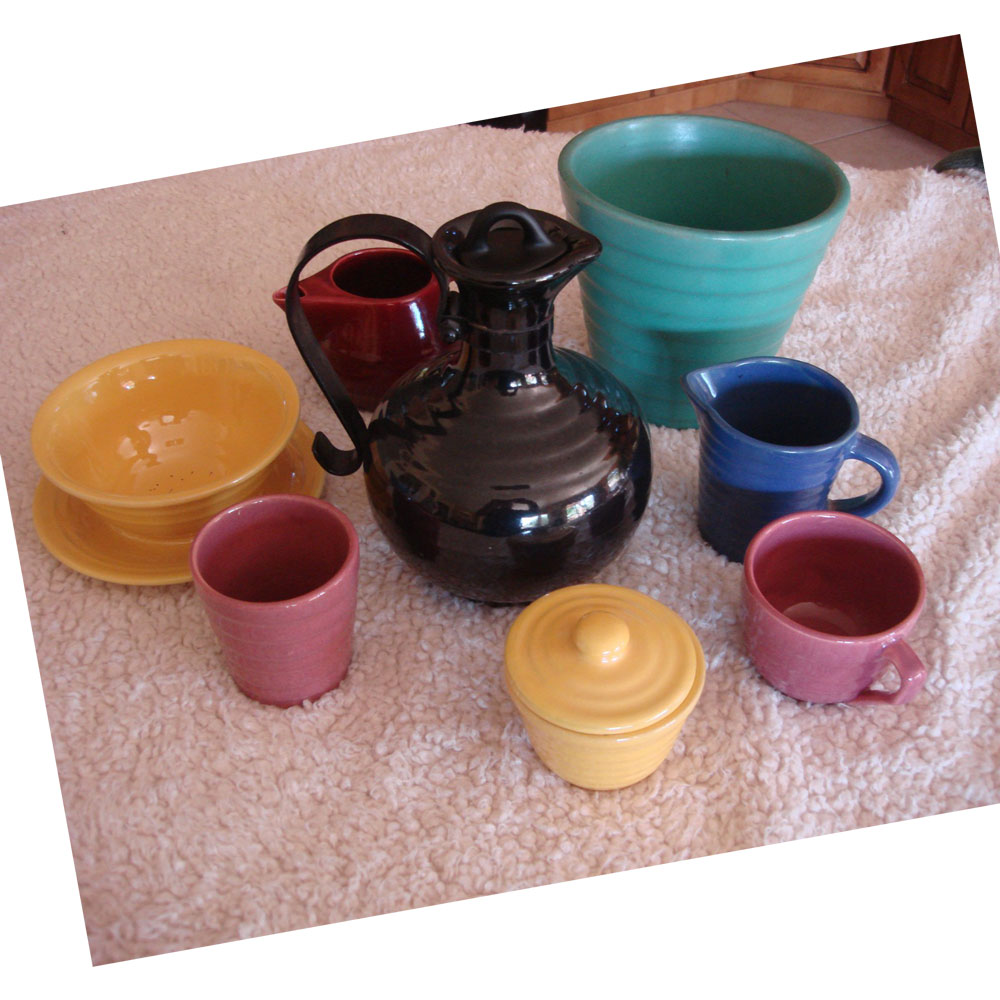
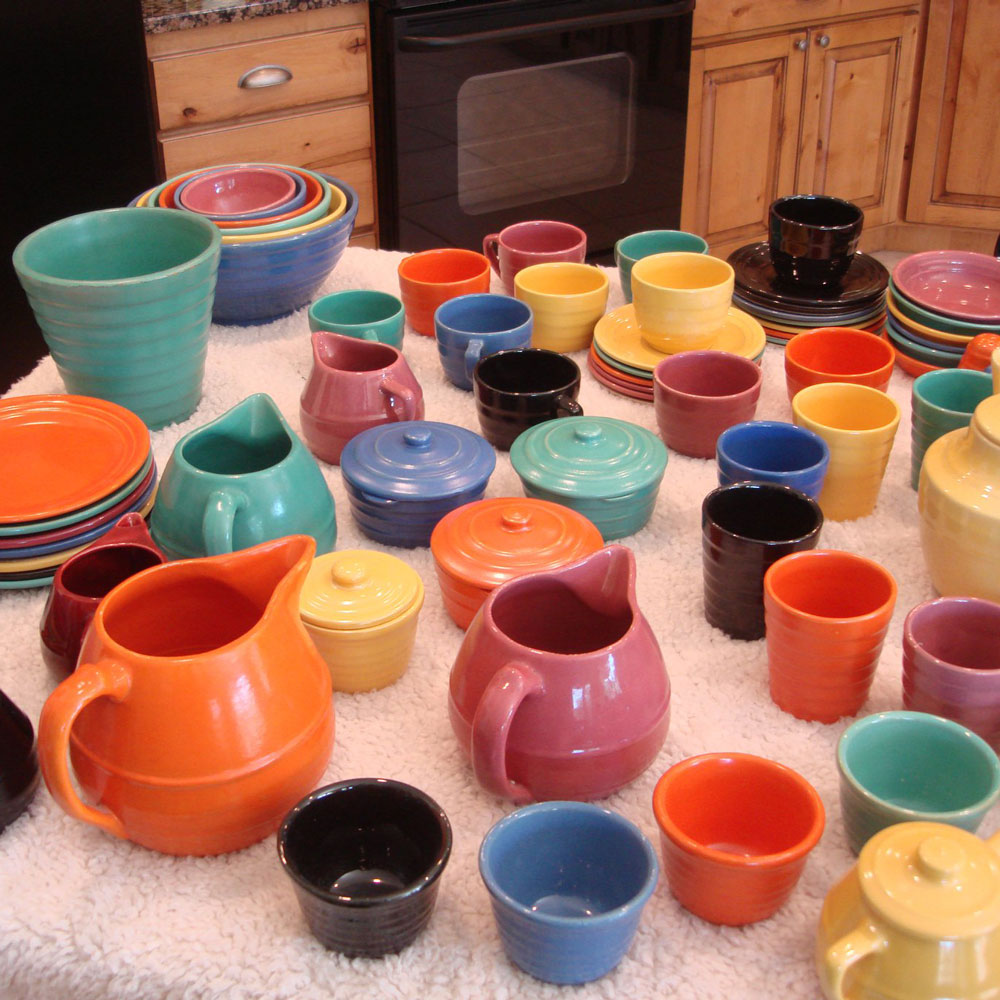
California Rainbow appears in at least eight colors: turquoise, green, ivory, rose, orange, blue, yellow, and black, with both gloss and matte finishes found. The line is scarce today, and putting together a set is not easy. Plates surface occasionally, as do the two carafe forms, but many of the standard table pieces are much harder to find. In my own collection, I have only a handful of pieces, which is about how collecting this line tends to go: a plate here, a carafe there, and long gaps in between.
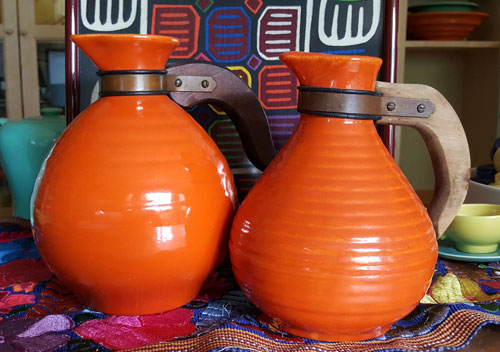
The carafes are among the most recognizable pieces. Meyer produced both a tall and a short version, with the tall carafe found with either a metal or wooden handle. Lids may have been optional, fragile, easily separated, or all of the above; in any case, they are difficult to find today. An almost identical tall carafe was also produced by Paden City Pottery of Paden City, West Virginia, for its Caliente dinnerware line, though the Caliente version typically has a Bakelite handle. The similarity is striking and points to the way successful shapes circulated well beyond a single factory or region.
Meyer’s California Rainbow is not a groundbreaking line in the way Bauer ringware or Pacific Hostessware can be considered groundbreaking. Its interest lies somewhere else. It shows how smaller potteries participated in the colorware craze, translating popular forms and colors into affordable everyday pottery for a market that wanted bright, informal dinnerware. The company left behind very little paper history, but the surviving pieces are a useful reminder that California pottery was not only made by the big names. It was also made by smaller manufacturers working quickly, borrowing freely, and producing cheerful, practical pottery for the modern table.
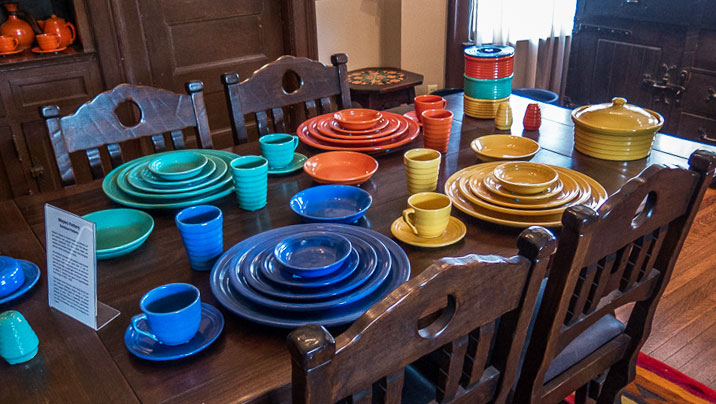
There is a significant collection of California Rainbow available for view in the California Heritage Museum in Santa Monica, California.