



Padre Pottery: From Lincoln Heights to Lost History
During the height of the California pottery boom in the 1930s, the Los Angeles area was crowded with manufacturers producing colored dinnerware, kitchenware, garden pottery, tile, and artware. Some were large, well-capitalized companies with national distribution. Others were small, short-lived shops that left behind very little paper history. Padre Pottery belongs to the second group. The company operated in Los Angeles, generally associated with the Lincoln Heights district, from the mid-1930s until the early 1940s. Its location placed it close to other important clay and pottery businesses, including Pacific Clay Products and Bauer Pottery.
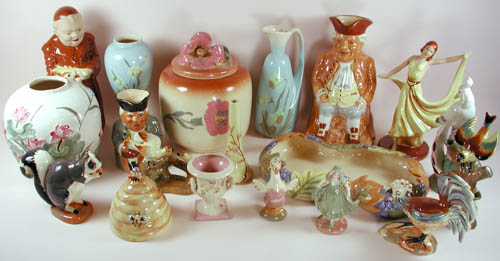
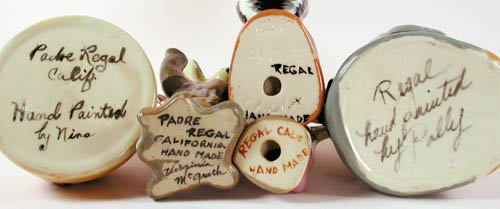
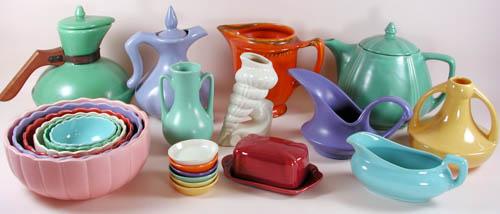
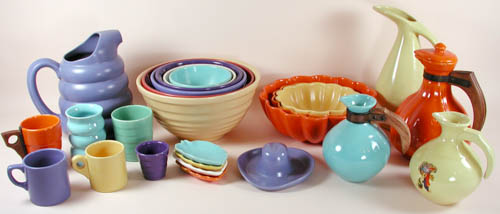
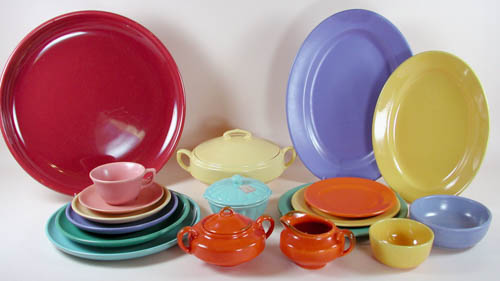
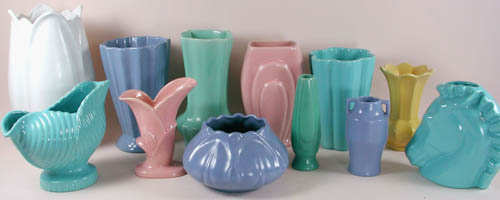
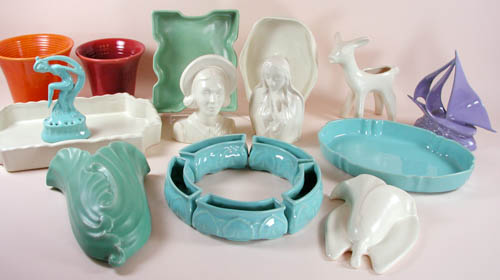
Very little is known about Padre’s ownership or internal history, but the surviving pottery shows a surprisingly broad product range. Padre made solid-color tableware and kitchenware, including bowls, plates, pitchers, carafes, teapots, and serving pieces. It also produced artware, garden pottery, figural pieces, and hand-painted decorative lines. Some pieces sit firmly in the California colorware tradition, with bright glazes and useful everyday forms that invite comparison to Bauer, Pacific, and other better-known manufacturers. Other pieces are more individual, especially the Art Deco vases, animal forms, and hand-painted “Regal” wares.
Padre is sometimes dismissed as a copycat pottery, and some of its dinnerware forms do follow the broader market. That was not unusual. Smaller California potteries often borrowed freely from successful shapes, glazes, and retail trends. But Padre’s surviving output is more varied than that label suggests. The company seems to have moved easily between practical kitchen pottery and decorative artware, producing pieces that were affordable, colorful, and occasionally quite distinctive.
A large fire reportedly destroyed much of Padre’s manufacturing facility around 1942 or 1943, and the company does not appear to have rebuilt. The timing was especially difficult. By then, wartime restrictions and material shortages had already reduced civilian pottery production, and many manufacturers had shifted toward utility wares or war-related production where they could. For a smaller pottery like Padre, a major fire at that moment may have been impossible to overcome. By the mid-1940s, the company had disappeared, leaving behind a scattered but interesting body of work.
Padre’s history is thin, but the pottery itself tells a useful story. It represents the crowded, experimental underside of the California pottery boom: small manufacturers working near the big firms, responding quickly to fashion, borrowing when it made commercial sense, and producing a mix of everyday and decorative wares for a market that wanted color, informality, and modern style. Its pieces are not always easy to identify, but they are a reminder that the California pottery story was much broader than the famous names.
Padre Dinnerware
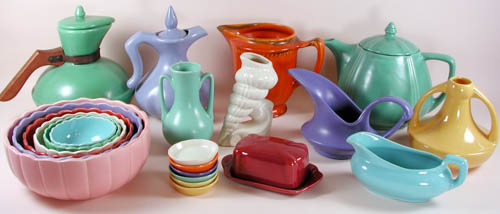
Padre Pottery is really random! Collectors will find a mix of different shapes, styles, colors and glazes in their dinnerware line.
Photos courtesy of Steve Beals.
Padre Artware
Photos courtesy of Steve Beals.
Padre Regal Artware
Photos courtesy of Steve Beals.