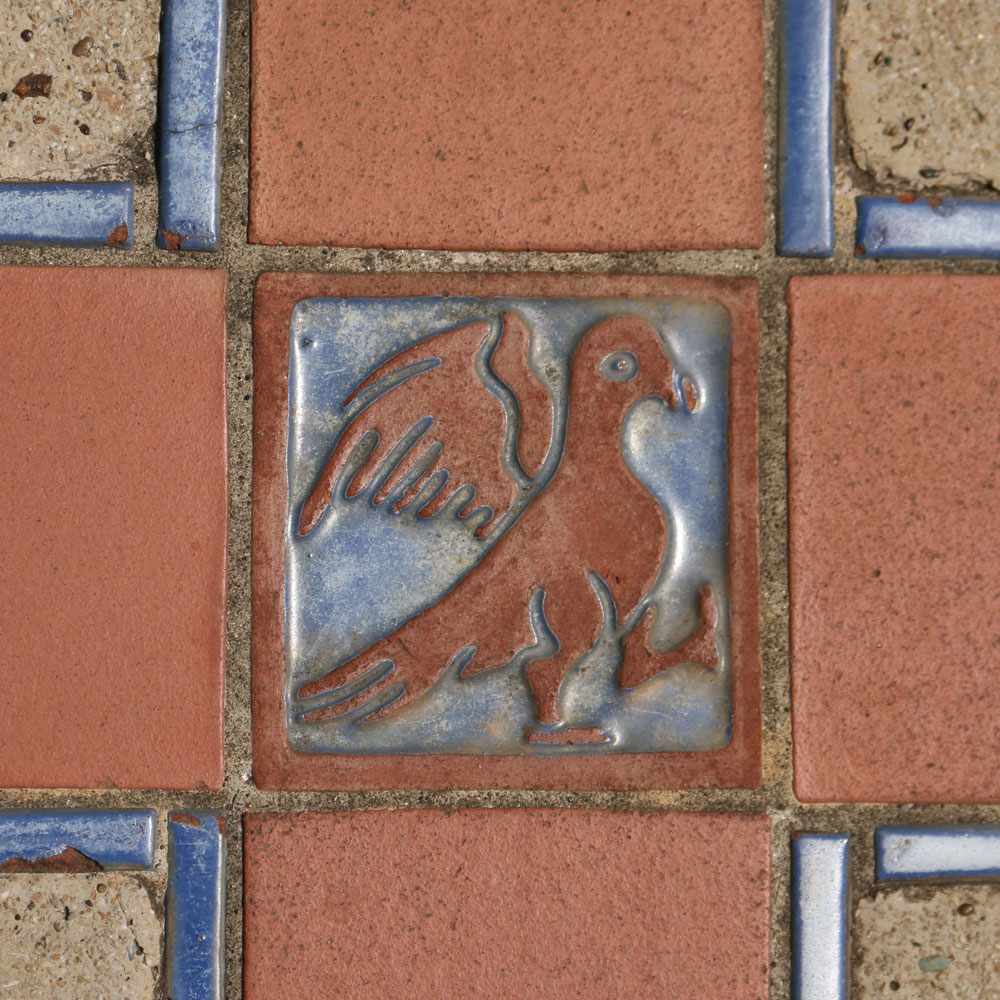




California Faience at Hearst Castle
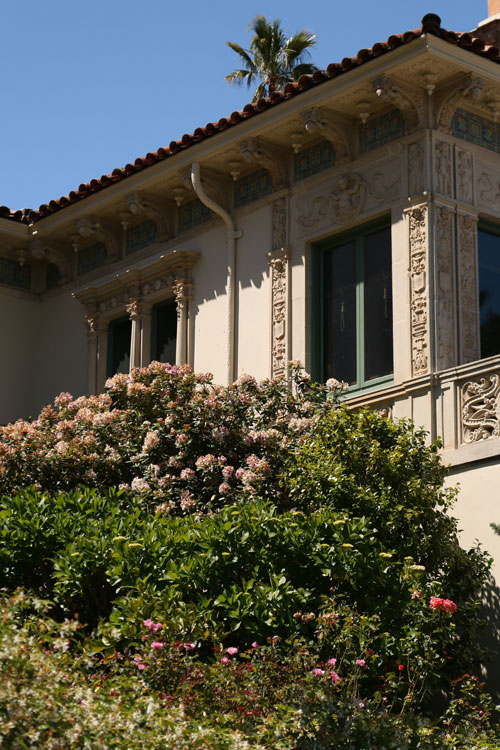
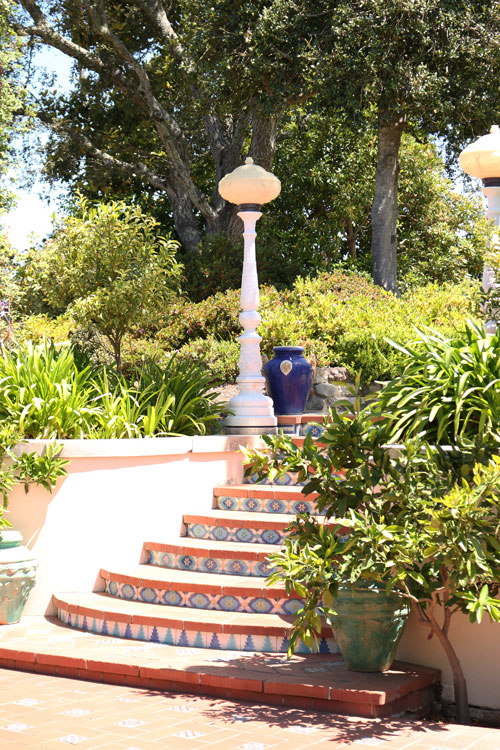
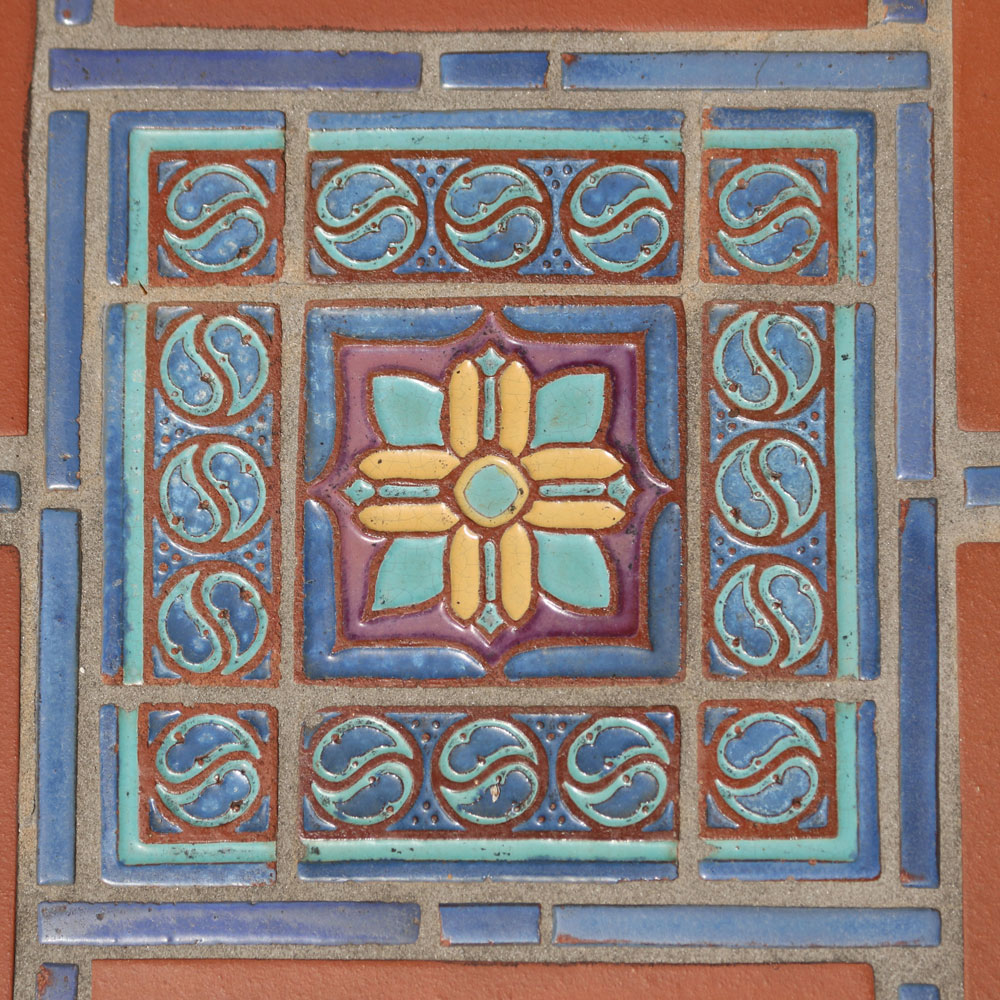
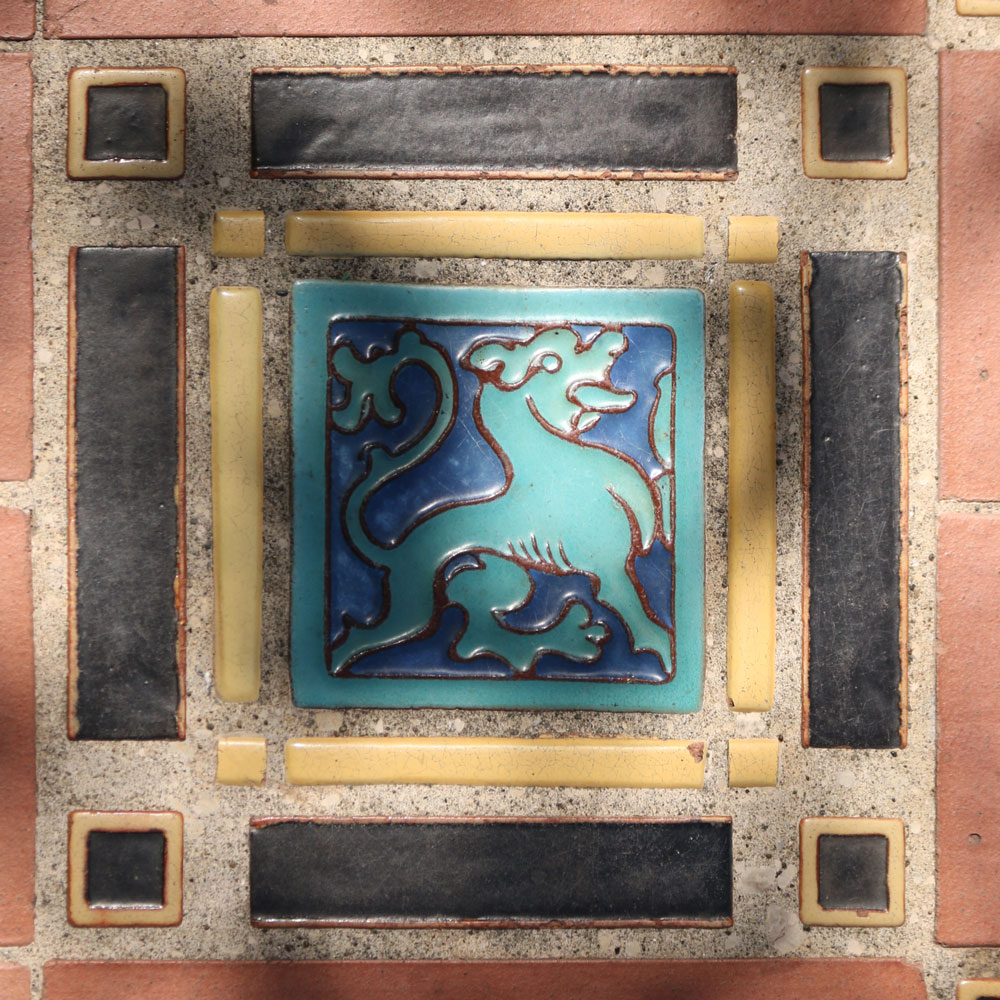
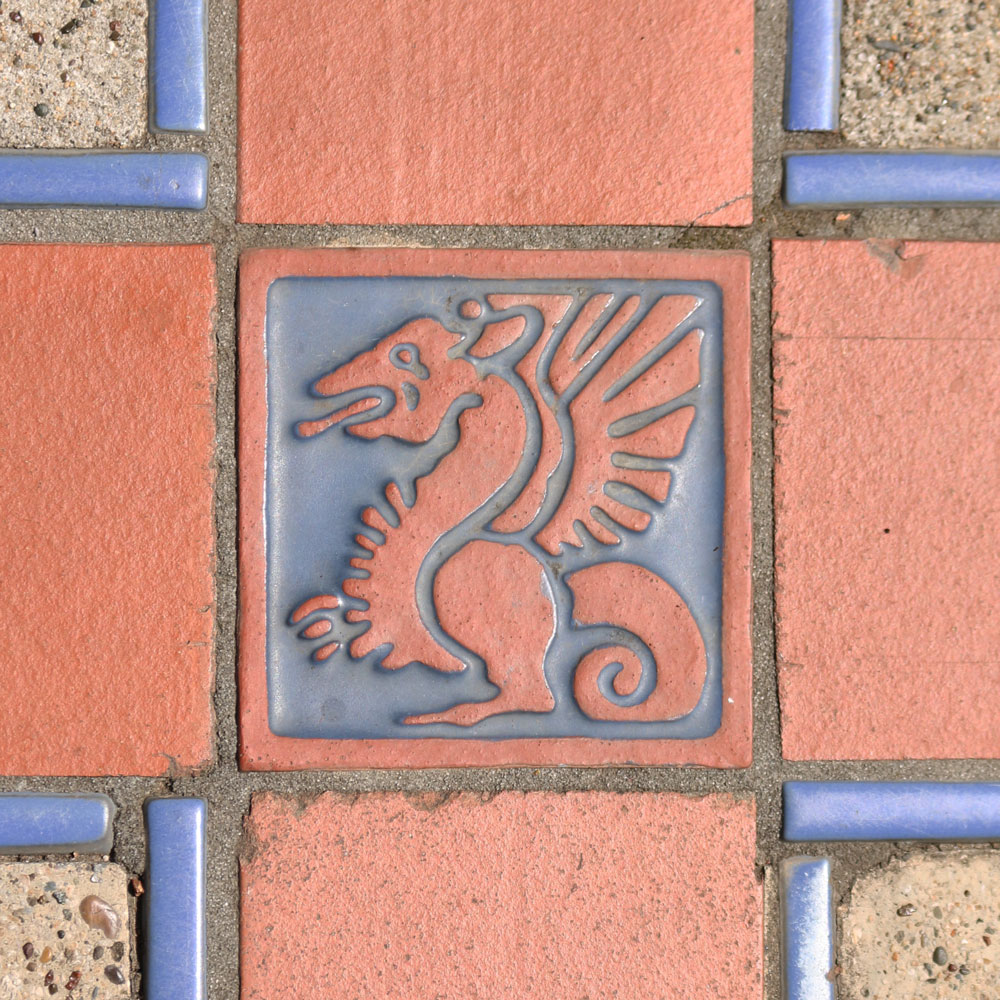
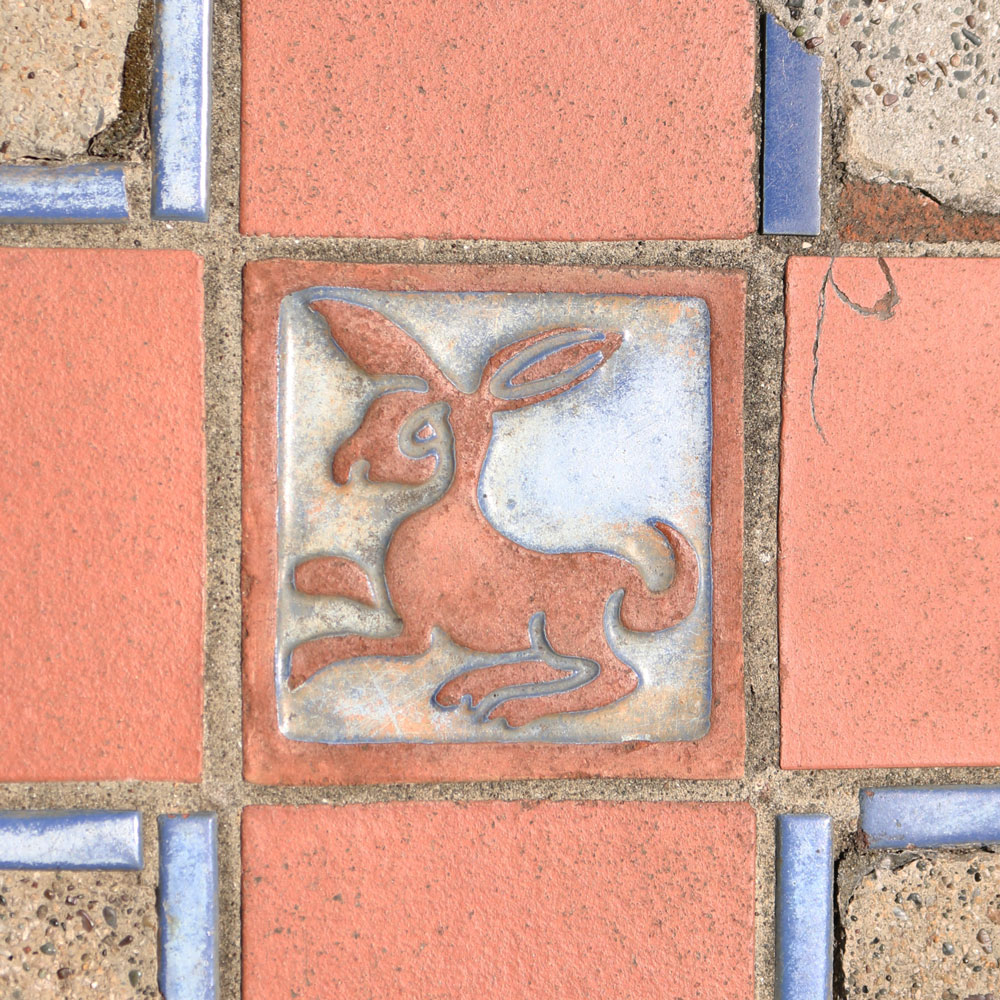
Hearst Castle is usually remembered for its scale: the towers, terraces, pools, antiques, and almost theatrical layering of European, Mediterranean, and Californian references. But some of its most revealing details are much smaller. Scattered across stair risers, thresholds, exterior walls, walkways, and garden areas are tiles produced by California Faience, the Berkeley pottery and tile company that became one of the defining makers of California architectural ceramics in the 1920s.
Founded by Chauncey Thomas as The Tile Shop in Berkeley and later known as California Faience, the company specialized in richly glazed decorative tiles, vessels, and architectural ceramics. Its work was especially well suited to the Spanish Colonial Revival and Mediterranean-influenced architecture that shaped much of early twentieth-century California design. At San Simeon, architect Julia Morgan used California Faience tile as part of the broader decorative program for William Randolph Hearst’s hilltop estate, which he began building in 1919 and called “La Cuesta Encantada,” or The Enchanted Hill.
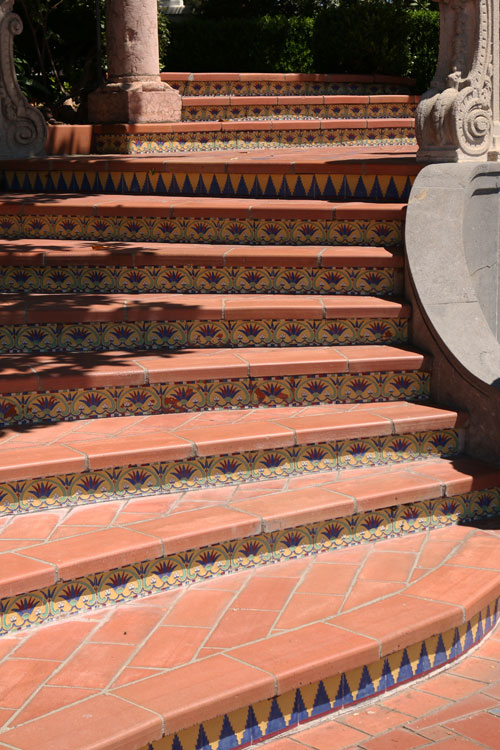
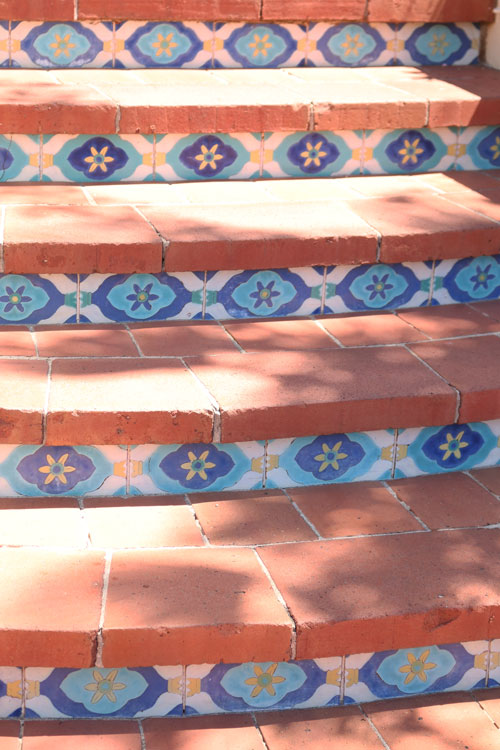
The Hearst commission appears to have been one of California Faience’s most important architectural projects. Sources describe Morgan’s relationship with the company as beginning around 1921, with California Faience producing tiles for the exterior of the buildings and other decorative settings at the estate. The tiles ranged from plain field tile to more elaborate designs, often using brilliant color, medieval and Spanish-inspired motifs, animals, figures, foliage, and geometric borders.
What makes the tile work at Hearst Castle so compelling is that it does not function only as surface decoration. It helps connect the estate to California itself. Hearst imported art and architectural fragments from Europe, but California Faience brought in a regional craft language: handmade, locally produced, color-saturated, and deeply tied to the California Arts and Crafts and Spanish Revival movements. The result is a layered visual experience where imported grandeur meets local material culture.
In many ways, the California Faience tiles are among the most human details at San Simeon. They are not as grand as the Neptune Pool or as famous as the Roman Pool mosaics, but they reward close looking. Their glazes shift in the light, their patterns carry the slight variations of hand production, and their placement often turns ordinary architectural moments into small decorative events. At Hearst Castle, California Faience helped make the “castle” feel less like a copy of Europe and more like a distinctly Californian fantasy.