




Designer for Hire: American Modern in the 1930s
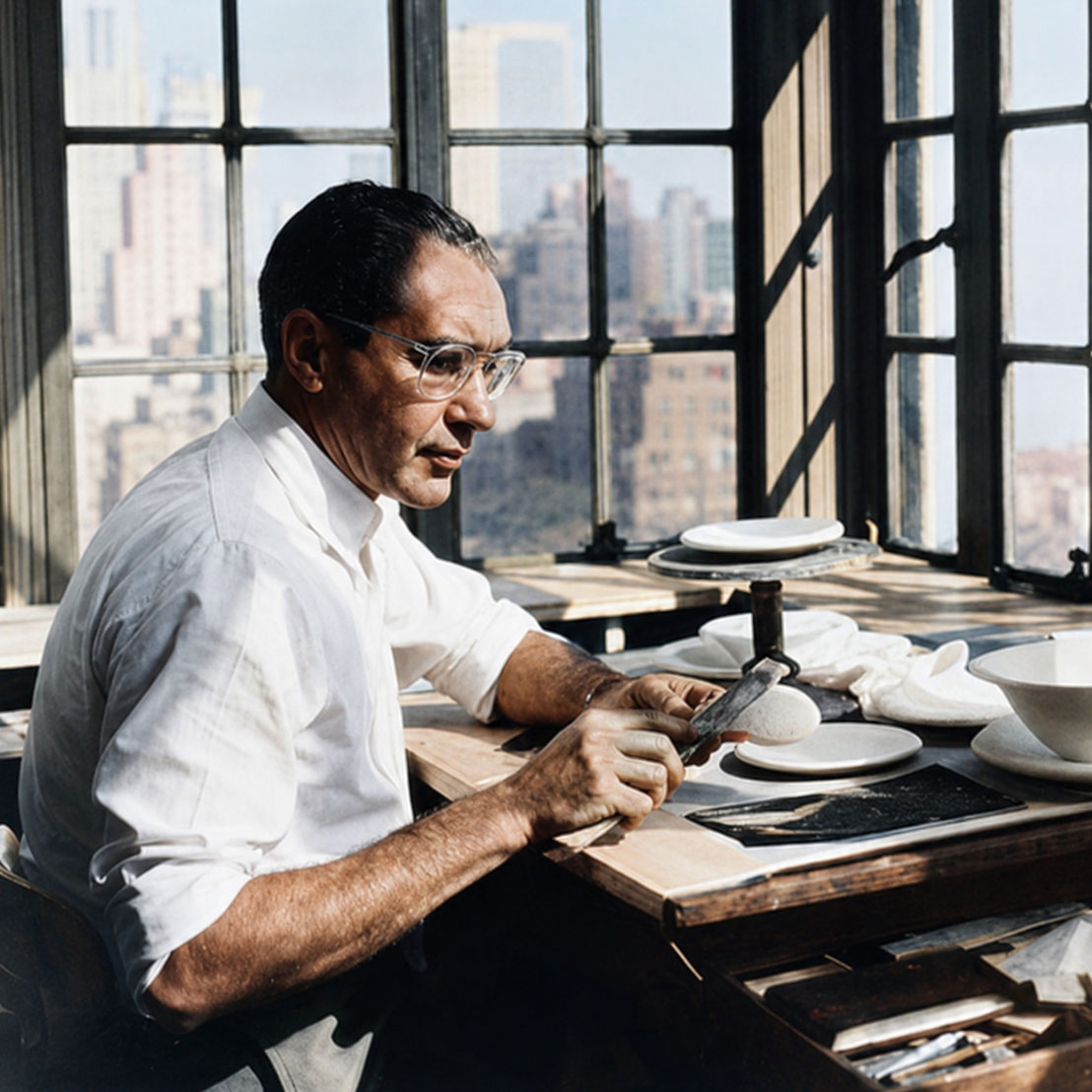


In the 1930s, a number of established American furniture manufacturers began turning to outside or named designers to help modernize their product lines. Many of these companies had long histories in traditional furniture, including Colonial Revival, European revival styles, and solid wood case goods. By the middle of the decade, they were responding to changing taste, new retail expectations, and a growing market for furniture that looked modern but still felt usable in ordinary American homes.
For much of the early twentieth century, furniture companies sold products based on historical styles. A bedroom suite, dining room set, or occasional table might be described in relation to Colonial, Georgian, French, Spanish, or other revival sources. These styles remained commercially important, but they no longer represented the full direction of the market. Modern design was becoming more visible through architecture, interiors, department stores, exhibitions, advertising, and household products. Manufacturers that had built their reputations on traditional forms began looking for ways to offer something new.
One answer was to hire external designers who could give a new furniture line a modern identity. The designer’s name could be used in advertising, labels, catalogs, and showroom presentations. It helped distinguish one company’s modern furniture from another’s, especially when manufacturers were often competing through the same department stores, showrooms, and retail channels.
Designers also helped bridge the gap between European modernism and the American mass market. Most manufacturers were not trying to sell severe, experimental, or avant-garde furniture to the average household. They were producing familiar furniture categories but updating them with cleaner lines, less ornament, lighter woods, and a more informal feeling. The furniture looked current, but it still fit the way American consumers were used to buying and using furniture.
Gilbert Rohde provides one of the clearest examples of this new role. He is most often discussed through his work for Herman Miller, where he began working in 1930 and helped move the company away from traditional reproduction furniture toward modern design. Rohde is frequently credited with changing not only the appearance of Herman Miller furniture, but also the company’s approach to design, marketing, and production.
Rohde’s consulting career, however, was broader than Herman Miller. He also designed for other manufacturers, including Heywood-Wakefield, Troy Sunshade, Widdicomb, Kroehler, and Thonet. His career shows how designers moved across manufacturers, bringing modern design ideas into different factories, materials, and market positions.
A similar pattern appeared in Gardner, Massachusetts, one of the major centers of American furniture production. Heywood-Wakefield and Conant Ball were both located there, and both were moving toward modern furniture in the 1930s.
Heywood-Wakefield introduced modern furniture during this period with the help of Gilbert Rohde and later became especially associated with solid maple, blonde finishes, and practical domestic forms. With the launch of the Streamline Modern line around 1935, designer Leo Jiranek provided many of company’s initial modern designs.
Conant Ball followed a related path through its work with Russel Wright. Wright designed the company’s American Modern furniture line, generally dated to the mid-to-late 1930s. The line was made primarily in solid maple and included bedroom, dining room, and occasional pieces. Many examples were marked as American Modern, built by Conant Ball, and designed by Russel Wright.
These examples point to a broader manufacturing shift rather than a single-company story. Furniture makers across the country were responding to the same changes in taste, retail presentation, and household use. Many were trying to offer modern furniture without moving too far from the forms buyers already understood.
This shared context is one reason attribution can be difficult today. By the late 1930s, modern maple furniture had become visible enough in stores and advertisements that similar forms appeared across the industry, including from several North Carolina manufacturers. Some pieces borrowed the general vocabulary of the better-known designer lines without any direct connection to the named designers. A piece may suggest the style of Wright, Jiranek, Rohde, Heywood-Wakefield, or Conant Ball, but appearance alone is not enough. Labels, stamps, catalog illustrations, period advertisements, and documented examples remain the strongest evidence for connecting a piece to a specific manufacturer or designer.