



Sherman/Bertram: California Comfort Meets Modern Design
Sherman Bertram of California was one of the many Los Angeles furniture manufacturers that helped define the relaxed, modern character of postwar West Coast interiors. Although the company is far less documented today than firms such as Glenn of California or Brown Saltman, surviving advertisements, directories and labeled pieces show that Sherman Bertram was an active producer of modern upholstered furniture from at least the 1940s through the 1960s.
A 1946 trade reference described Sherman-Bertram, Inc. as a Los Angeles maker of “custom designed modern home furniture.” By the mid-1960s, the company operated a manufacturing and upholstery facility at 5401 East Slauson Boulevard, part of the large furniture-making district that developed southeast of downtown Los Angeles. The company also maintained a showroom in San Francisco’s furniture market during the 1950s and 1960s.
Sherman Bertram promoted its furniture as distinctly Californian. One period advertisement described a new approach to furniture that was neither visually heavy nor overly delicate, but generously scaled for comfort while remaining pleasing to the eye. That balance suited the increasingly informal way Americans used their homes after World War II. Living rooms became places for conversation, entertaining and television rather than formal rooms reserved for special occasions.
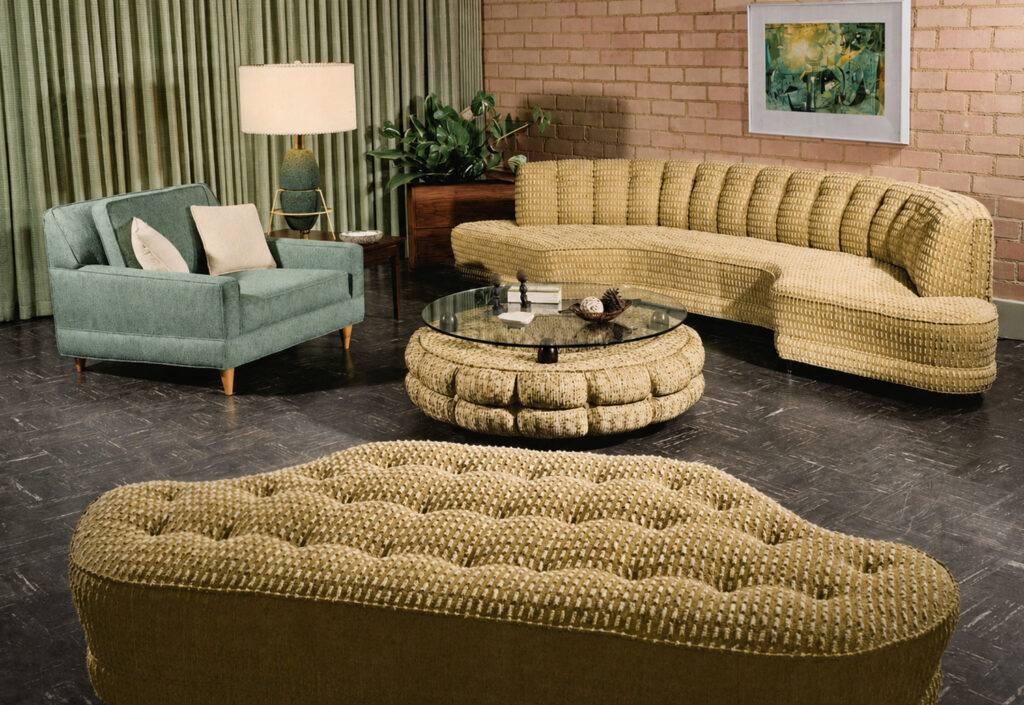
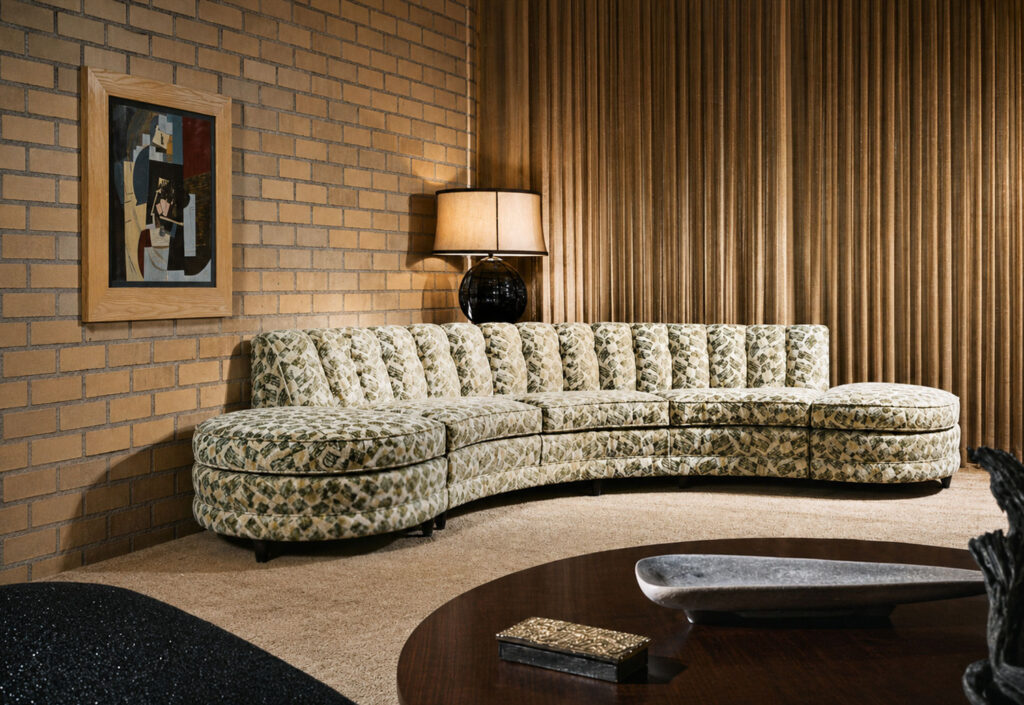
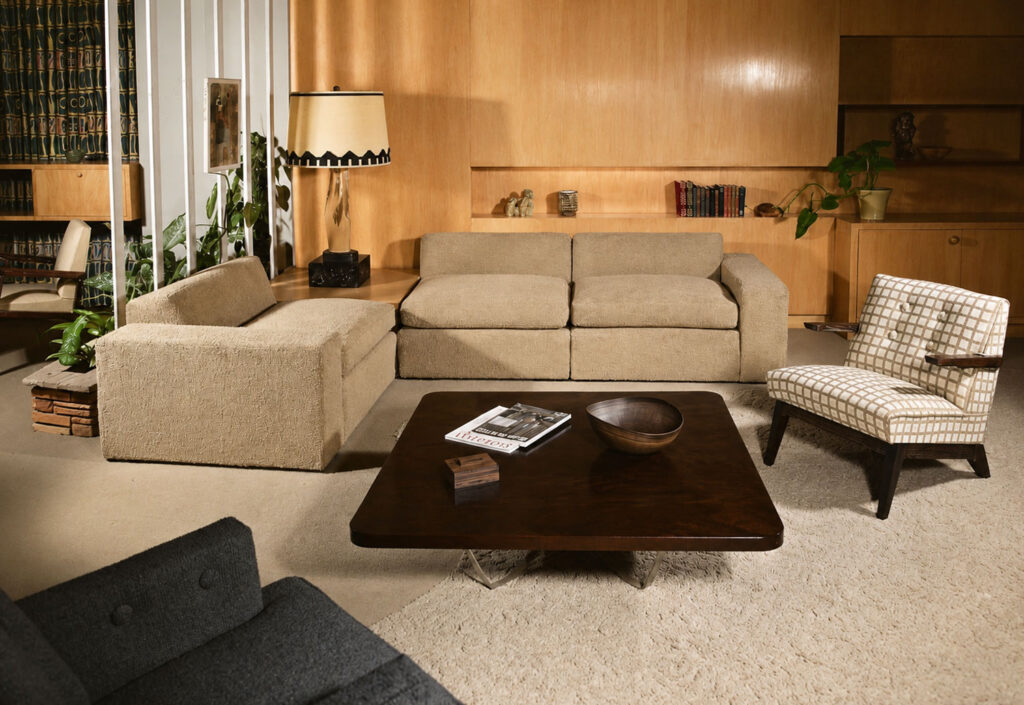
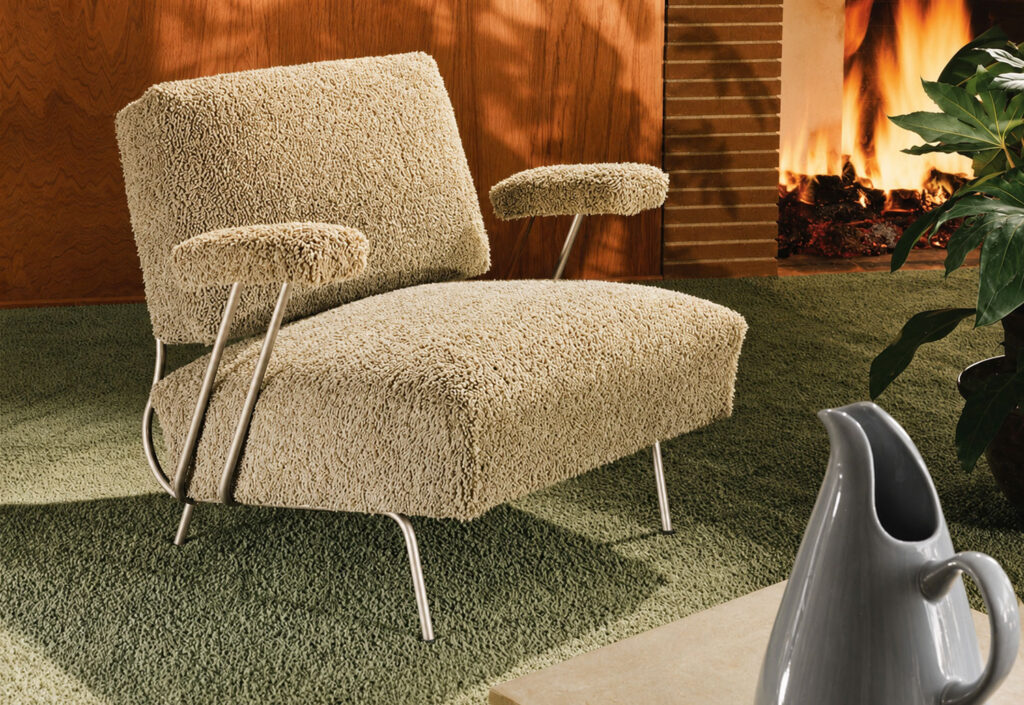
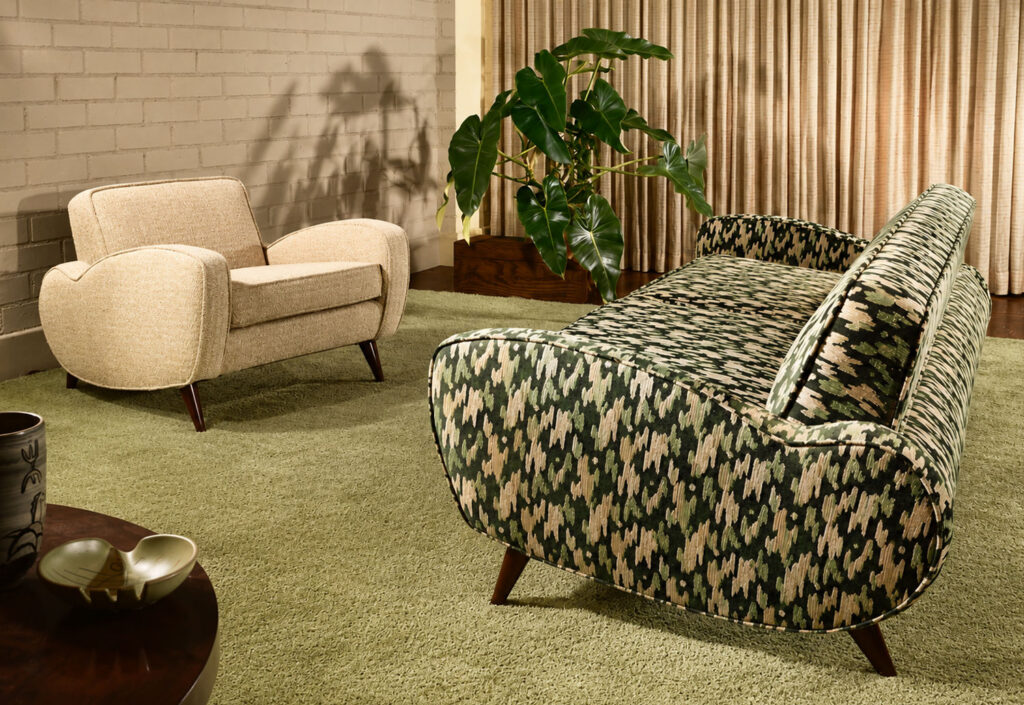
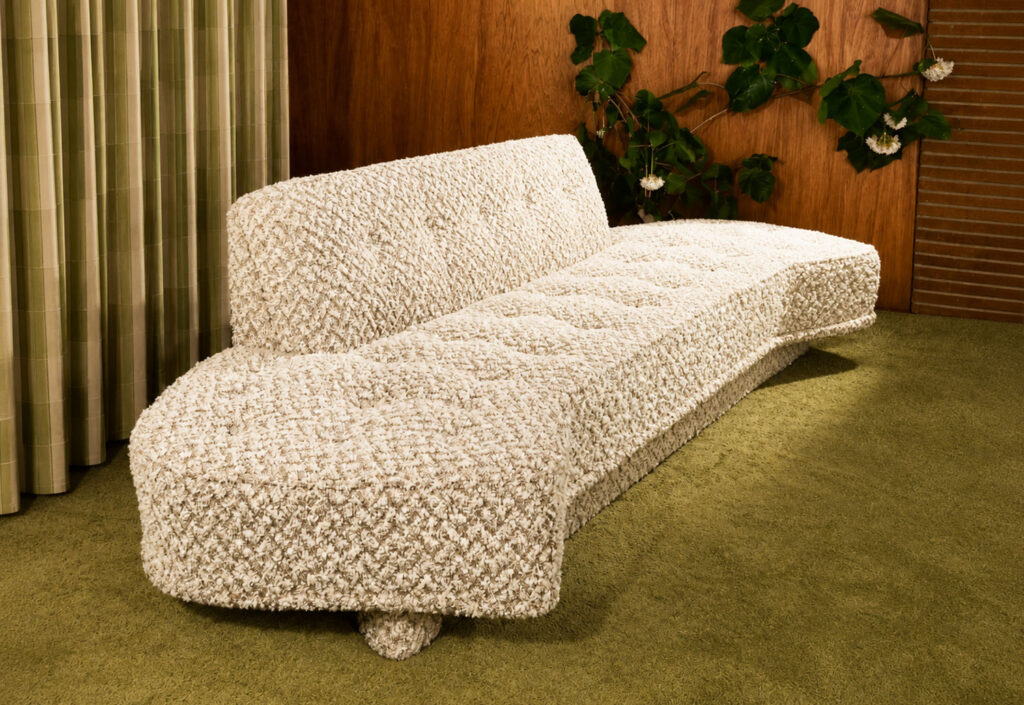
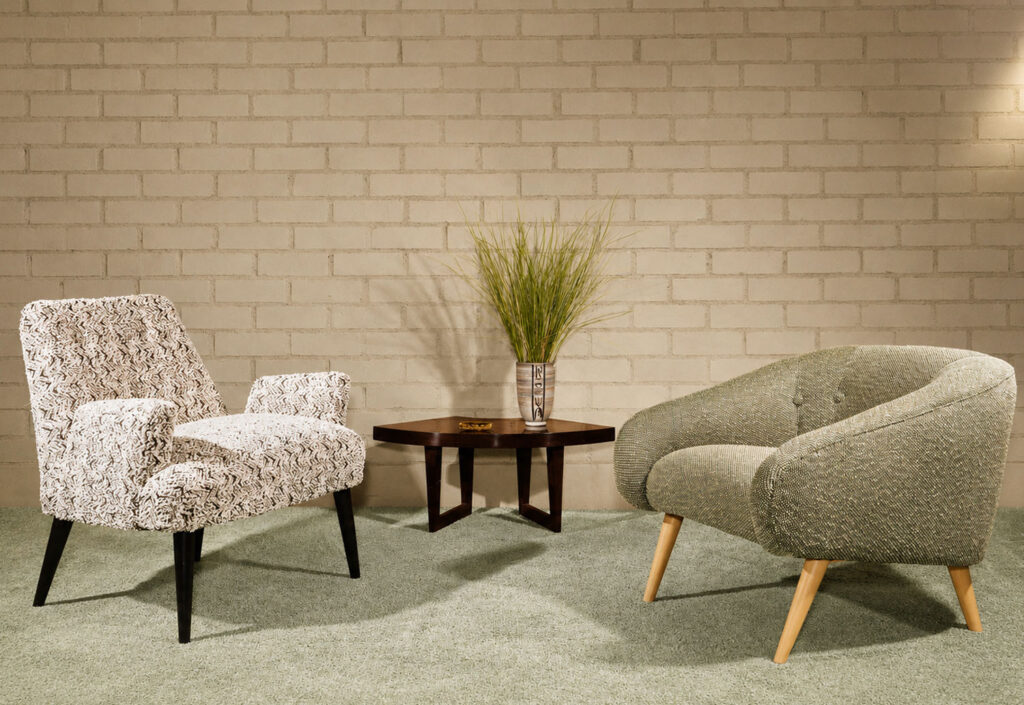
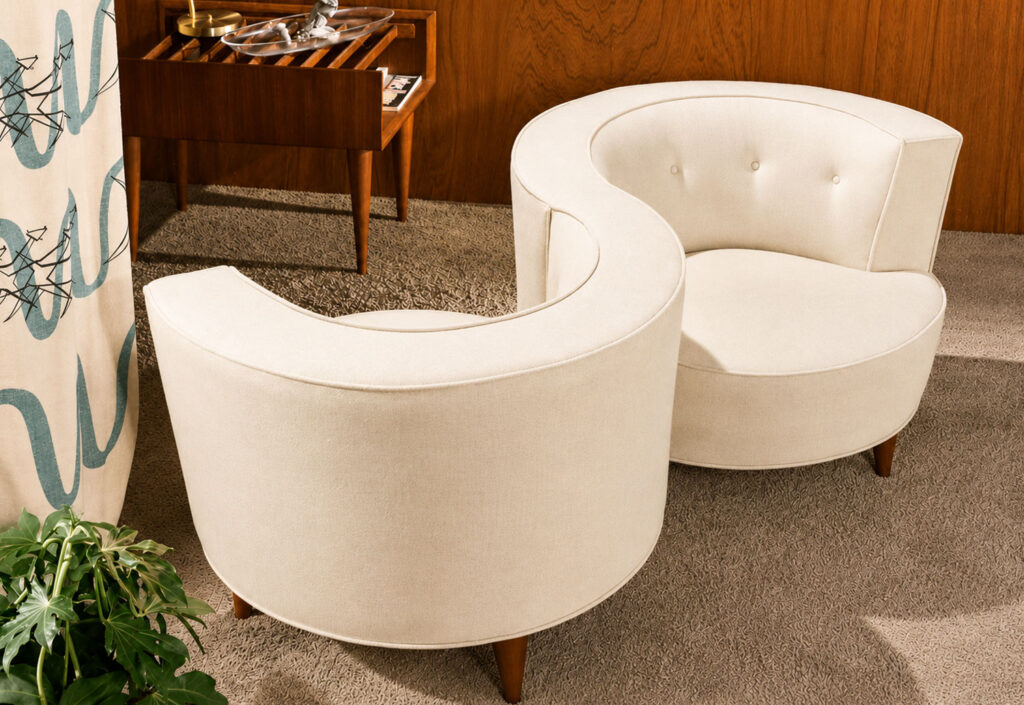
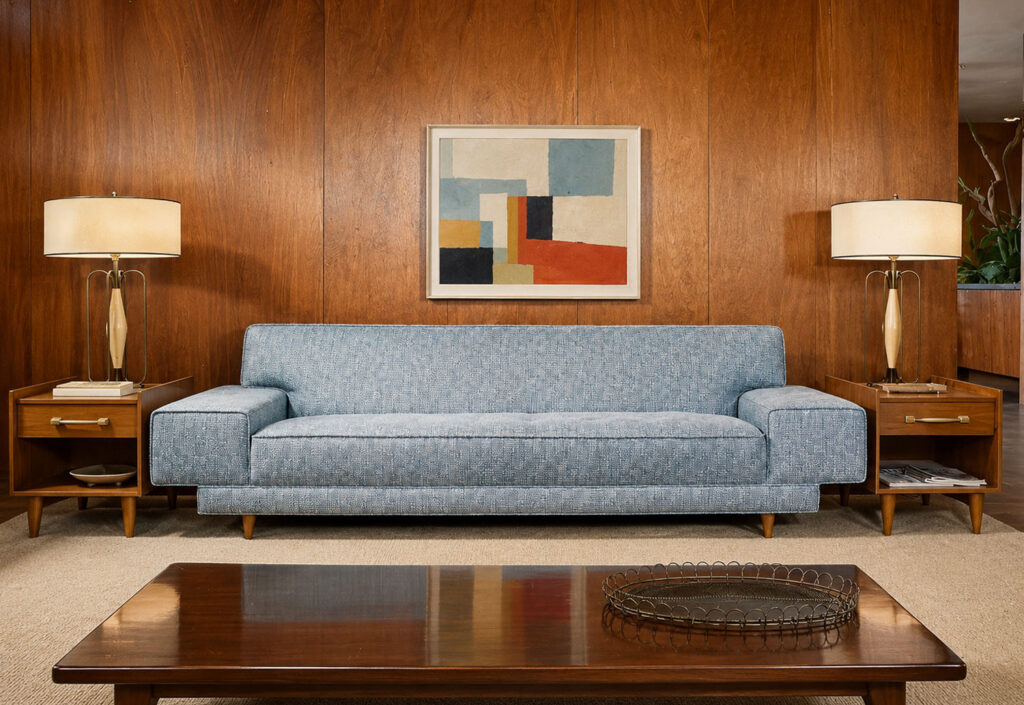
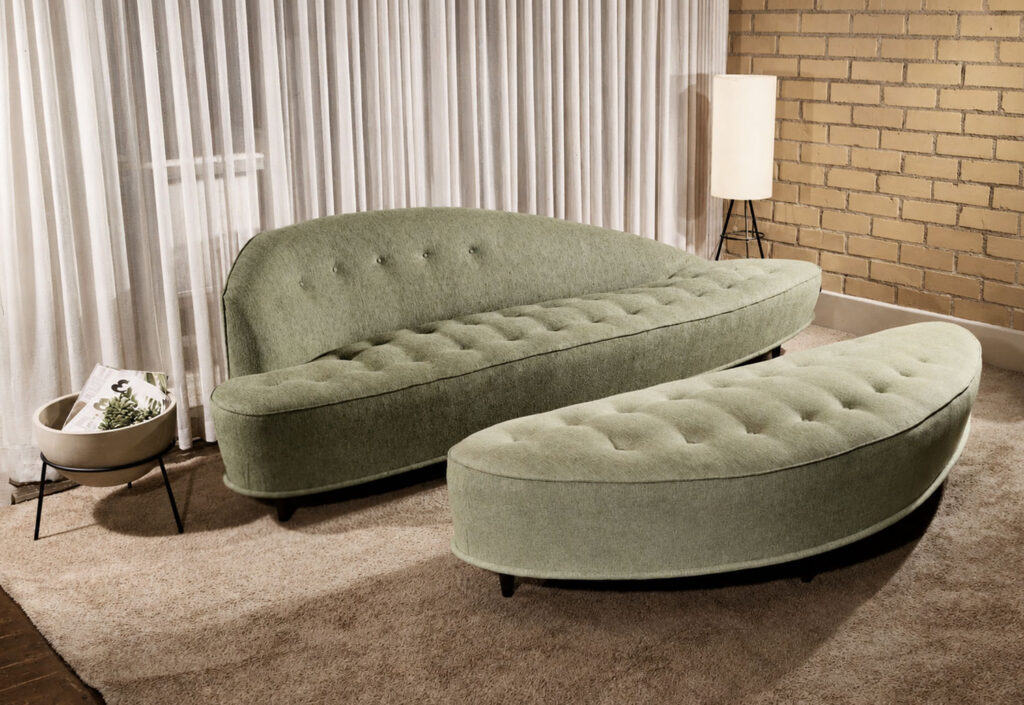
The company became particularly known for sofas, lounge chairs, sectionals and settees. Surviving examples range from restrained modern seating with slender frames to enormous sofas with deep cushions, dramatic textiles and long, low profiles. A 1963 advertisement offered a Sherman Bertram corner sectional measuring ten feet across, with reversible cushions, zippered covers and oversized gold casters. Other surviving pieces sit on recessed plinth bases or combine tailored upholstery with exposed wood, reflecting the broad range of styles sold under the company’s name.
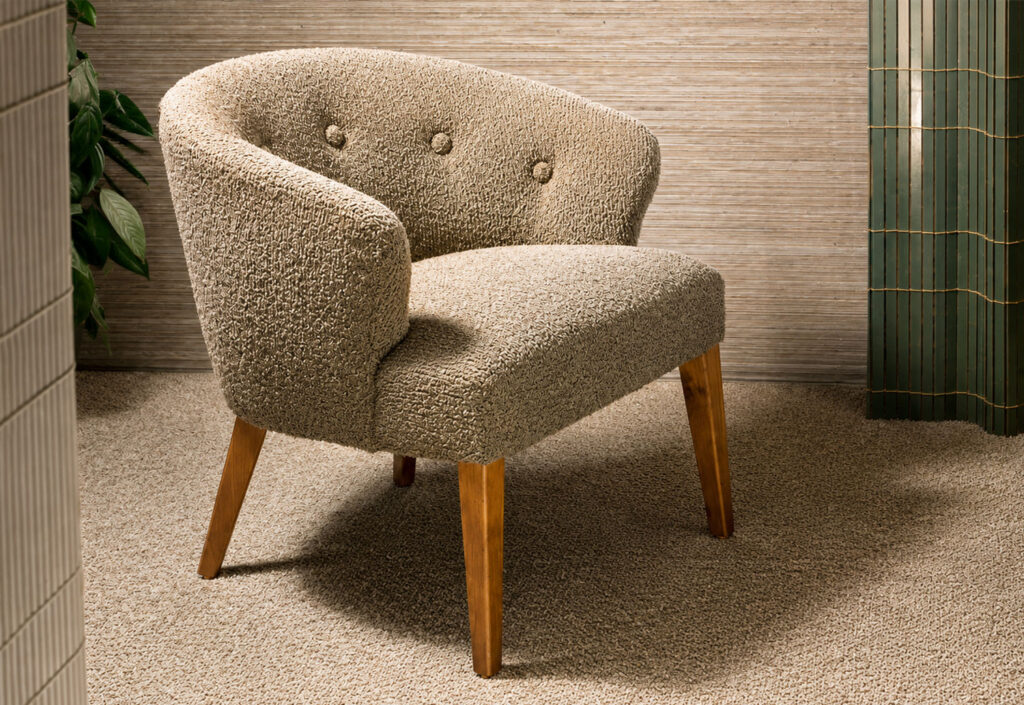
Sherman Bertram also worked with Greta Magnusson Grossman, the Swedish-born architect and designer who became an important figure in Los Angeles modernism. Her Peninsula Chairs, produced by Sherman Bertram around 1947 to 1949, used sculptural upholstered seats supported by sharply angled wooden frames. The relationship places the company within the active network of designers, manufacturers and retailers that made Southern California an important center of modern furniture production during the postwar period.
Not every Sherman Bertram piece was an avant-garde designer statement. Much of the company’s furniture was made for the upper-middle residential market, combining modern lines with the comfort, scale and decorative fabrics expected by American consumers. Newspaper advertisements show Sherman Bertram furniture being sold alongside established national brands such as Drexel, Century, Bassett and Thomasville well into the late 1960s.
Today, Sherman Bertram furniture survives without a well-established catalog of model names, dates or designers. Labels are therefore particularly important when identifying the company’s work, and dealer attributions should be treated cautiously unless supported by period documentation. Even so, its sofas and chairs offer a useful picture of California modernism as it was actually lived: comfortable, generously proportioned and adaptable to homes that were becoming increasingly casual.
Sherman Bertram may never receive the recognition given to California’s best-known furniture manufacturers, but the company occupied an important place within the Los Angeles industry. Its work connected modern design with everyday comfort, helping translate the promise of the California lifestyle into furniture for the American home.
The catalog below is from 1948 and the images from 1950-54.