




Gay Fad Studios: Hand-Painted Glassware and the Mid-Century Table
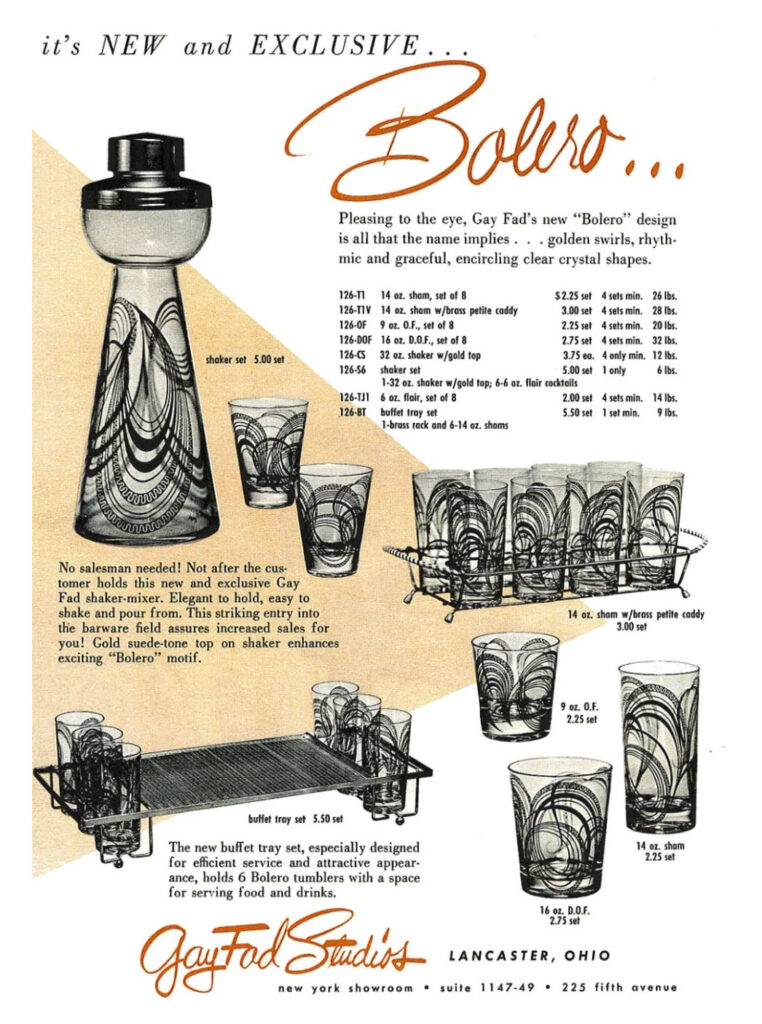
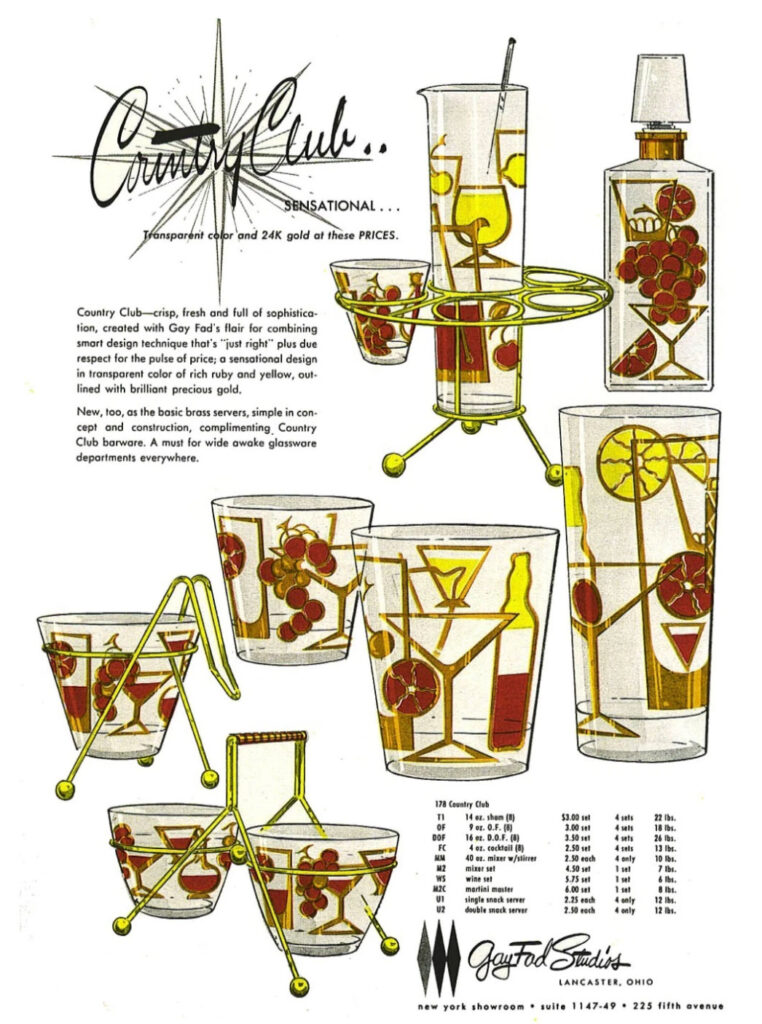
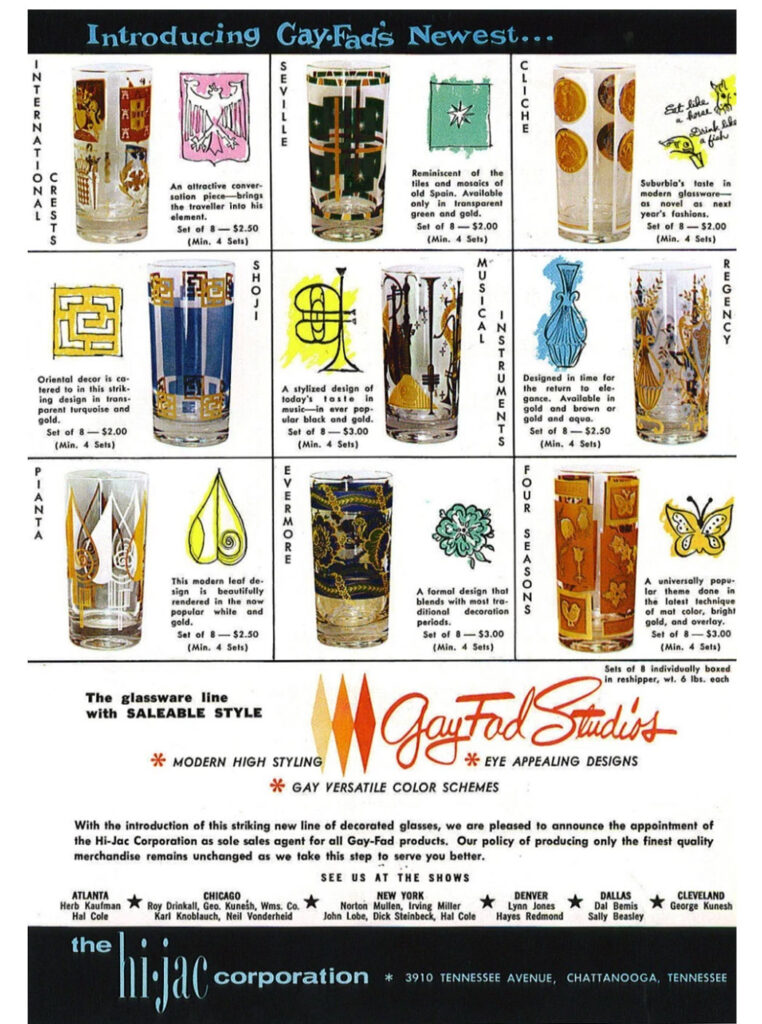
Gay Fad Studios occupies a lively place in mid-century American decorative glass. Founded by Fran Taylor in 1939, the company became known for bright, hand-painted designs applied to glassware blanks produced by established manufacturers, including companies such as Anchor Hocking. Gay Fad did not make the glass itself; its distinction came from decoration, design, and the ability to turn ordinary glass forms into objects with personality.
The company’s name can be slightly distracting to modern readers, but in its original context, “gay” still carried its older meaning of cheerful, bright, lively, or stylish. That meaning fits the objects well. Gay Fad glassware was meant to bring color and charm to the table, bar cart, breakfast room, or informal postwar interior. The name was not subtle, and neither were many of the designs. This was glassware meant to be noticed.
Fran Taylor’s route into glassware was practical as much as artistic. Before founding Gay Fad Studios, she had worked in dressmaking and decorative painting, including painted tin wastebaskets. Wartime material shortages made tin harder to obtain, and glass offered a more available surface for decoration. By purchasing undecorated glass blanks and painting them in appealing motifs, Taylor built a business around design rather than manufacture. That distinction matters because Gay Fad sits at an interesting point between studio craft, commercial decoration, and mass-market housewares.
The company’s work reflected the broader decorating habits of the 1940s and 1950s. American homes were becoming more colorful, more casual, and more open to themed table settings. Glassware was no longer just functional. It could be seasonal, witty, coordinated, or expressive. Gay Fad designs included florals, fruit, leaves, geometric patterns, figures, faces, and cocktail motifs. Some pieces feel refined and restrained, while others lean fully into mid-century novelty. That range is part of the appeal.
Gay Fad also benefited from the strength of the American glass industry. Ohio, West Virginia, and Pennsylvania were major centers of glass production, and companies such as Anchor Hocking, Federal Glass, Hazel-Atlas, and others produced enormous quantities of household glass. Gay Fad’s model depended on that ecosystem. By decorating existing forms, the company could move quickly with changing tastes while avoiding the cost and complexity of glass production itself.
This is one reason collectors often encounter Gay Fad decoration on familiar glass shapes. The underlying blank may be recognizable from another manufacturer, but the surface decoration changes the object’s character. A plain tumbler becomes a cocktail glass with attitude. A milk glass dish becomes part of a bright kitchen set. A simple pitcher becomes a table centerpiece. Gay Fad’s value is in that transformation.
The company was especially well suited to the mid-century love of entertaining. Barware became a major part of postwar domestic style, and Gay Fad’s designs fit easily into the world of cocktail parties, bridge nights, patio entertaining, and holiday tables. The graphics often had a lightness that feels very much of the period: confident line work, bold color, simplified forms, and a willingness to be playful without being sloppy.
Gay Fad operated until 1962, after which the brand disappeared for decades. Its original production years now help define its collecting appeal. Pieces from the 1940s and 1950s are especially attractive to collectors interested in decorated glass, barware, kitchenware, and mid-century domestic design. Condition is important, because the painted decoration can wear, fade, or scratch with use. The best examples retain strong color, clean graphics, and minimal loss to the decoration.
The brand has also had an unusual second life. Gay Fad Studios was relaunched in 2022 by Jason and David Annecy, who have revived the name with new mid-century-inspired glassware while also preserving and displaying the company’s history. Their Lancaster, Ohio museum and store includes a large collection of original Gay Fad pieces, packaging, catalogs, photographs, and related archival material.
For collectors, original Gay Fad pieces are appealing because they are both accessible and distinctive. They are not usually austere design objects. They are domestic objects with graphic energy and a clear sense of period taste. They also tell a useful story about women-led design entrepreneurship, the decorated glass industry, and the postwar shift toward more colorful, expressive home goods.
Gay Fad Studios deserves attention not because it was the largest or most technically advanced glass company of the period, but because it understood how much design could do. Fran Taylor took existing glassware forms and gave them identity. In doing so, she created objects that still feel fresh, cheerful, and unmistakably mid-century. For a table, shelf, or bar cart, Gay Fad brought exactly what its name promised: color, style, and a little bit of fun.


