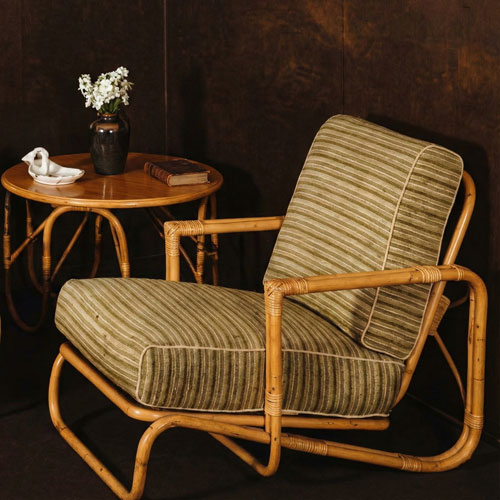





Rattan furniture in the 1930s through the 1960s occupied a distinctive place in American interiors, balancing modern design with an enduring sense of ease. Made from climbing palms harvested in Southeast Asia, rattan offered strength without heaviness and flexibility without fragility. In the 1930s, as tastes moved away from heavy ornamentation, designers embraced rattan for its clean lines and ability to form generous curves. It fit naturally into sunrooms, porches, and informal living spaces, but it also appeared indoors as part of a broader shift toward lighter, airier homes that felt modern without being austere.
By the 1940s and 1950s, rattan had become firmly embedded in everyday American life. Wartime material restrictions and postwar housing booms both favored furniture that was economical, adaptable, and visually relaxed. Manufacturers drew on decades of experience with cane, reed, and bent wood to produce rattan pieces that felt both casual and intentional, often blurring the line between indoor and outdoor use. In the 1960s, rattan’s popularity expanded further as interiors became more informal and leisure-focused. Its woven textures and sculptural forms captured a sense of comfort and optimism that defined mid-century living – furniture designed not to impress at a distance, but to be lived with, lounged in, and enjoyed every day.
Explore Ficks Reed

Explore Willow & Reed
Explore Ritts Company
Explore Heywood-Wakefield