



Ritts Co. belongs to a particular chapter of American design history: the rise of California casual furniture after World War II, when rattan, bamboo, and tropical-inspired interiors moved from resort fantasy into everyday domestic life. The company is most closely associated with Herbert “Herb” Ritts Sr. and Shirley Ritts, whose Los Angeles-based furniture business helped popularize stylish rattan furniture in the 1950s and 1960s. Their son, Herb Ritts Jr., would later become the famous fashion and celebrity photographer, but before the Ritts name was connected to black-and-white portraits of supermodels and movie stars, it was already known in Southern California for rattan furniture, showroom style, and a distinctly relaxed version of modern glamour.
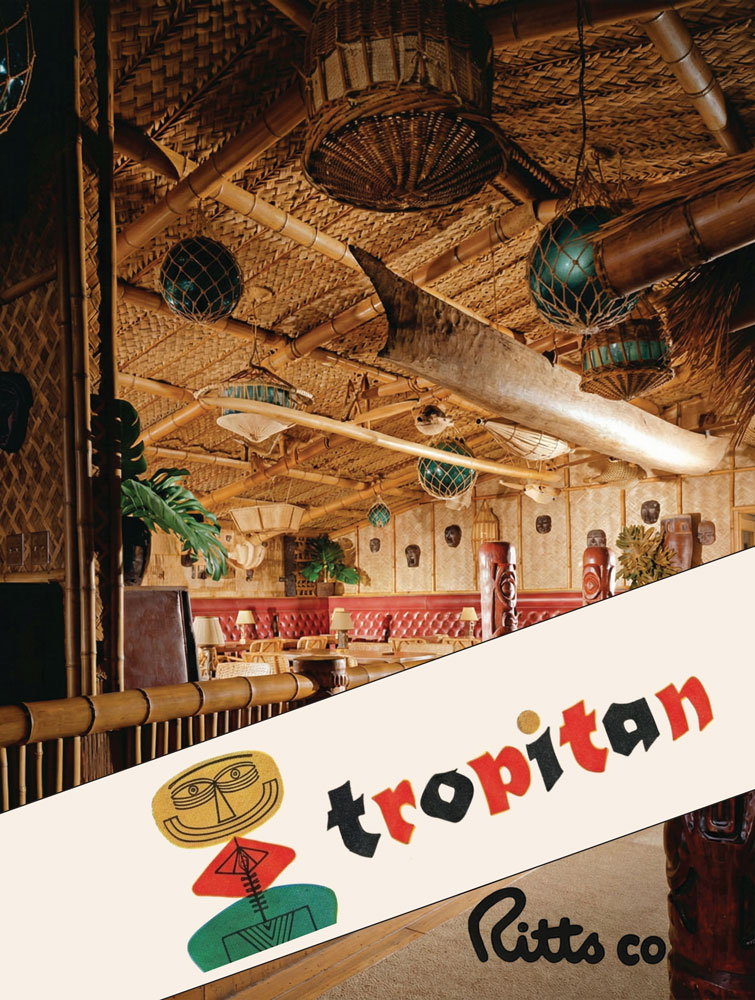
The company’s story begins with Herb Ritts Sr., who worked as a furniture designer and manufacturer in Los Angeles. Some accounts place his early rattan work in the late 1930s and 1940s, with the business becoming more established after the war, when demand for informal, indoor-outdoor furniture accelerated. By around 1950, Ritts Co. was operating in West Hollywood, with later references also noting expansion into Pasadena. The business was often associated with the Tropitan name, a brand identity that perfectly captured the period’s interest in tropical modern living: part patio, part lanai, part Hollywood set, and part California family room.
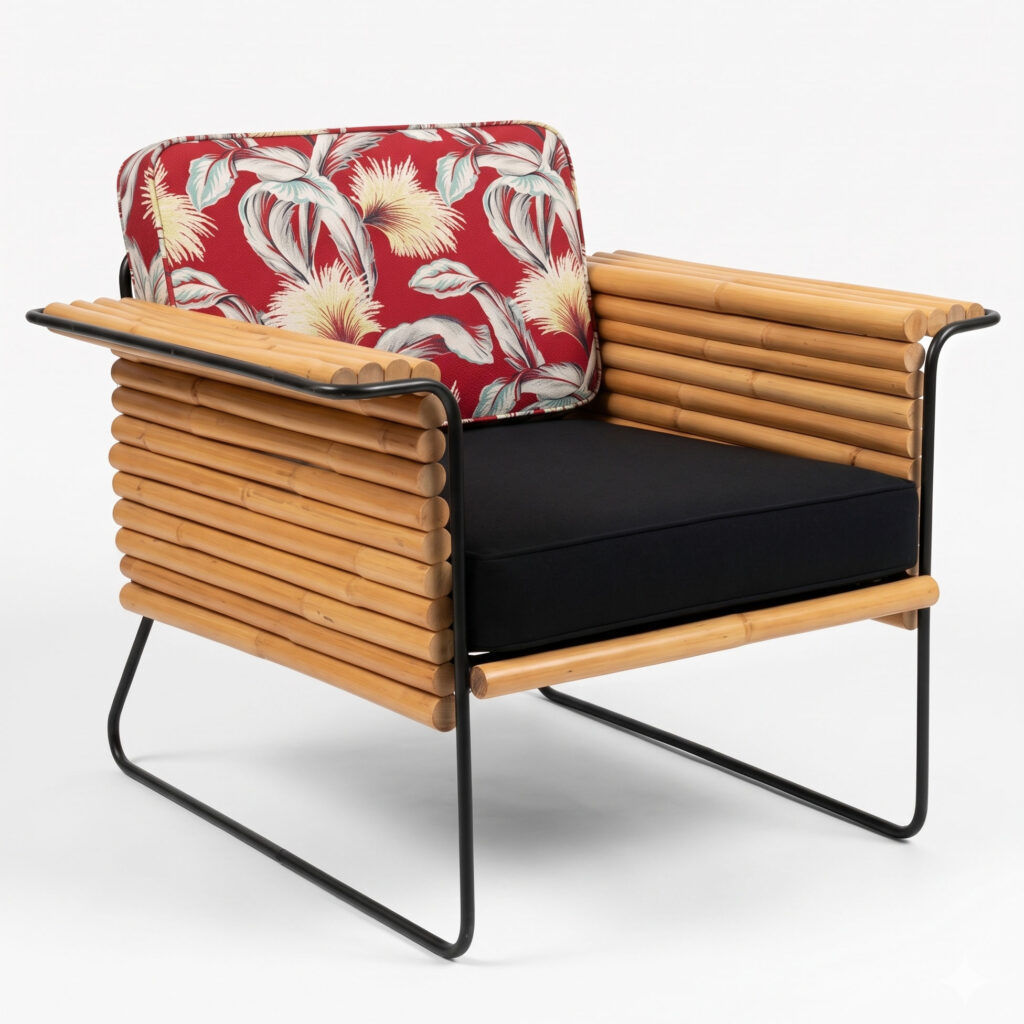
Ritts furniture was built around rattan, bamboo, cane, mahogany, and woven surfaces, but the appeal was not simply the material. Ritts Co. pieces had a particular balance of ease and polish. Chairs and sofas were often generous and low, tables might combine bent rattan frames with decorative wood tops, and larger suites could create an entire room environment rather than just provide occasional porch seating. The company’s furniture fit naturally into sunrooms, patios, pool houses, dens, and informal living rooms, but it also had enough design confidence to work in more glamorous interiors. This is where Ritts Co. differs from ordinary mid-century rattan: the best pieces are not just casual; they are theatrical, architectural, and very much tied to the Los Angeles idea of living well.
Shirley Ritts was central to that story. Born Shirley Roos in Baltimore in 1920, she became an interior designer and was deeply involved in the Ritts business after marrying Herb Ritts Sr. Sources describe Herb as the furniture designer and Shirley as a force in sales, marketing, and interior presentation. That division of labor matters because Ritts Co. was not only selling chairs and tables; it was selling a lifestyle. Shirley’s eye for display, publicity, and social connection helped give the company its glamorous West Coast identity.
The timing was ideal. After World War II, California became a powerful source of American style. Los Angeles was growing, suburban homes were spreading, backyard leisure was becoming a middle-class ideal, and indoor-outdoor living was moving from architectural theory into ordinary consumer aspiration. Rattan furniture suited this moment perfectly. It was lighter and less formal than traditional wood furniture, but warmer and more tactile than much of the new metal and plastic furniture of the period. It suggested vacation without requiring travel. It made a den, porch, or terrace feel like a resort.
Ritts Co.’s Tropitan furniture also sat comfortably within the broader American fascination with Polynesian, Hawaiian, and tropical design. The postwar years brought an enormous popular appetite for tiki bars, Hawaiian shirts, bamboo rooms, exotic cocktails, tropical resorts, and movie-set escapism. Ritts Co. was not always as overtly theatrical as full tiki décor, but it shared the same cultural vocabulary: rattan frames, cane panels, bamboo-like forms, curved arms, openwork construction, and an easy association with warm climates and leisure. In this sense, Tropitan was both furniture and atmosphere.
The company’s connection to entertainment culture strengthened that identity. Shirley Ritts is often credited with assisting with set design for Elvis Presley’s 1961 film Blue Hawaii, using rattan furniture and Polynesian-inspired design. Whether in film, showrooms, or private interiors, Ritts Co. benefited from the way Southern California blurred the lines between home design, celebrity culture, retail display, and fantasy. Furniture did not merely furnish a room; it helped stage a lifestyle.
Construction and material quality were also part of the company’s reputation. Ritts Co. pieces were often built with substantial rattan frames, carefully wrapped joints, shaped bends, and decorative combinations of rattan, bamboo, mahogany, cane, and upholstery. Later vintage dealers and restoration specialists frequently point to the durability of the furniture and the sophistication of the forms. Some accounts credit Herb Ritts Sr. with developing or refining rattan-forming processes, although that claim is usually repeated in design-market and dealer histories rather than documented in formal industrial records. Still, the surviving furniture itself shows that Ritts Co. was serious about construction. The pieces were built to be used, not merely photographed.
By the 1950s and 1960s, Ritts Co. had become part of a larger network of American rattan and bamboo manufacturers that included companies such as Ficks Reed, McGuire, Paul Frankl-related lines, and other West Coast and resort-oriented makers. Each had its own character. Ficks Reed often leaned more toward refined national distribution and designer collaborations; McGuire became associated with high-end San Francisco craftsmanship; Frankl brought a strong modernist and architectural sensibility to rattan. Ritts Co., by contrast, had a particularly Los Angeles flavor: relaxed, photogenic, a little glamorous, and closely tied to the idea of the tropical-modern home.
The Ritts family story also gives the company an unusual cultural afterlife. Herb Ritts Jr., born in Los Angeles in 1952, grew up in the world created by his parents’ business. His father was a furniture designer, his mother an interior designer, and their family home in Brentwood placed him within a social world connected to Hollywood, design, and visual culture. He later worked briefly in the family business after college before becoming one of the defining fashion and celebrity photographers of the 1980s and 1990s. The younger Ritts’ career was separate from the furniture company, but the connection is intriguing: both the furniture and the photography share a sensitivity to form, light, surface, and the glamour of relaxed California style.
Ritts Co. later expanded beyond rattan into Lucite and other glamorous materials associated with late mid-century and 1970s interiors. Shirley Ritts is especially linked in later accounts with high-end Lucite designs, including decorative and sculptural pieces. This shift makes sense within the company’s broader identity. Ritts Co. was never only about natural materials; it was about lifestyle materials. In the 1950s, that meant rattan and bamboo. In later decades, Lucite could serve a similar function: light, modern, theatrical, and well suited to affluent California interiors.
Like many American furniture companies built around specialized materials and handcraft, Ritts Co. eventually became more visible in the vintage market than in contemporary retail. Today, its Tropitan pieces are collected for their design presence, their association with postwar California living, and their usefulness in layered interiors. A Ritts sofa, lounge chair, dining set, or table can work in a mid-century room, a coastal house, a tiki-inspired space, a Hollywood Regency interior, or a modern room that needs texture and warmth. The furniture’s adaptability is part of its endurance.
For collectors, Ritts Co. is especially rewarding because the work exists in that appealing middle ground between documented design history and rediscovery. Some pieces are labeled; some are identified through catalogs, construction, dealer knowledge, or comparison with known examples. The Tropitan name is an important clue, as are materials such as bent rattan, bamboo, cane, mahogany, and wrapped joints. Original upholstery, surviving labels, catalog matches, and unusual forms all add interest. Because so much rattan furniture has been refinished, reupholstered, repaired, or misattributed over the decades, careful documentation matters.
Ritts Co.’s significance lies in how fully it embodied the promise of postwar California design. Its furniture was informal but not careless, glamorous but not stiff, modern but not cold. It translated rattan and tropical materials into a language of comfort, display, and aspiration. In the process, Herb and Shirley Ritts helped define a version of American leisure that still feels familiar: the sunny room, the low lounge chair, the woven texture, the indoor-outdoor threshold, and the idea that modern living could be both elegant and relaxed.