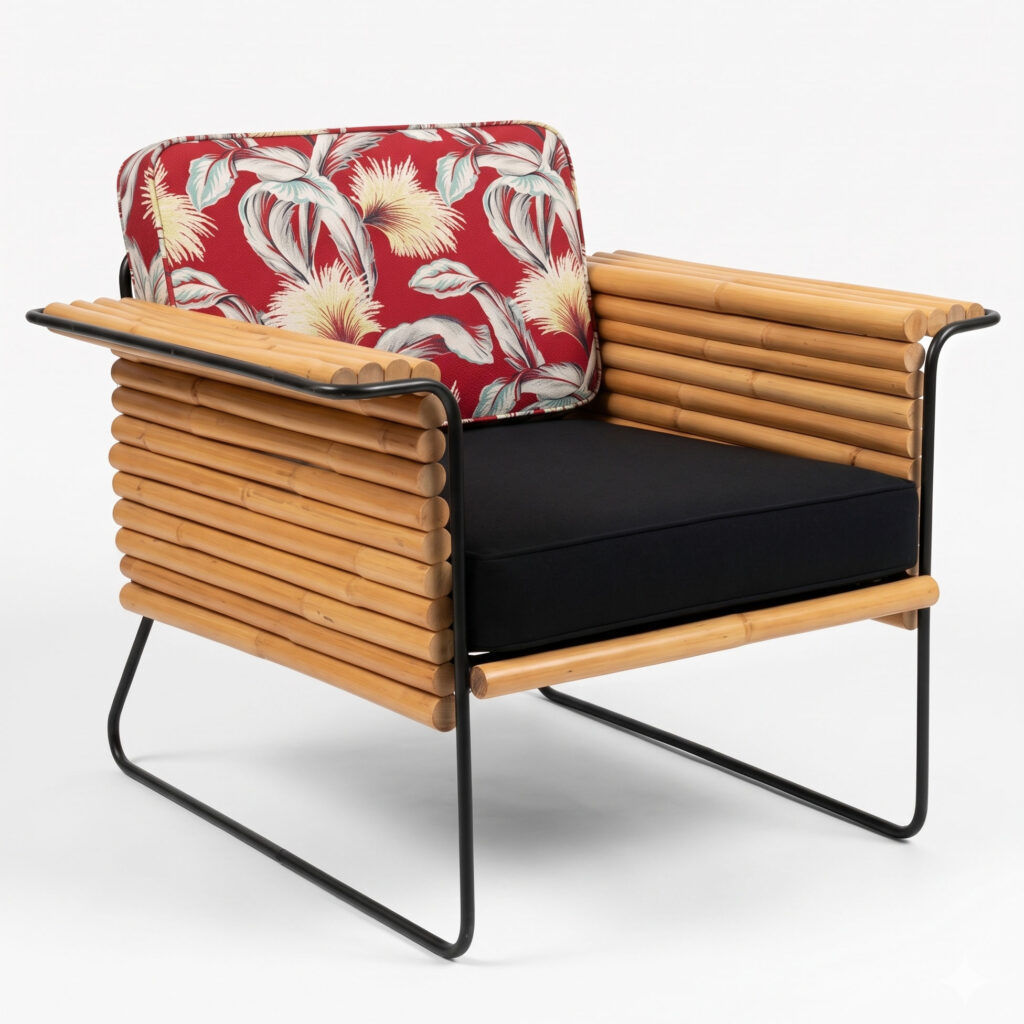




Willow & Reed is one of those mid-century American furniture names that tends to surface through the objects themselves: a labeled dining chair, a lacquered bamboo table, a cane-front commode, a rattan lounge chair with an unexpectedly elegant silhouette. The company does not have the same widely published history as Heywood-Wakefield, Ficks Reed, or McGuire, but its surviving furniture tells a clear story. Willow & Reed occupied the refined end of the American rattan and bamboo market, producing furniture that was casual in material but often quite sophisticated in design.
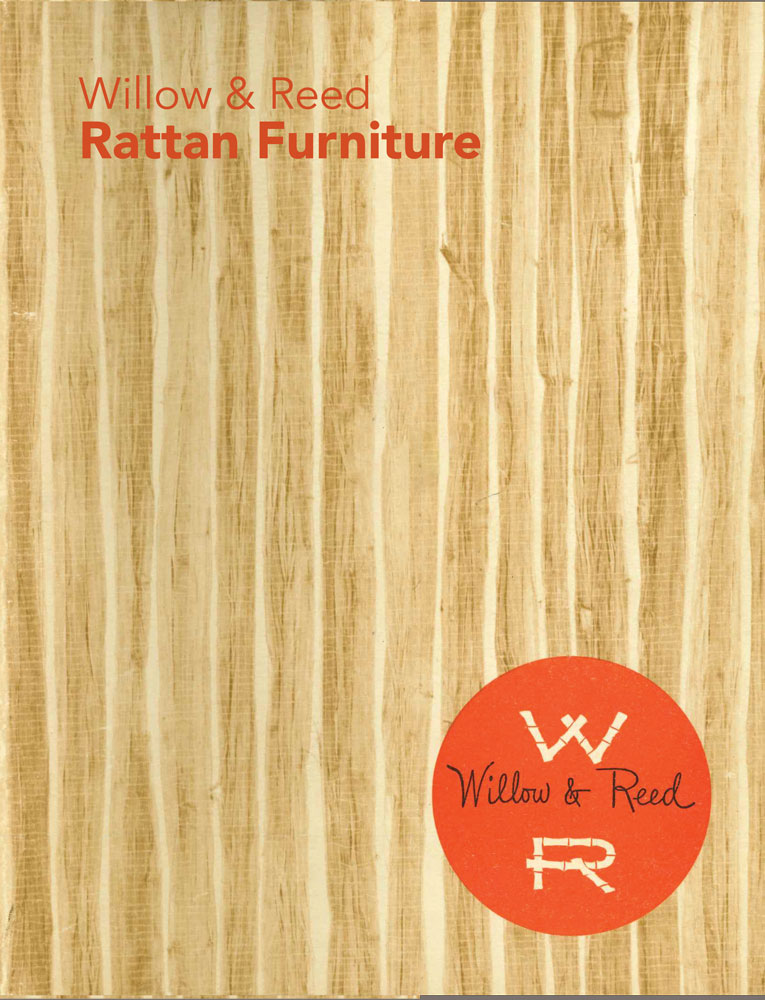
The company was active by at least the early 1940s. A 1940 letterhead identifies it as Willow & Reed Art Work Mfg. Co., with its factory and main office in Brooklyn and salesrooms at 1 Park Avenue in New York City. By 1951, a company catalog titled Willow & Reed Rattan Furniture described the firm as “America’s Leading Rattan Furniture” and listed the company at 293–297 Greenpoint Avenue in Brooklyn. That Greenpoint address is significant. Brooklyn had long been home to workshops, small factories, importers, and furniture-related trades, making it a logical base for a company working with rattan, reed, bamboo, cane, and other labor-intensive materials.
Willow & Reed’s name also captures its design identity. “Willow” and “reed” evoke older traditions of basketry, wickerwork, and woven furniture, but the company’s best-known pieces belong firmly to the twentieth century. This was not Victorian wicker revived as nostalgia. Willow & Reed used pliable natural materials in forms that could work in modern apartments, dining rooms, sunrooms, terraces, and high-style interiors. A trade-catalog record for the 1951 catalog identifies its subject as home furniture and rattan furniture, while later design-market references consistently associate the company with rattan, bamboo, cane, leather wrapping, lacquer, and brass.
The company’s most important period appears to have been the postwar era, especially the 1950s, when American interiors were becoming less formal and more open to indoor-outdoor living. Rattan and bamboo furniture had a special place in that shift. It was lighter than traditional hardwood furniture, warmer than metal, more relaxed than formal upholstery, and well suited to the emerging language of sunrooms, terraces, Florida rooms, and casual entertaining. Willow & Reed’s furniture fit this moment, but it often did so with a New York polish rather than a purely tropical or resort character.
That polish is especially visible in the company’s association with Tommi Parzinger and Henry Olko. The Smithsonian’s Archives of American Art holds a Tommi Parzinger collection covering 1935–1981 and notes that Parzinger designed for multiple firms, including Willow & Reed in rattan. Parzinger was a major figure in American modern design, known for refined forms, elegant proportions, and a distinctive blend of modernism and decorative sophistication. His connection gives Willow & Reed an important place in the mid-century design landscape, particularly because rattan and cane furniture are often treated as casual or secondary when, in fact, designers like Parzinger used them in highly considered ways.
Henry Olko is also closely tied to Willow & Reed. Later design-market accounts describe Willow & Reed as led by Olko and identify him as an American furniture designer with deep experience working in bamboo, rattan, willow, and leather-wrapped construction. Incollect’s profile describes Willow & Reed Inc. as a twentieth-century company associated with Olko’s work in these pliable materials. While dealer sources should be read carefully, the repeated attribution of Willow & Reed pieces to Olko reflects a consistent collecting and market understanding: Olko was not merely connected to the firm, but central to its later identity.
The relationship between Parzinger and Olko is part of what makes Willow & Reed interesting. Some surviving pieces are attributed to Parzinger, some to Olko, and some to both. A number of mid-century dining chairs, lounge chairs, chests, tables, and commodes associated with Willow & Reed combine rattan or bamboo frames with cane panels, lacquered surfaces, brass details, or upholstered seats. These are not rustic pieces. They often have the composure of fine cabinet furniture translated into woven and tropical materials. Chairish and 1stDibs listings, while commercial rather than archival sources, show the range of pieces now associated with the company, including Parzinger-attributed dining chairs and lacquered case goods, as well as Olko-attributed rattan and cane seating.
Willow & Reed’s furniture also belongs to the larger history of American rattan design. By the 1930s, 1940s, and 1950s, rattan had moved well beyond porch furniture. Designers and manufacturers used it for lounge seating, dining sets, occasional tables, bedroom pieces, bar carts, screens, chests, and full room groupings. The material had practical advantages: it was strong, flexible, relatively light, and visually open. It also carried strong cultural associations. Rattan suggested travel, informality, warmth, and leisure. In the postwar period, those associations aligned perfectly with American aspirations toward modern living.
Where companies like Ritts Co. leaned into California tropical leisure and Ficks Reed bridged resort, decorator, and national markets, Willow & Reed seems to have occupied a more urbane position. Its New York base, designer associations, and frequent use of lacquer, brass, cane, and sculptural rattan forms gave its furniture a more dressed quality. It could sit comfortably in a sunroom, but it could also belong in a formal dining room or a decorator-designed apartment. That range is one reason Willow & Reed pieces are often described today as mid-century modern, Hollywood Regency, Art Deco revival, or Palm Beach Regency depending on the object and finish.
The company’s material vocabulary is important. Rattan provides the structural frame, often bent or bundled into strong curves and uprights. Cane panels add texture and transparency. Bamboo-like forms create rhythm and verticality. Leather wrapping or binding reinforces joints and adds a crafted detail. Lacquer changes the mood completely, turning natural material into something sharper, glossier, and more decorative. Brass hardware or caps add another layer of refinement. Willow & Reed’s best work comes from this contrast: organic material handled with urban discipline.
For collectors, Willow & Reed can be challenging because documentation is uneven. Labels, catalogs, and period references are less common than the furniture itself. The 1951 catalog is especially valuable because it confirms the company’s Brooklyn identity and its self-positioning in the rattan furniture market. Surviving labels, catalog matches, construction details, and credible designer attributions all matter. Because rattan and cane pieces were often refinished, repainted, repaired, or reupholstered, the original identity of a piece can easily become blurred over time.
Original finishes are also worth noting. Many Willow & Reed pieces seen today have been lacquered, restored, or updated for contemporary interiors. That is not necessarily a problem, since rattan and cane often require maintenance to remain usable, but it does mean collectors should look closely at construction, proportions, joinery, labels, and signs of earlier finishes. A white lacquered bamboo sofa, a black lacquer cane commode, or a natural rattan dining chair may all belong to the Willow & Reed world, but finish alone is not enough to establish attribution.
Willow & Reed’s appeal today comes from the way it bridges categories. It is casual furniture, but not ordinary casual furniture. It is rattan furniture, but not simply porch furniture. It is modern, but with decorative intelligence. It can be tropical, urban, coastal, glamorous, or restrained depending on the piece. That flexibility is exactly what made rattan so important in mid-century interiors, and it is why these pieces still feel useful now.
In a broader design-history context, Willow & Reed helps correct the idea that American rattan furniture was only about patios and vacation rooms. The company shows how woven and flexible materials could be elevated through proportion, finish, designer collaboration, and careful construction. Its furniture belongs in the same conversation as the better-known American makers who took natural materials seriously, but it has its own character: a Brooklyn-made, designer-inflected version of rattan modernism with just enough glamour to keep it from feeling purely rustic.
Willow & Reed may remain a somewhat under-documented company, but that is part of what makes it interesting. The available record points to a firm active by the early 1940s, established in Brooklyn, strongly present in the rattan market by 1951, and later associated with designers including Tommi Parzinger and Henry Olko. The surviving furniture fills in the rest of the story: elegant chairs, sculptural frames, cane surfaces, lacquered finishes, and a confident handling of materials that were too often dismissed as merely casual. Willow & Reed gave rattan and cane a more polished American language, and its best pieces still carry that balance of ease, craft, and sophistication.