



Continental Art Company Lamps: Mid-Century Drama
Continental Art Lamp Company was a Chicago-based manufacturer located on the city’s well-known Division Street. The company was owned by John Matanky, the son of Russian immigrants, along with three Italian nationals. Production appears to have begun around 1948 or 1949 and continued until 1962, when Matanky reportedly suffered a severe stroke. The company specialized in plaster lamps made from molds of sculptures by Italian designers, and both the plaster bases and their distinctive lampshades were produced in house.
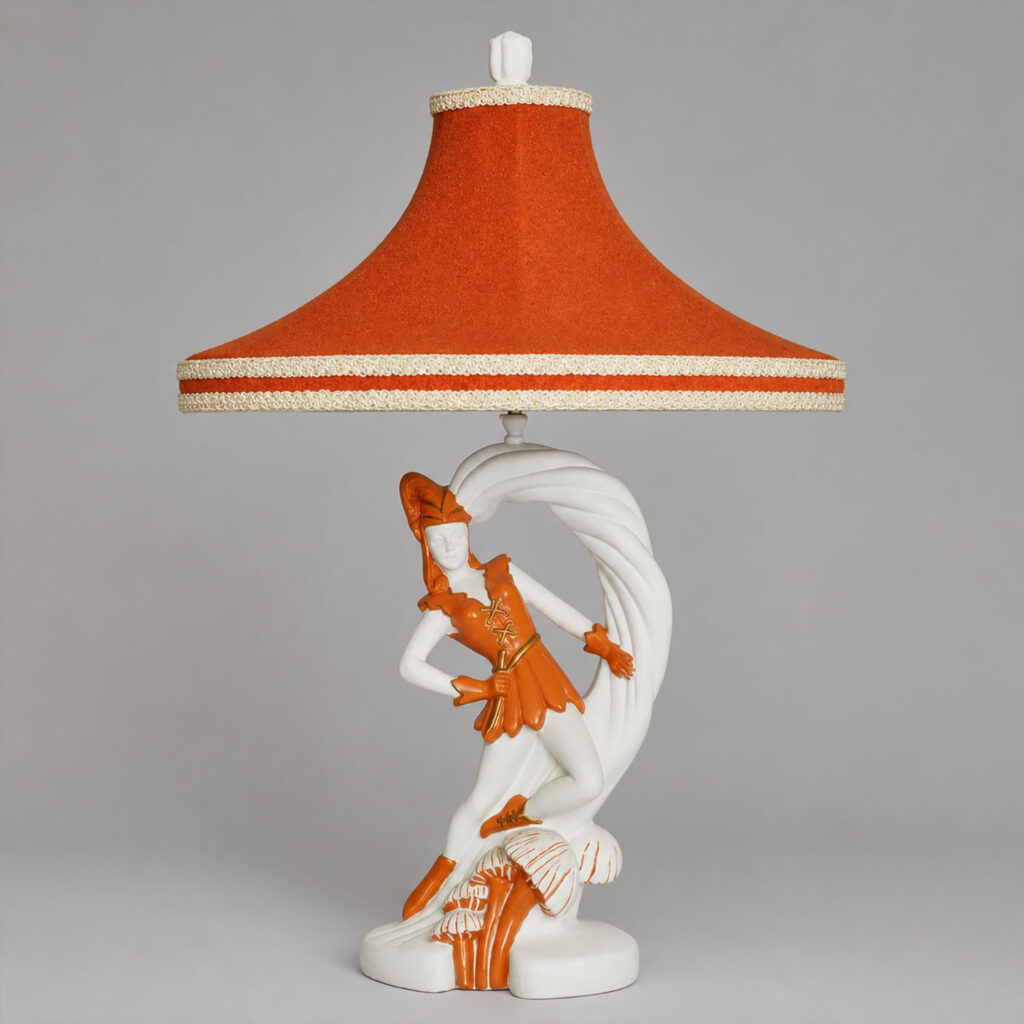
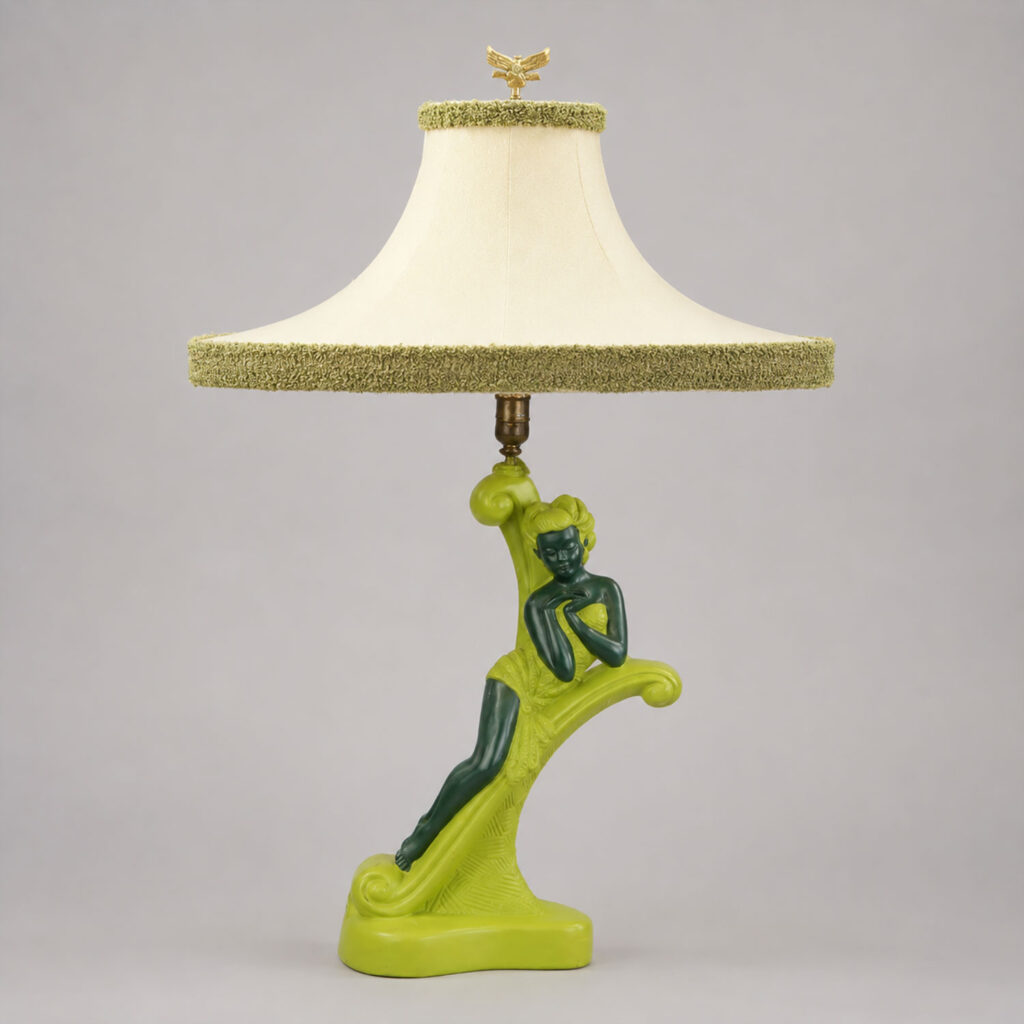
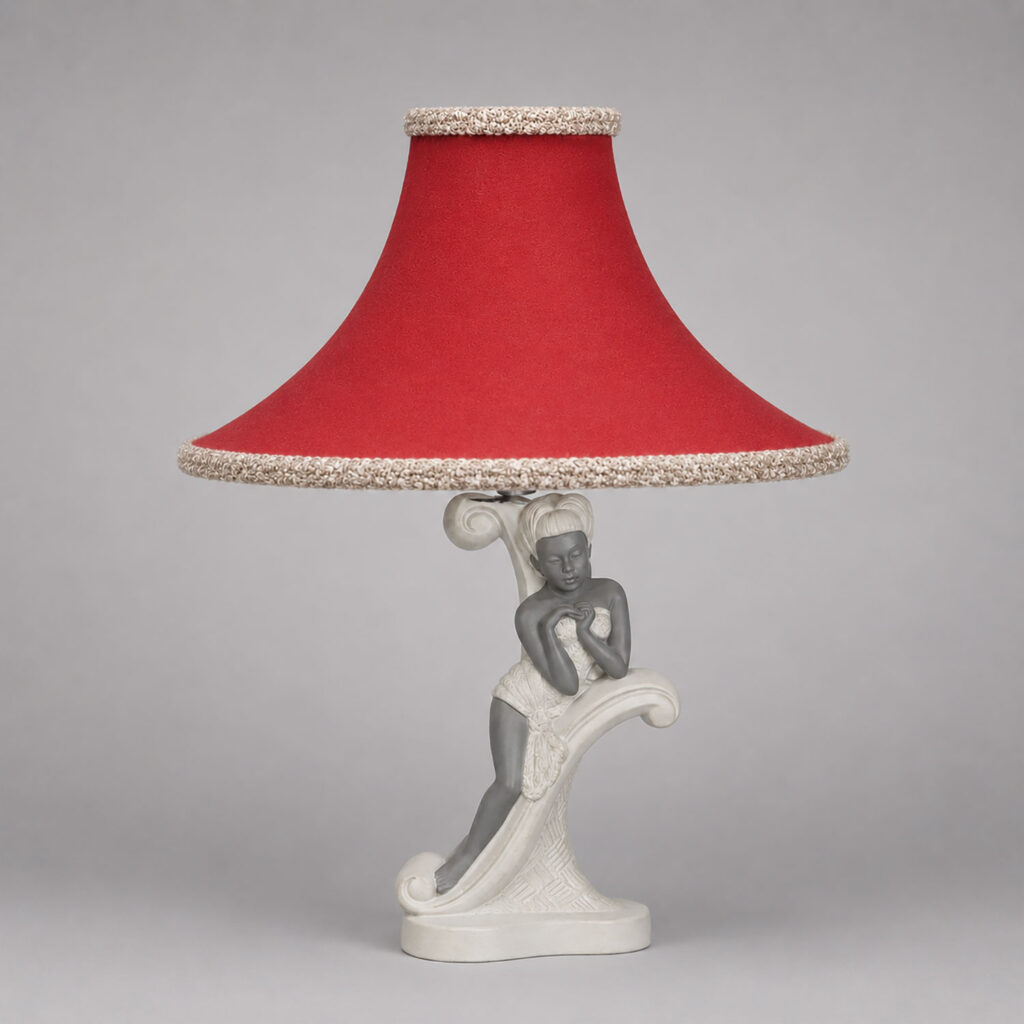
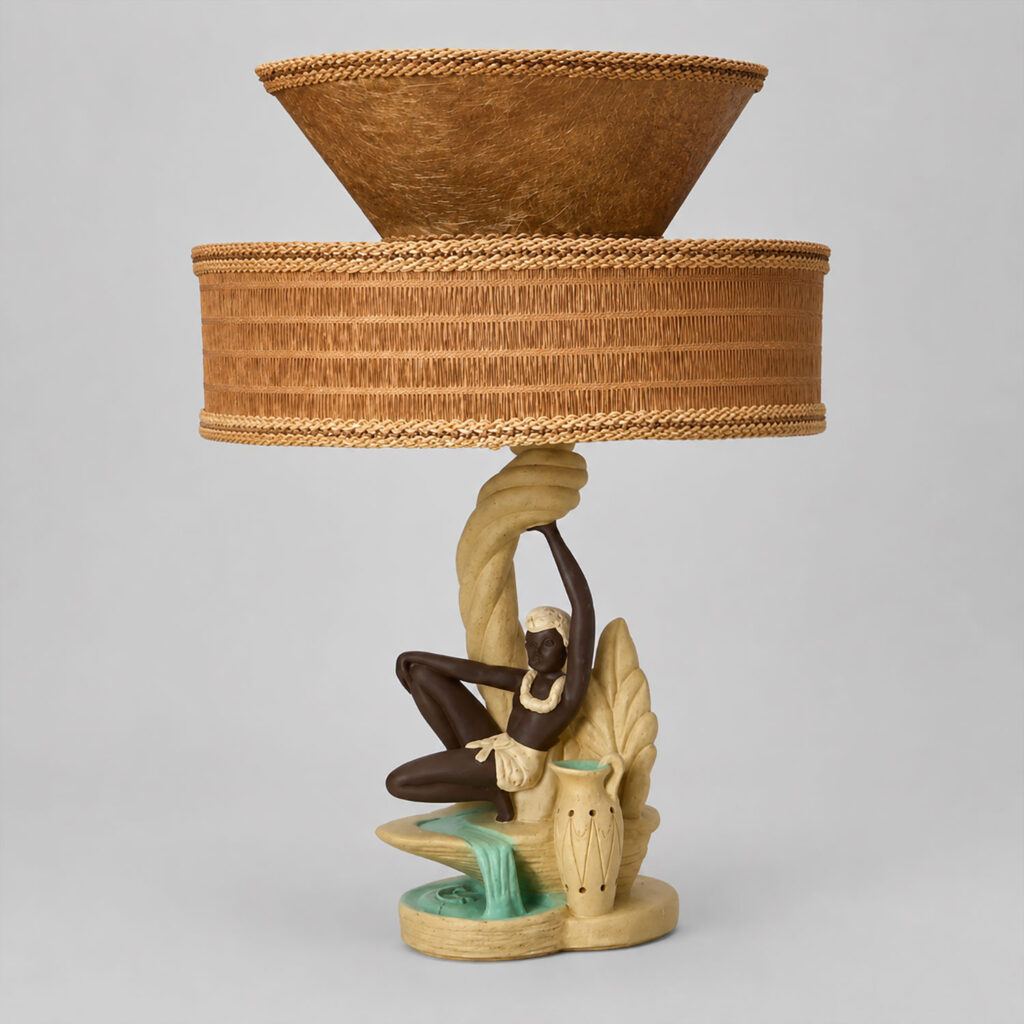
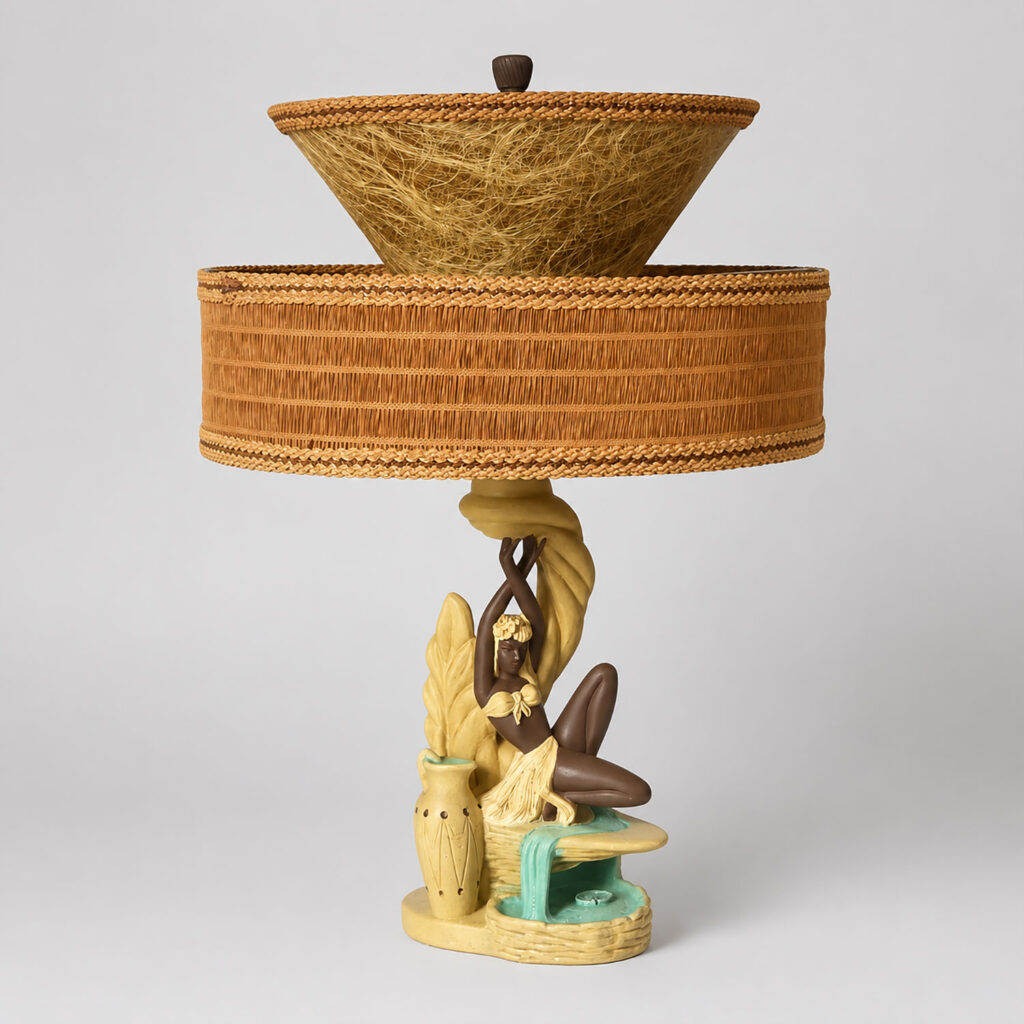
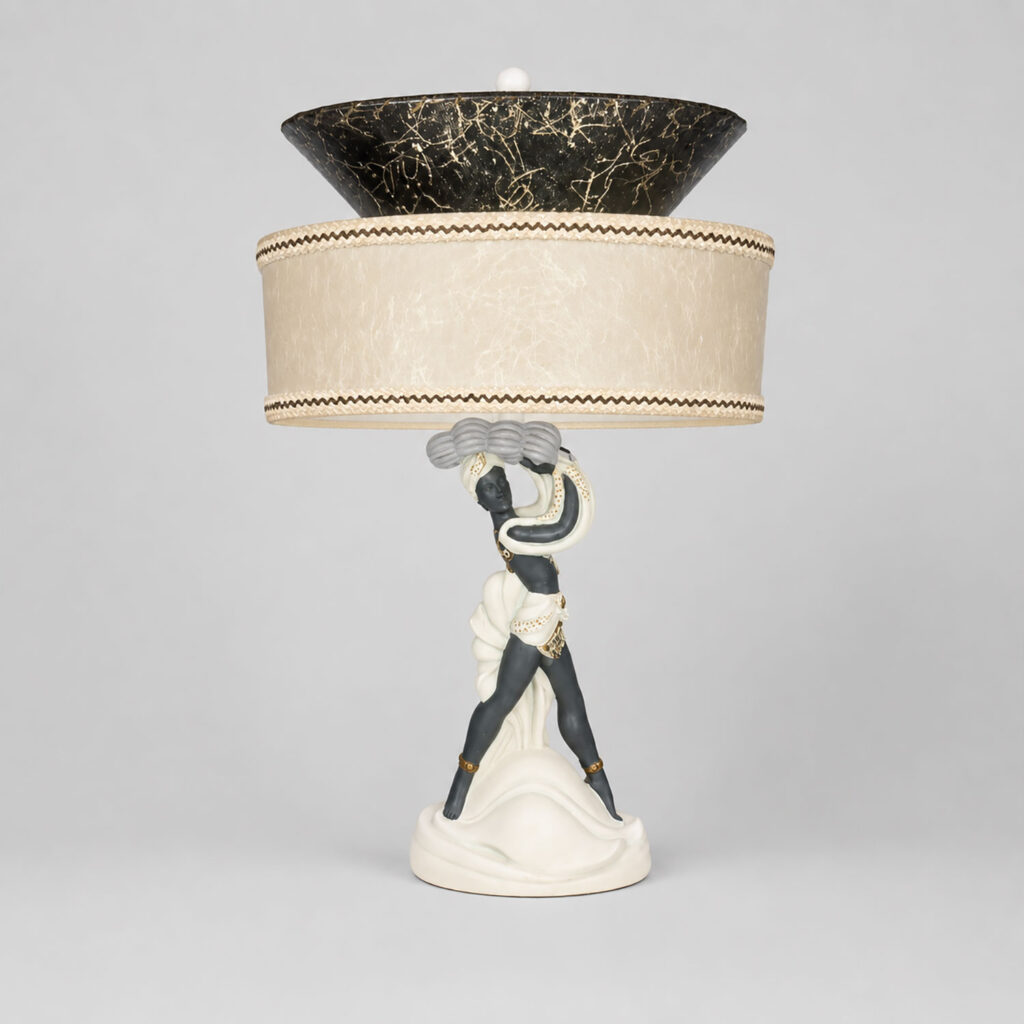
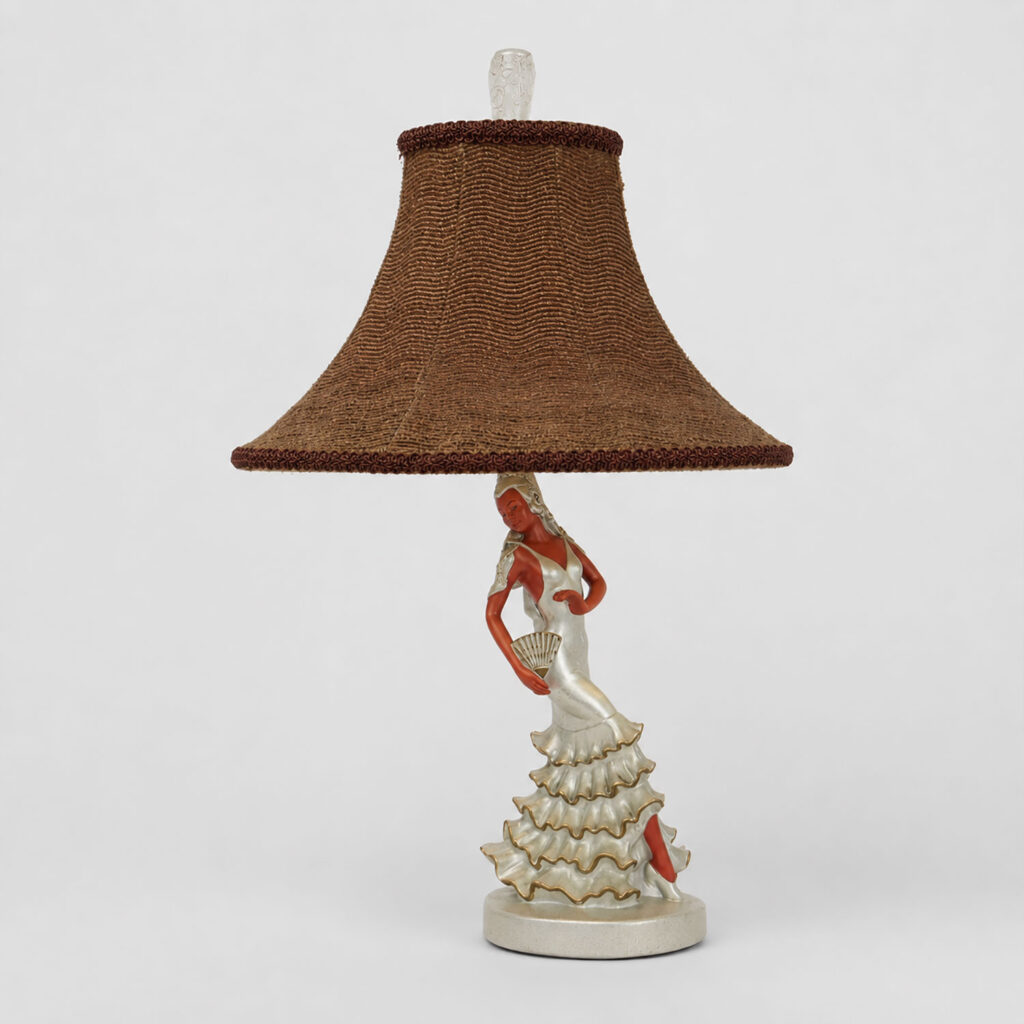
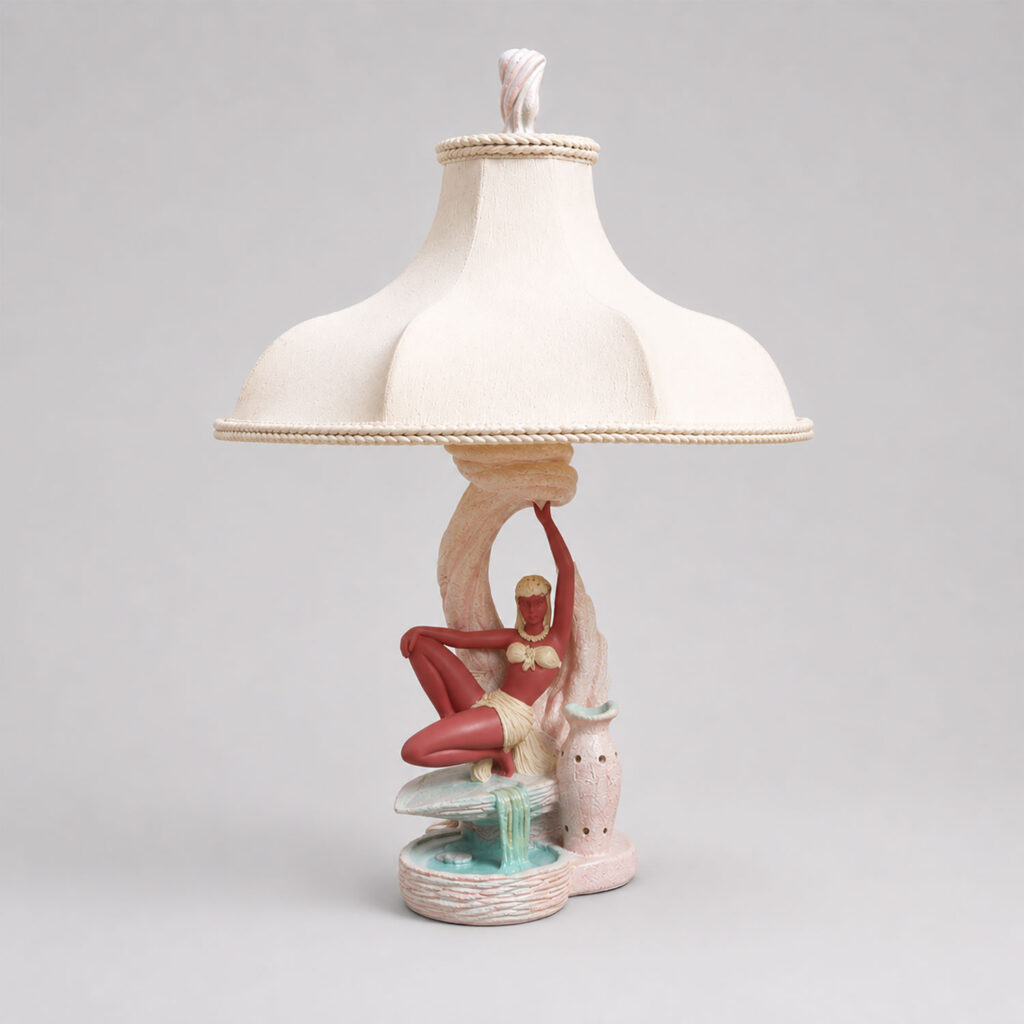
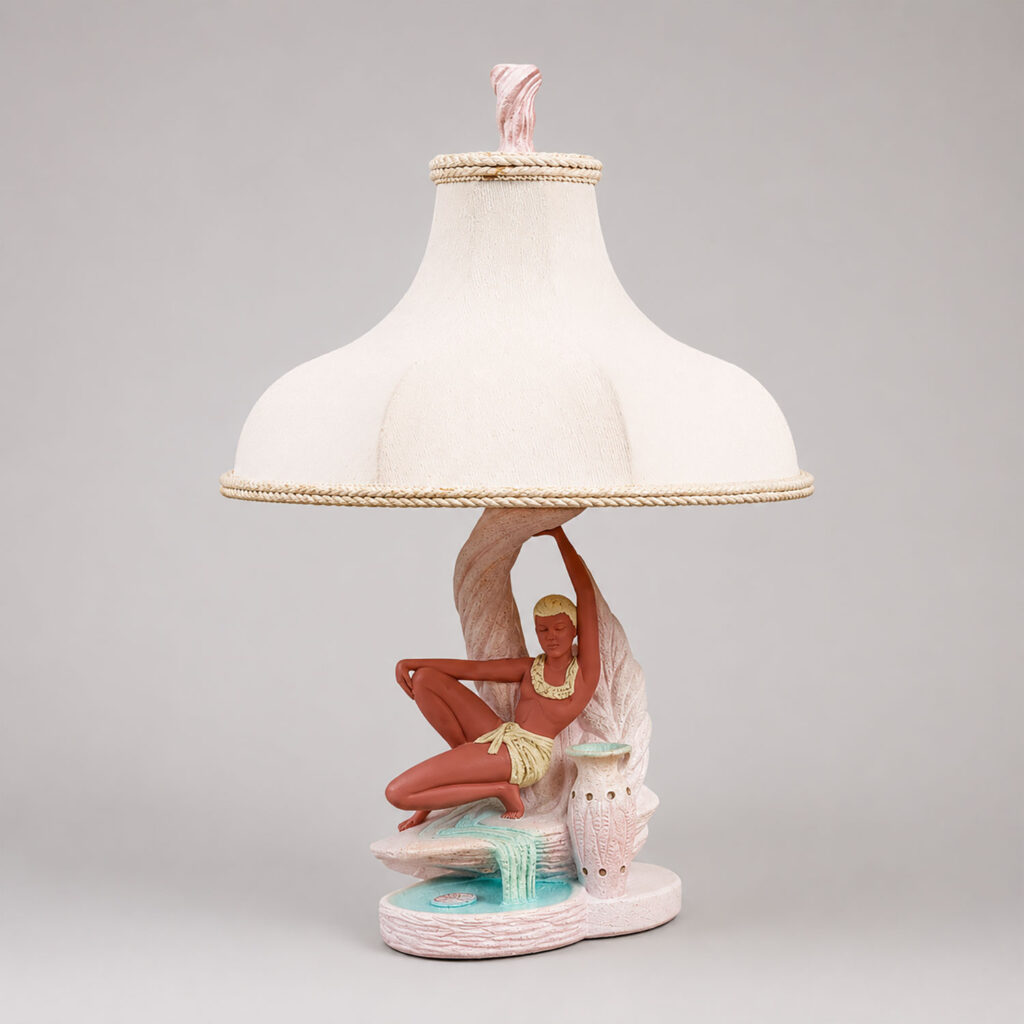
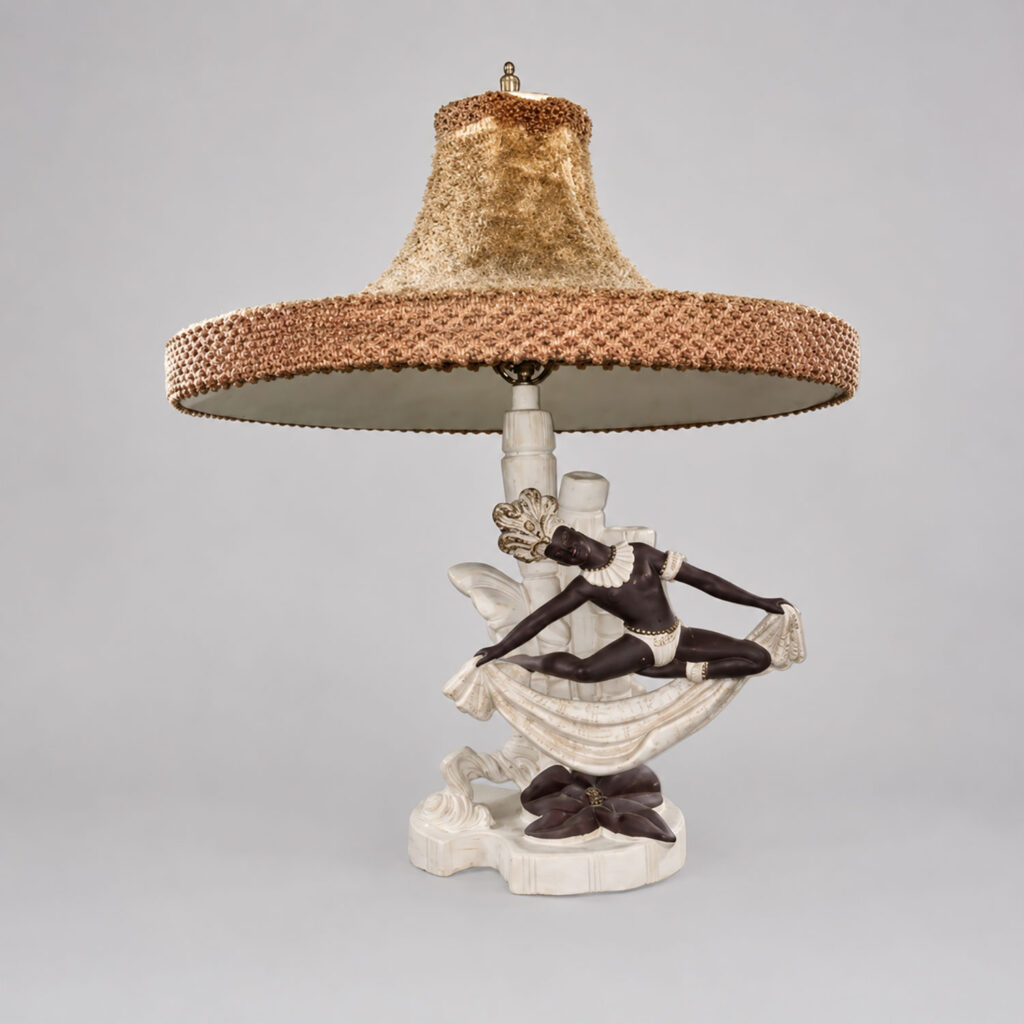
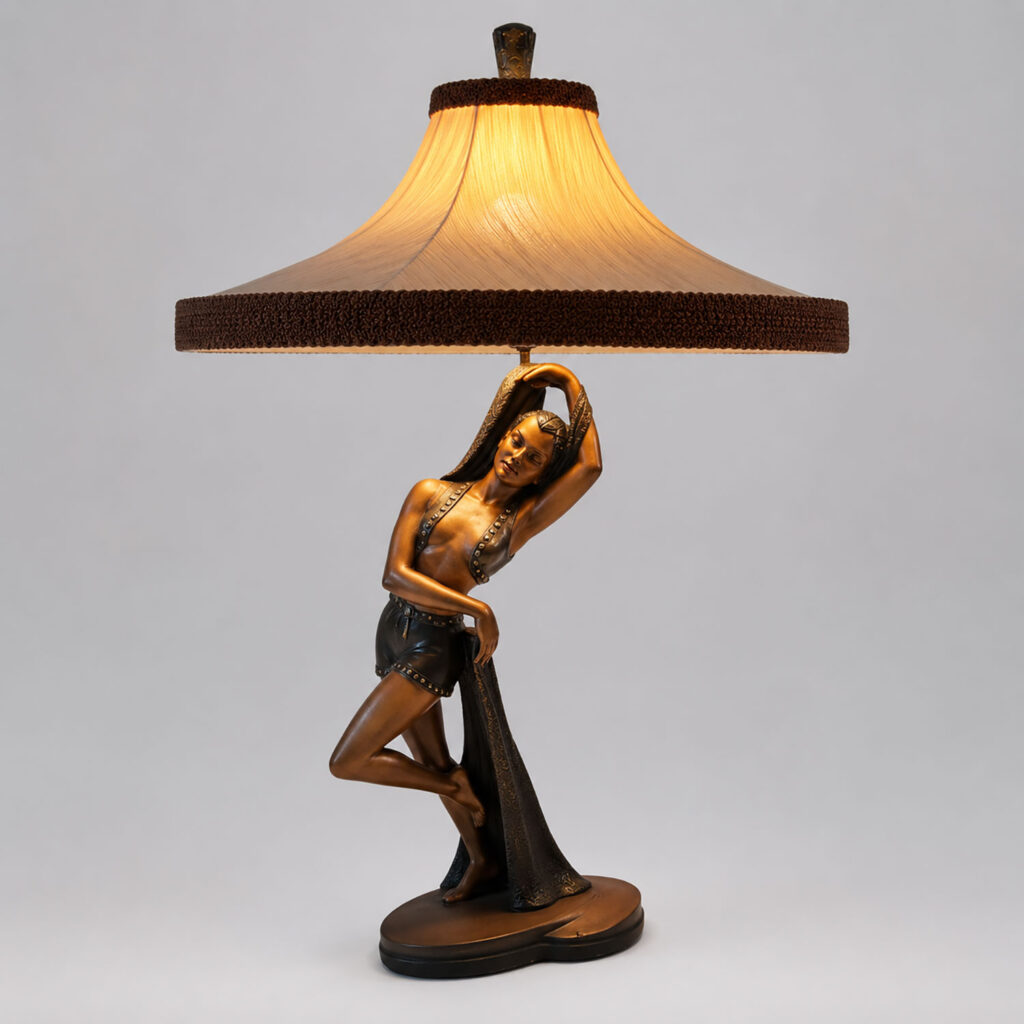
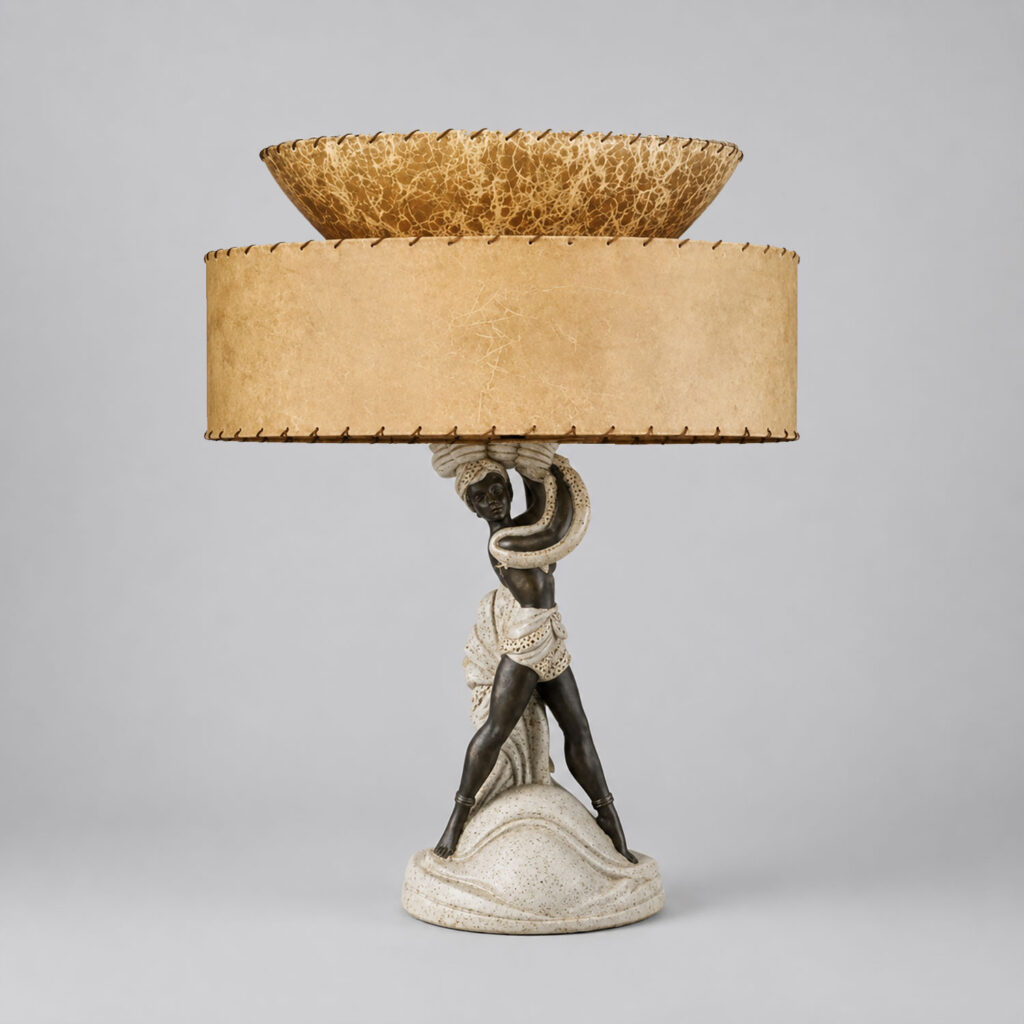
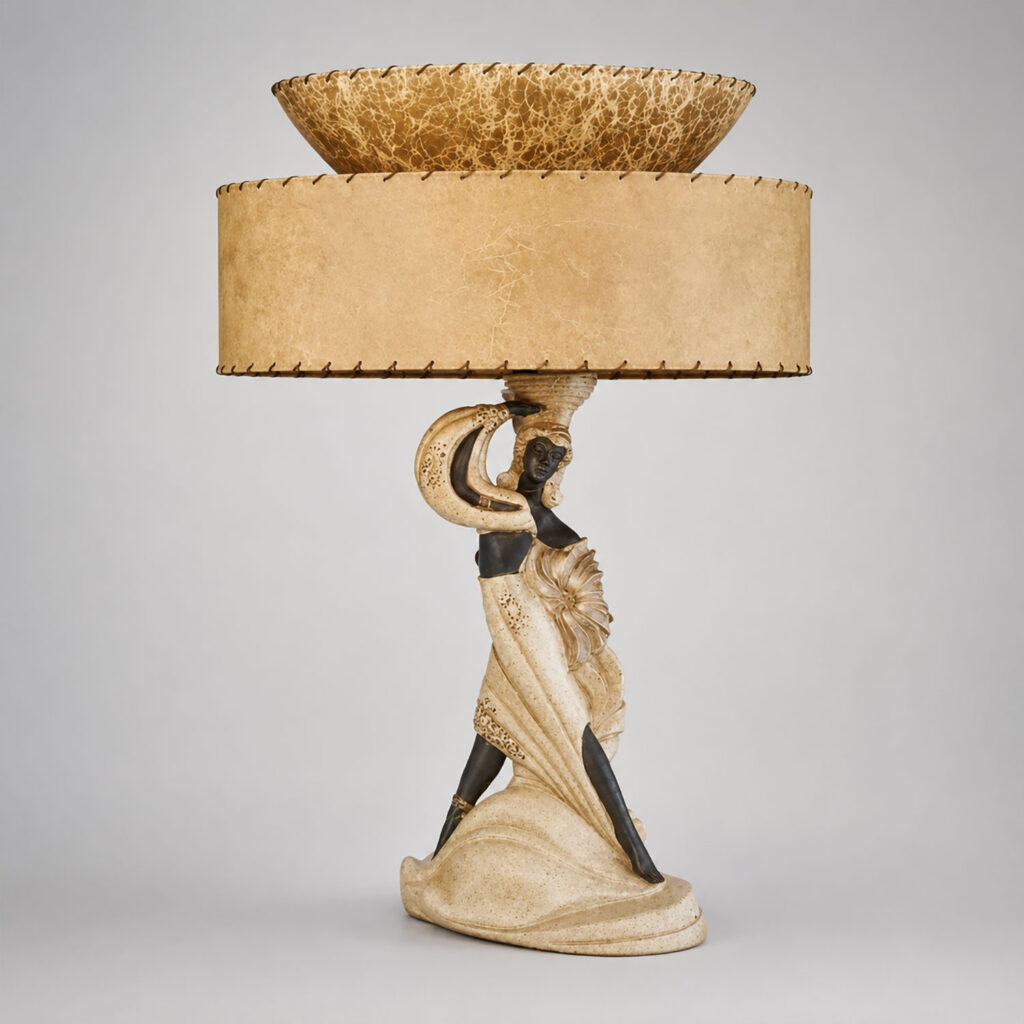
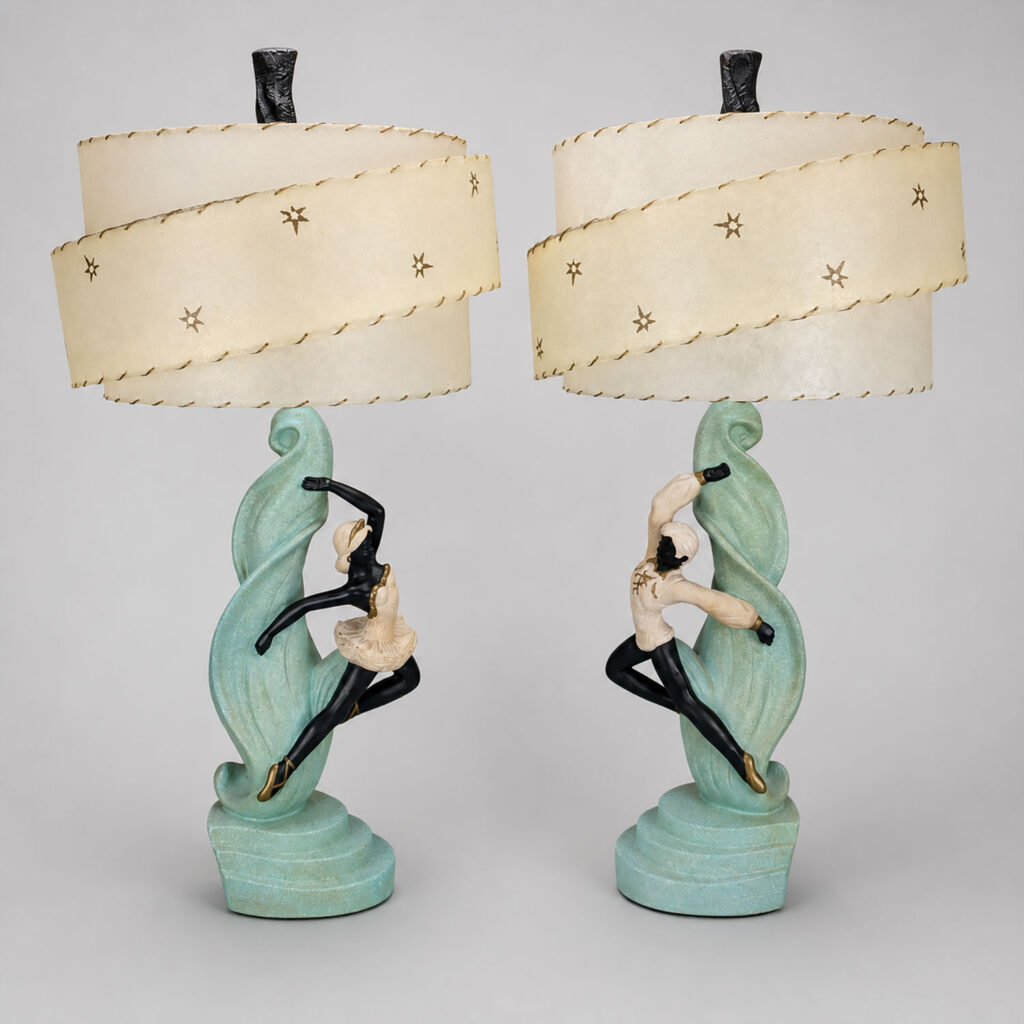
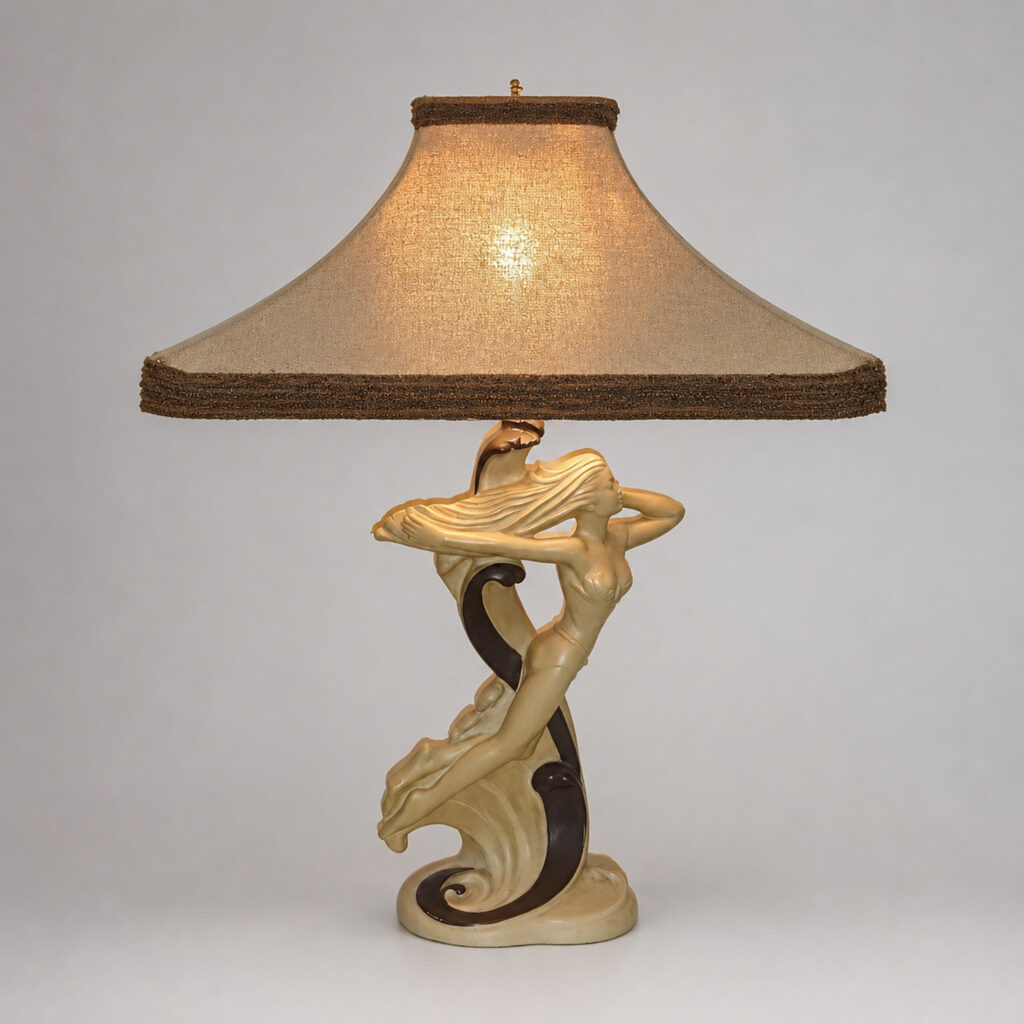
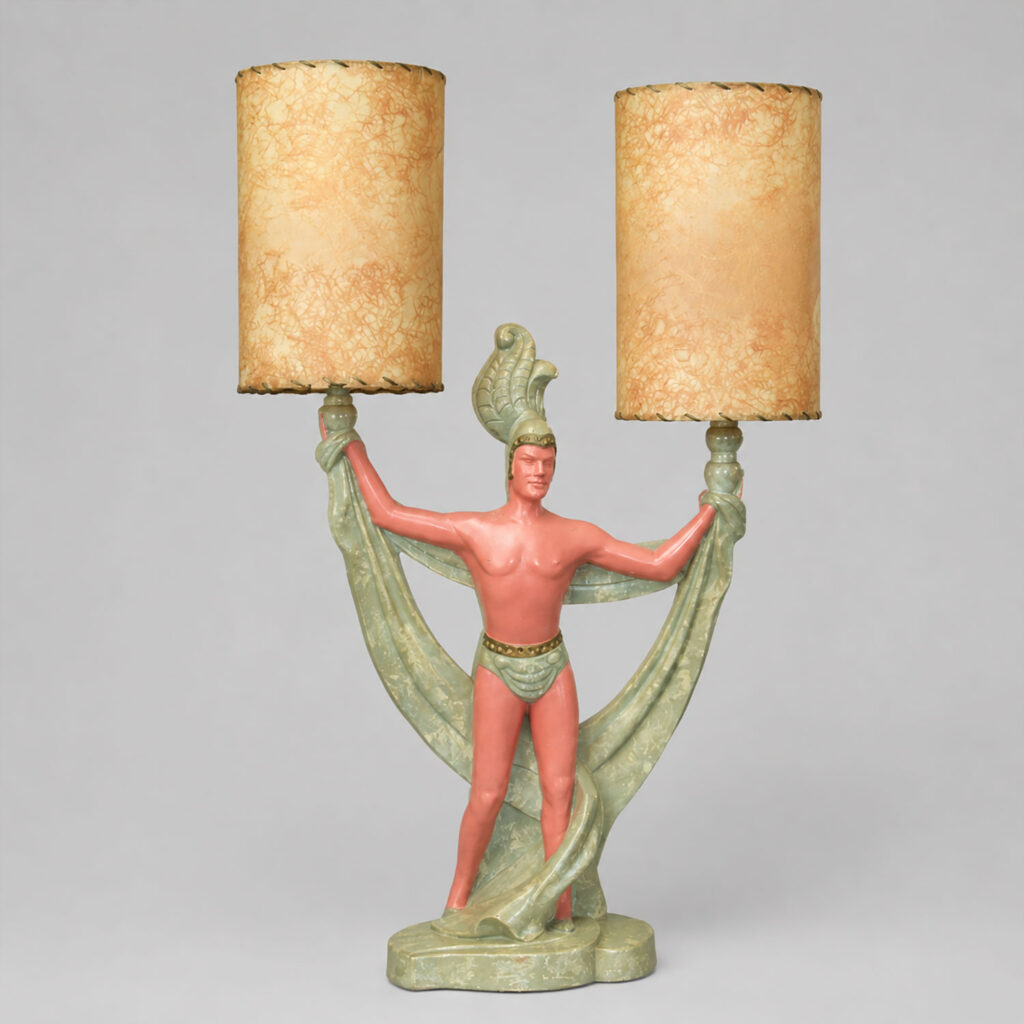
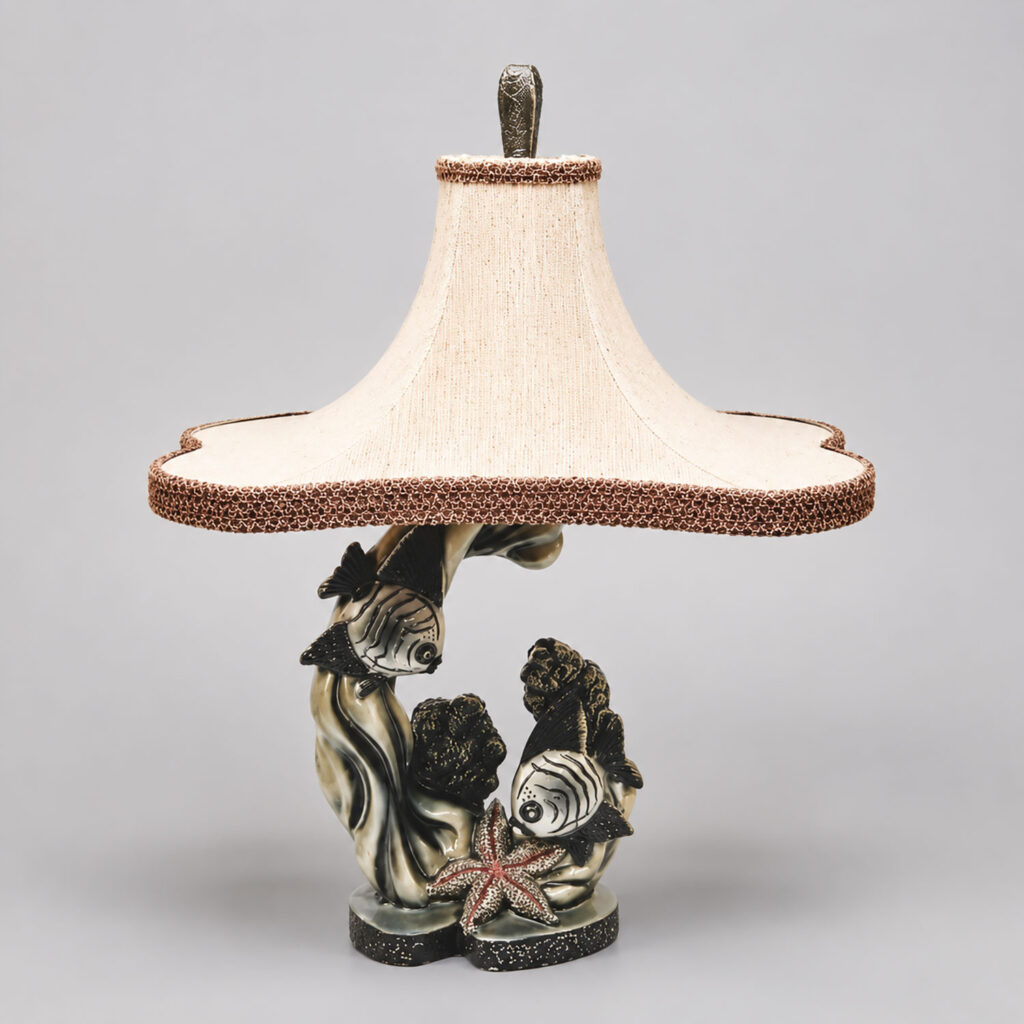
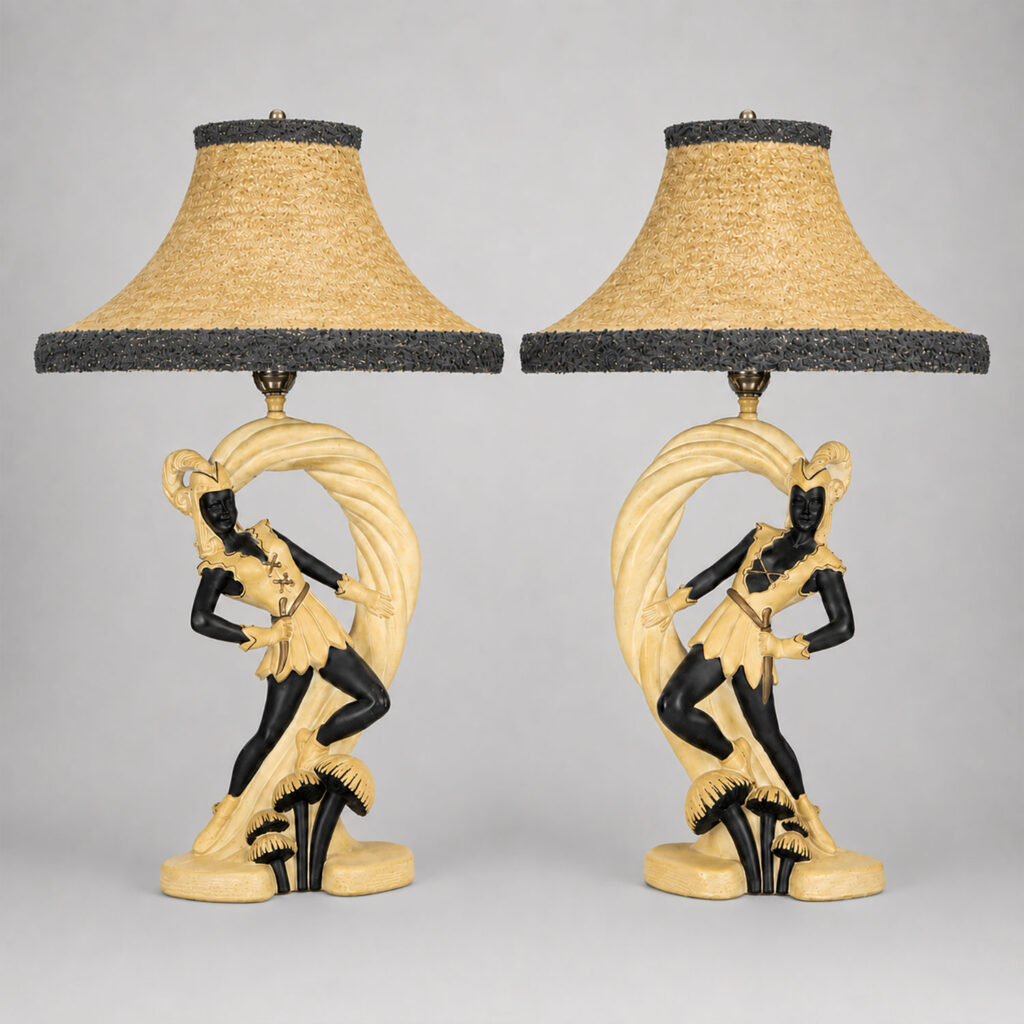
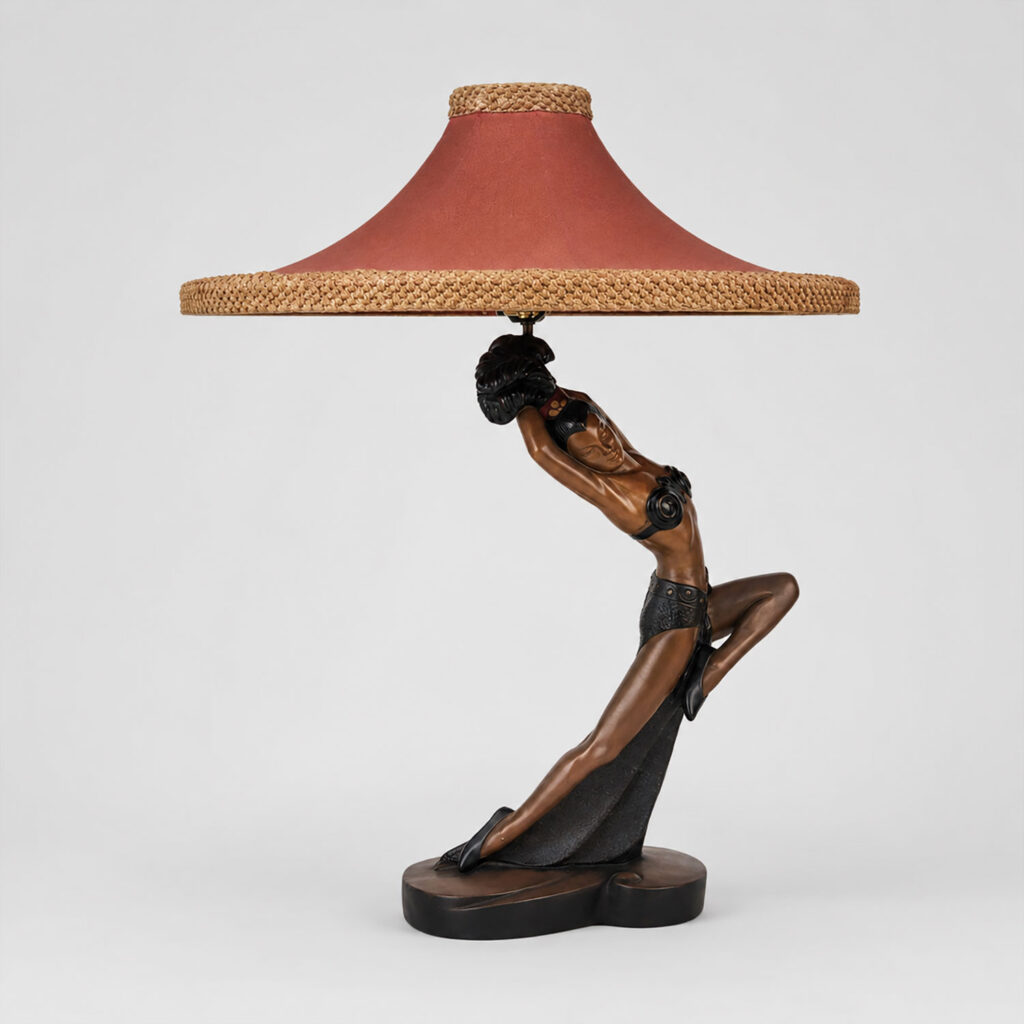
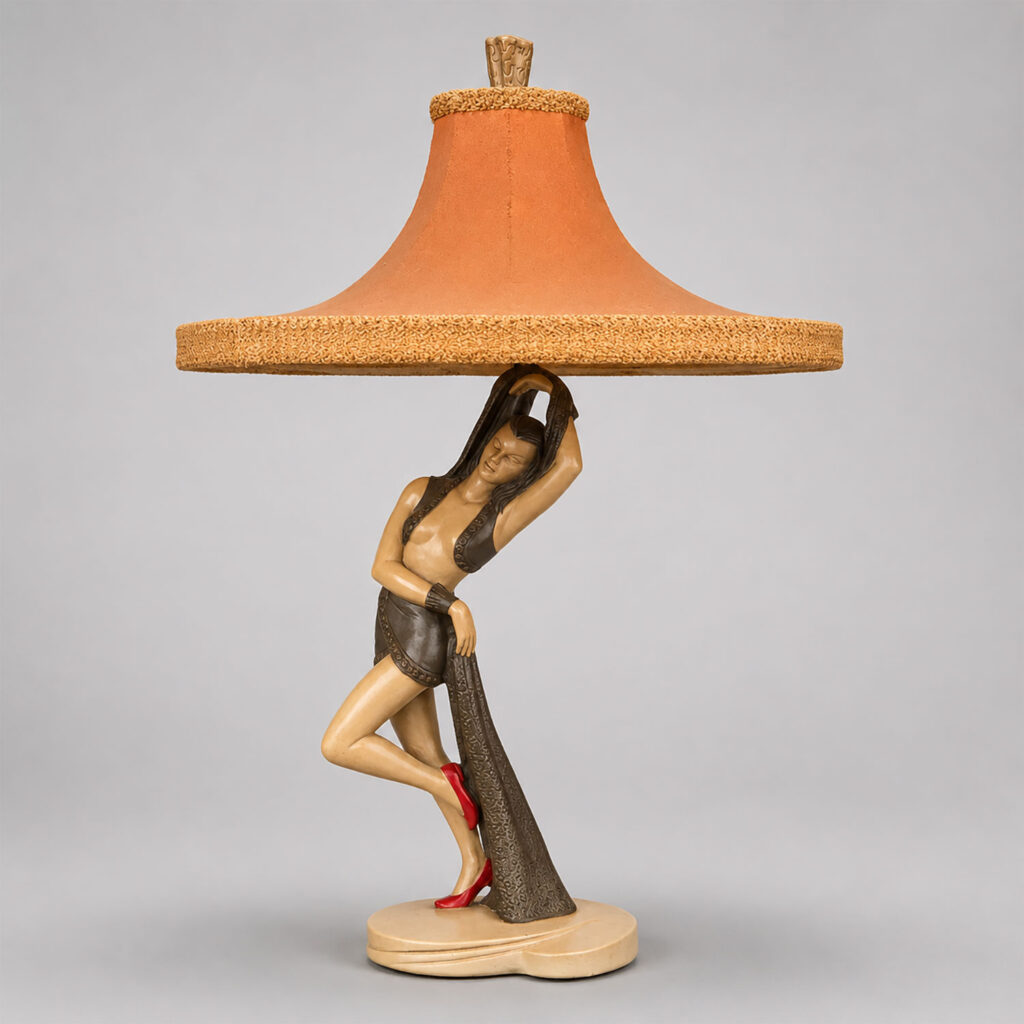
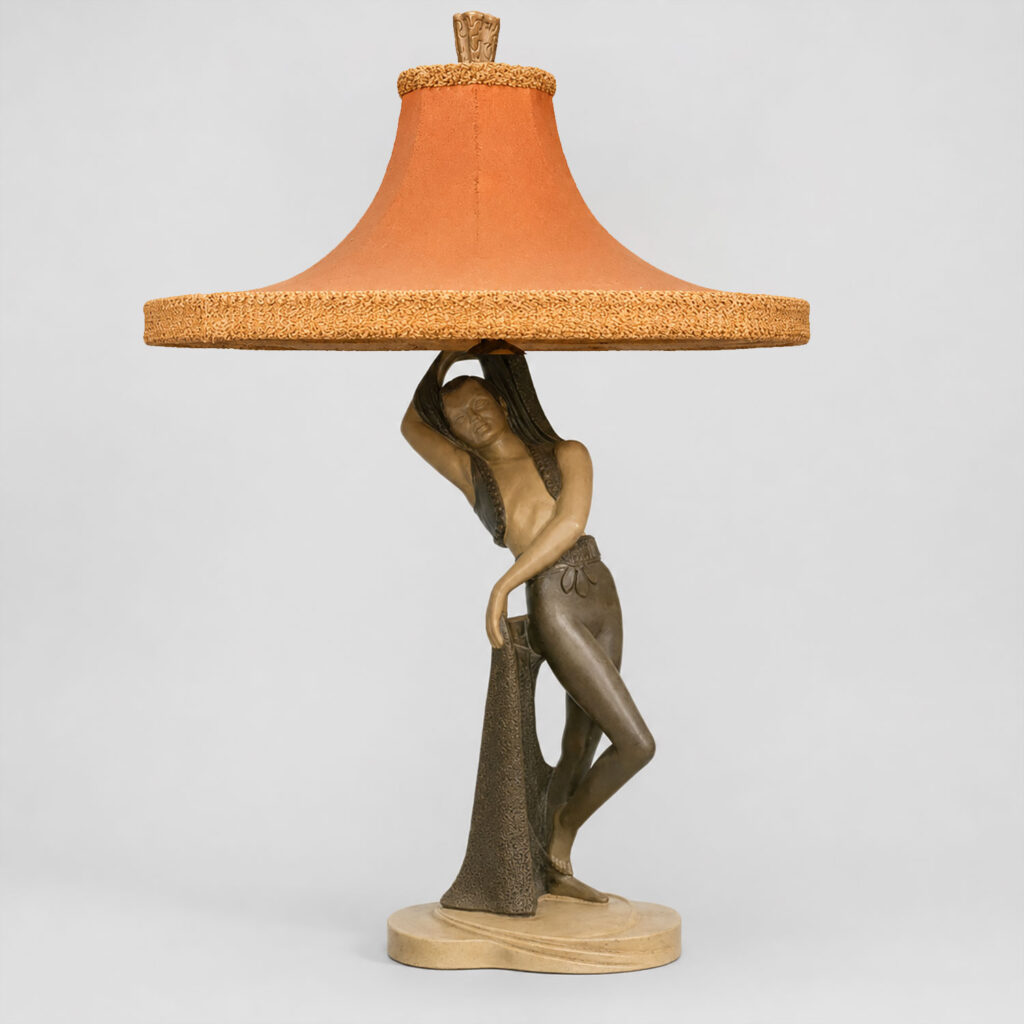
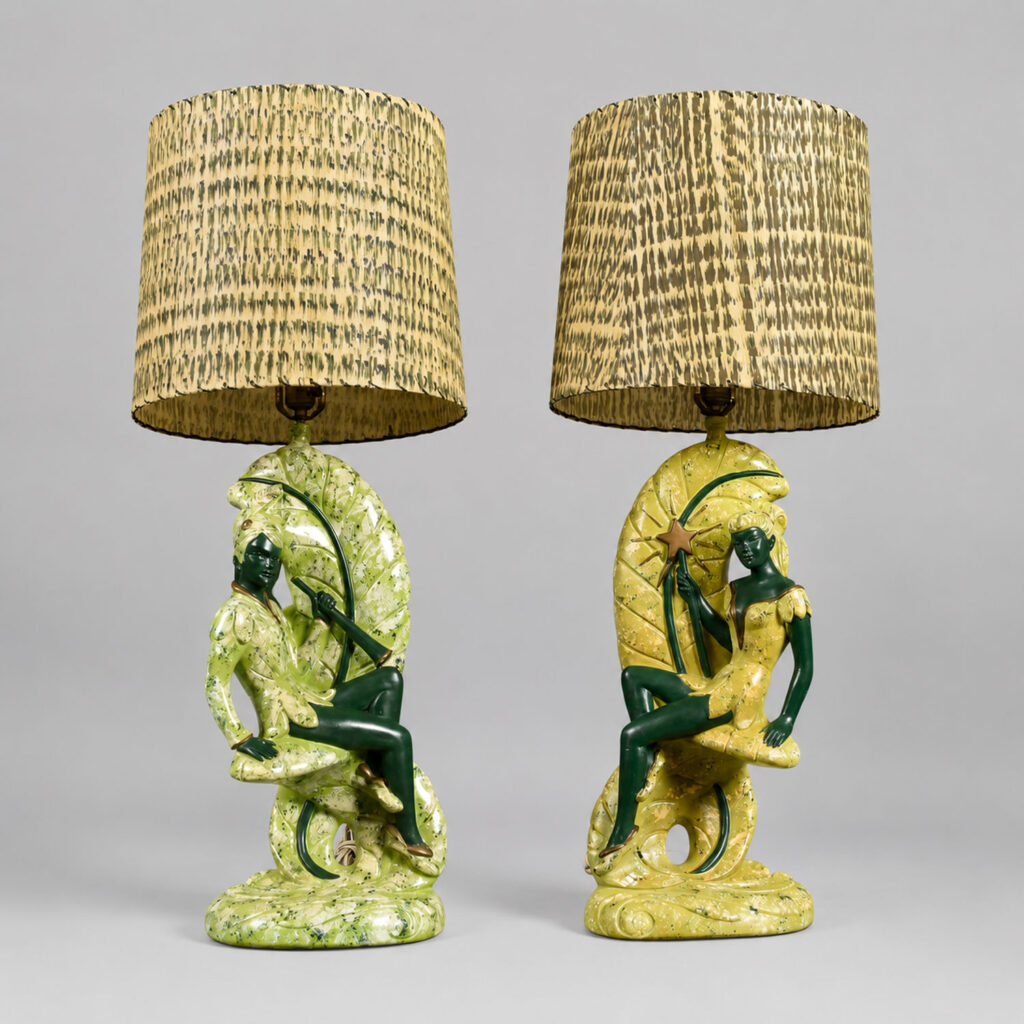
Continental Art Company lamps belong to the theatrical side of mid-century American design, where lighting was not just functional but decorative, sculptural, and often a little fantastical. These were not quiet background objects. They were meant to be seen, with figural bases, dramatic shades, metallic accents, and subjects drawn from dancers, storybook figures, European fantasy, and other decorative themes popular in the postwar period.
The company is best known for chalkware or plaster lamps from the late 1940s and 1950s. Surviving examples are often marked “Continental Art Co.” or “Continental Art Company” and frequently appear with large fiberglass shades, sometimes laced, painted, or shaped to match the drama of the base. Like lamps by Moss, Reglor, Lane & Co., and other postwar makers, Continental Art pieces reflect a period when the American table lamp became a kind of miniature stage set.
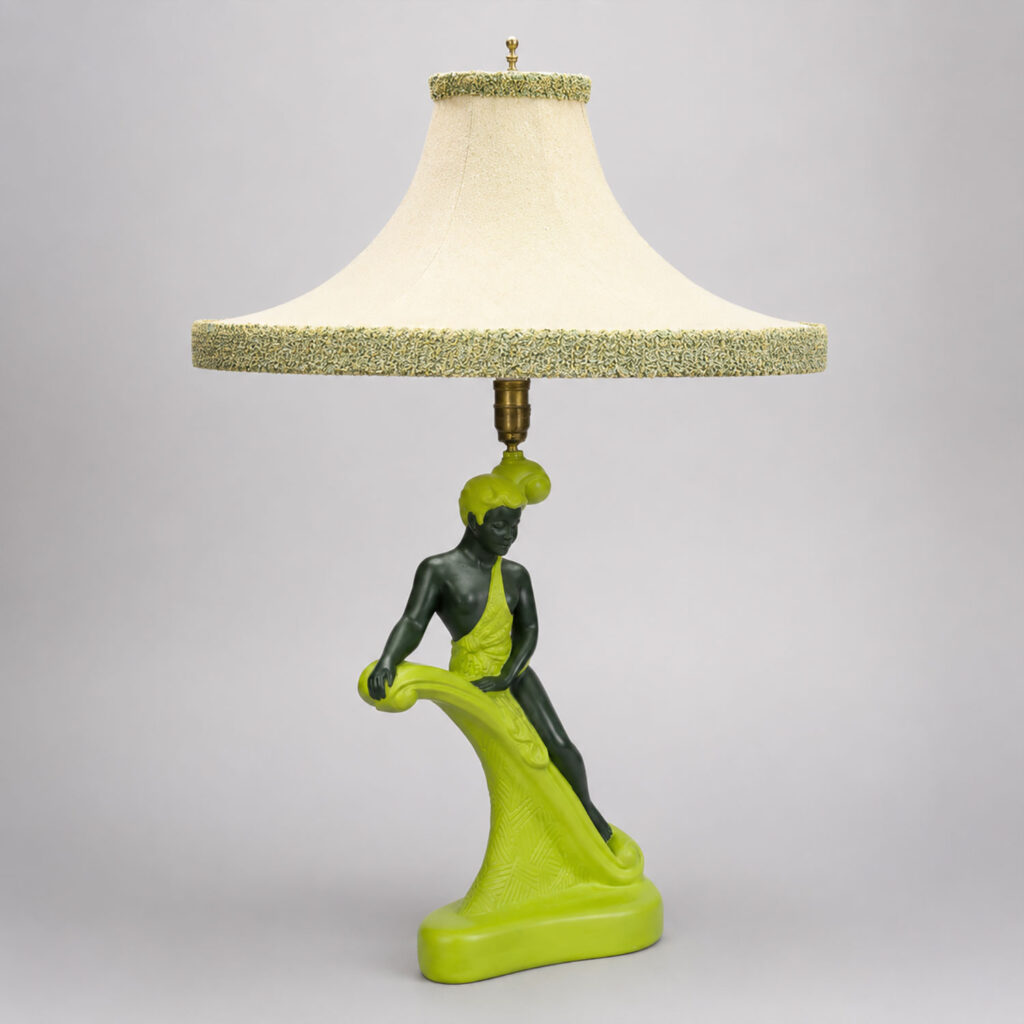
The appeal of these lamps lies partly in their materials. Chalkware allowed manufacturers to produce detailed figural forms at an affordable cost. It could be molded, painted, antiqued, and gilded, giving the lamp the presence of sculpture without the cost of ceramic or bronze. It was also fragile, which is why many surviving examples show chips, paint loss, or small repairs. For collectors, condition matters, but so does completeness. A lamp with its original shade, finial, and surface finish has far more impact than an orphaned base.
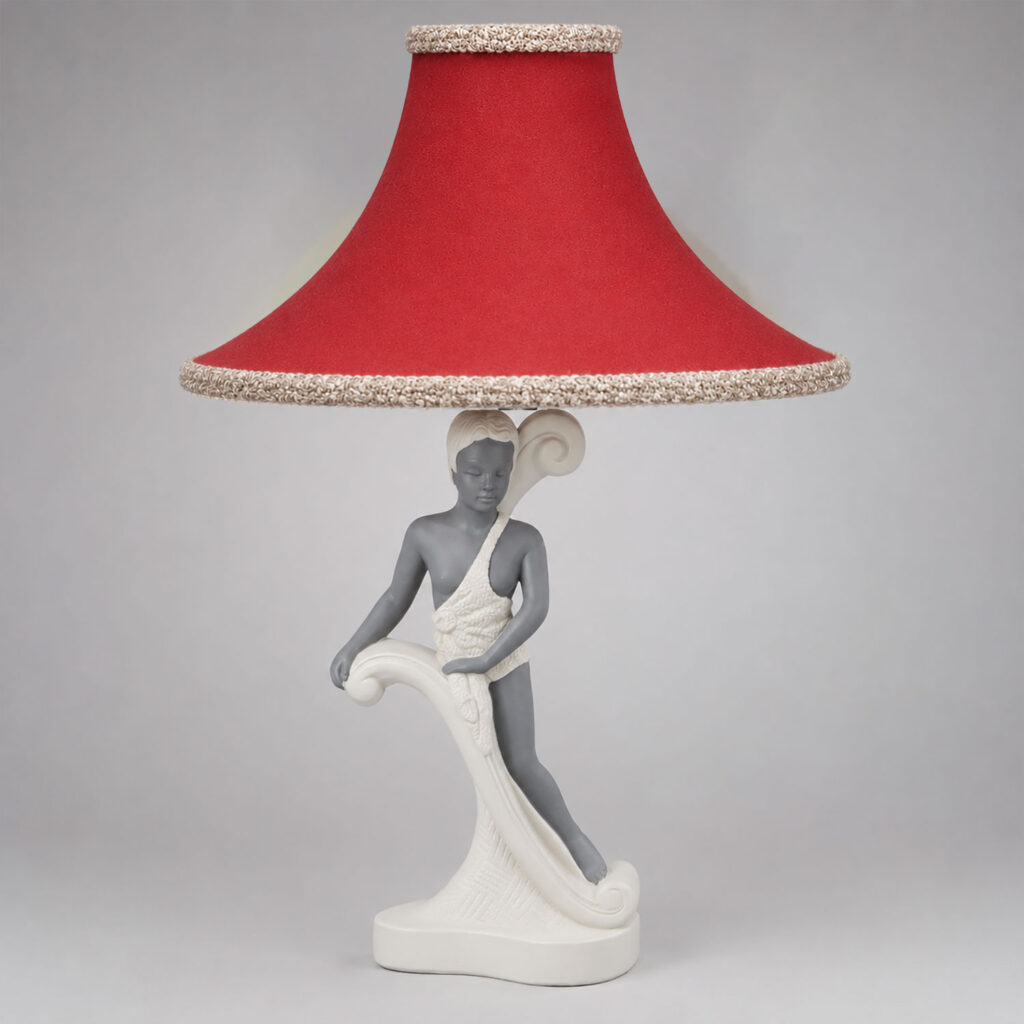
The shades are often as important as the figures. Fiberglass shades gave postwar lamps a warm, atmospheric glow and added texture, color, and scale. On Continental Art lamps, the shade often completes the composition. Without it, the base may read as a decorative figurine with a socket; with it, the lamp becomes a full mid-century object, balanced between furniture, sculpture, and lighting.
Continental Art lamps also capture the eclecticism of American interiors in the 1950s. They are not strict modernism, and they are not historical reproductions. They borrow freely from older European, folkloric, theatrical, and exoticized imagery, then reinterpret it through postwar color, materials, and domestic taste. That mixture is part of what makes them interesting now. They show a version of mid-century design that was playful, layered, and often much more decorative than the clean-lined modernism usually associated with the period.
For collectors, the best examples have strong sculptural presence, intact painted surfaces, original or period-appropriate shades, and clear markings. Matched pairs are especially desirable, as many figural lamps were designed as complementary sets.
Continental Art Company lamps are not minimalist objects, and that is their charm. They remind us that the mid-century home was not only Danish chairs, abstract clocks, and streamlined furniture. It was also fiberglass shades, chalkware figures, gold accents, and lamps that looked as though they had wandered in from a stage set. For collectors of postwar American design, they remain vivid examples of just how theatrical and imaginative domestic lighting could be.