



Ficks Reed Fujiyama 1964 Brochure
The Fujiyama collection by Ficks Reed is one of the company’s more distinctive mid-century rattan lines. Introduced as “the pinnacle of rattan,” it was designed to move rattan beyond the porch, patio, or sunroom and into the main rooms of the house.
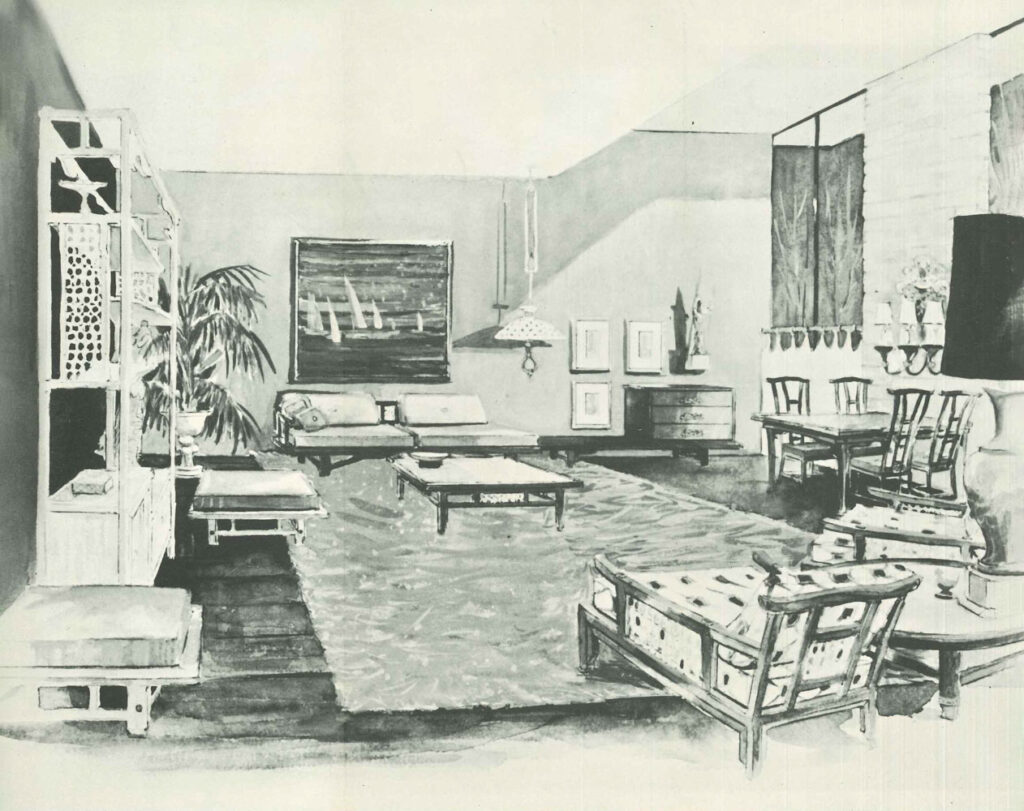
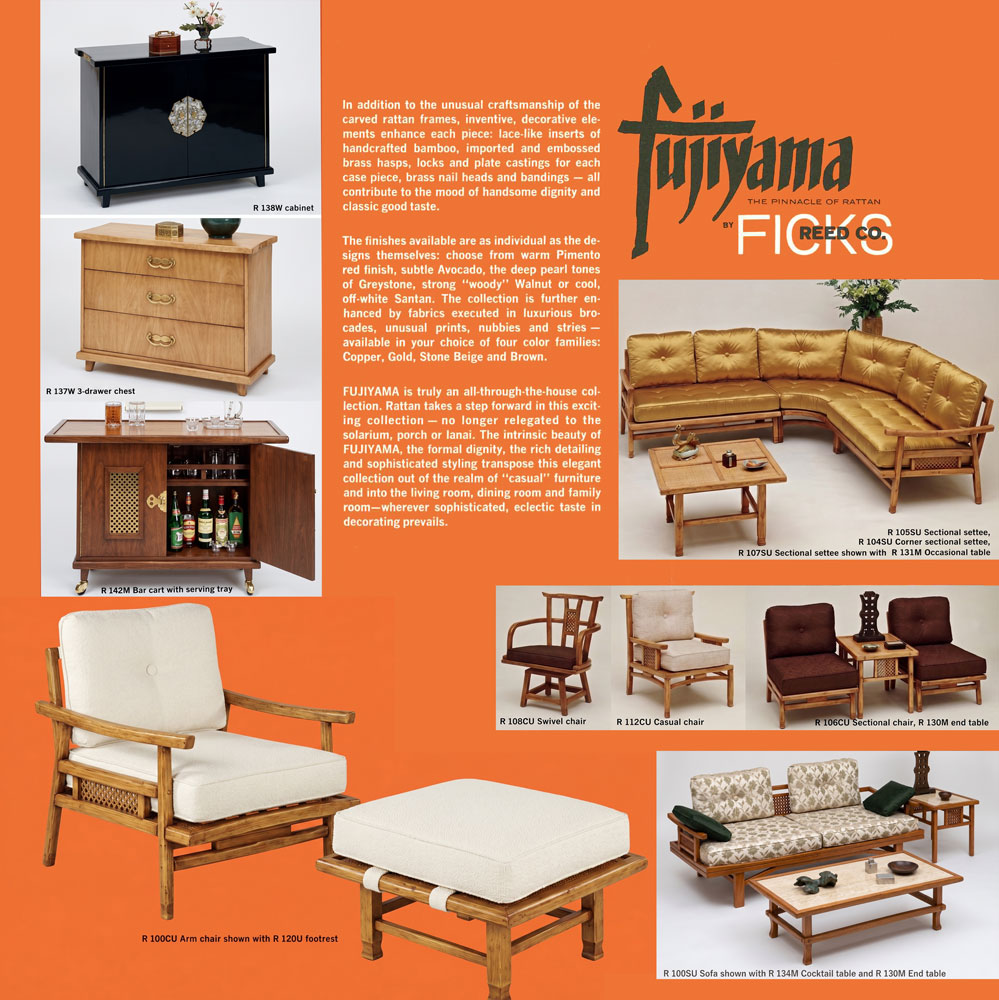
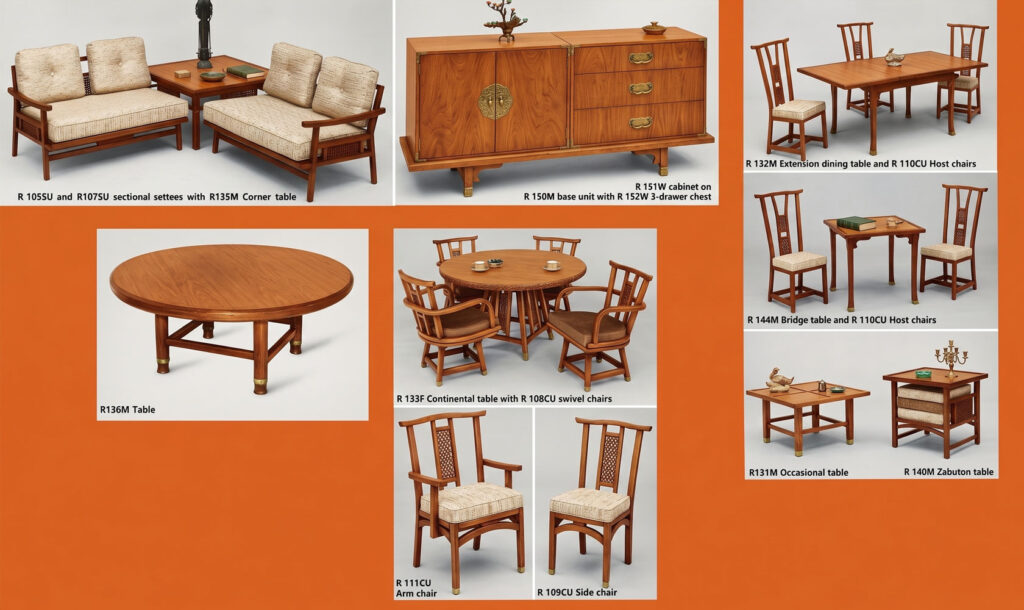
The catalog makes that ambition clear. Fujiyama was presented as an “all-through-the-house” collection, with seating, dining furniture, cabinets, chests, occasional tables, a room divider, and even a bar cart. This was not just casual furniture for warm-weather spaces. Ficks Reed was showing rattan as a complete interior design choice.
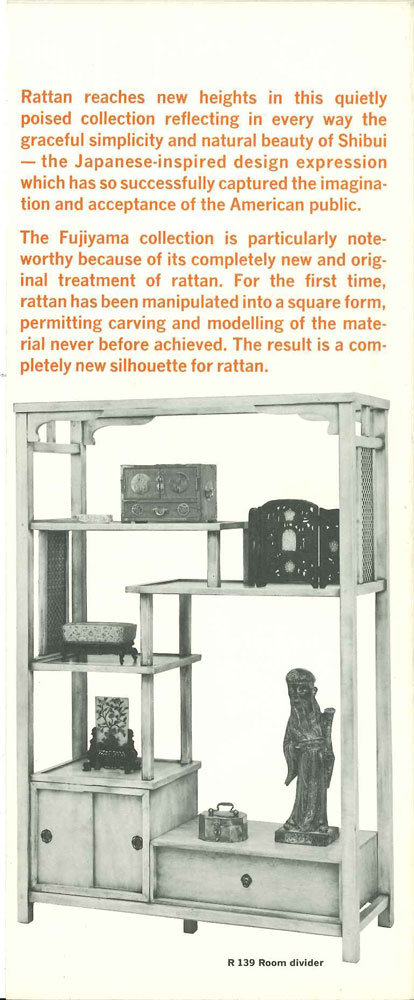
The Japanese influence is central to the line. The catalog describes Fujiyama as inspired by Shibui, a Japanese design idea associated with quiet simplicity, restraint, and natural beauty. That influence fit very well with American interiors in the early 1960s, when designers and shelter magazines were increasingly interested in Japanese aesthetics: low horizontal forms, open space, screens, natural materials, and understated details.
Fujiyama reflects that influence in a very direct way. The pieces are low, clean-lined, and architectural. The frames are more squared-off than the rounded rattan most people associate with tropical or resort furniture. The catalog notes that the rattan had been manipulated into square form, which allowed for carving and modeling of the material and gave the line a more structured silhouette.
The details also make the collection feel more formal than typical rattan furniture. Many pieces combine rattan frames with wood surfaces, woven panels, brass hardware, and decorative metal accents. The cabinets and chests, especially, have a polished, almost ceremonial quality, while the sectional seating and occasional tables keep the line relaxed enough for everyday living.
The available finishes show how carefully Ficks Reed positioned the collection. Fujiyama could be ordered in colors such as Pimento Red, Avocado, Greenstone, Walnut, Natural, and off-white Satin, with coordinated fabric options in tones like Copper, Gold, Stone Beige, and Brown. It was meant to be part of a designed room, not just an accent piece.
Today, Fujiyama stands out because it captures a very specific moment in 1960s design. Rattan was still associated with casual living, but Ficks Reed was trying to give it a quieter, more sophisticated identity. The result is a collection that feels warm and relaxed, but also restrained, elegant, and unmistakably mid-century.