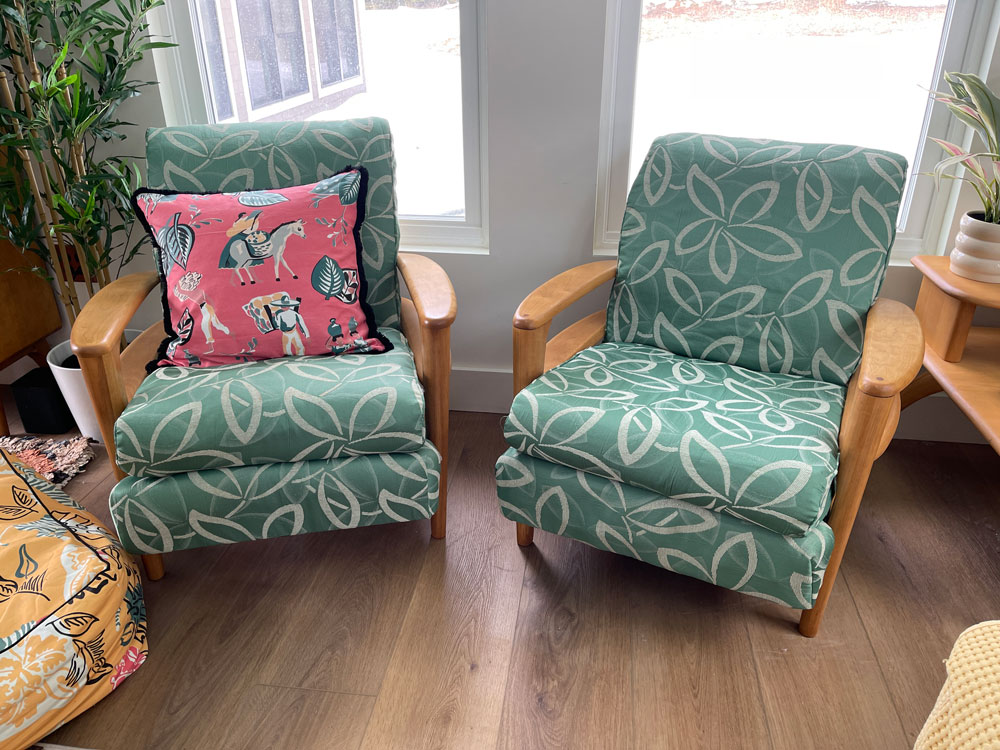




Restoring a Pair of Heywood-Wakefield C3980C Streamline Arm Chairs
These two Heywood-Wakefield C3980C arm chairs are from the company’s Streamline line, produced circa 1941–44. Like so much of Heywood-Wakefield’s best wartime-era seating, they have that deceptively simple combination of rounded birch, generous proportions, and just enough curve to make them feel modern without being severe. The arms sweep forward in one continuous line, the back posts extend slightly above the cushion, and the whole frame has the sturdy, practical optimism that defines the Streamline group.
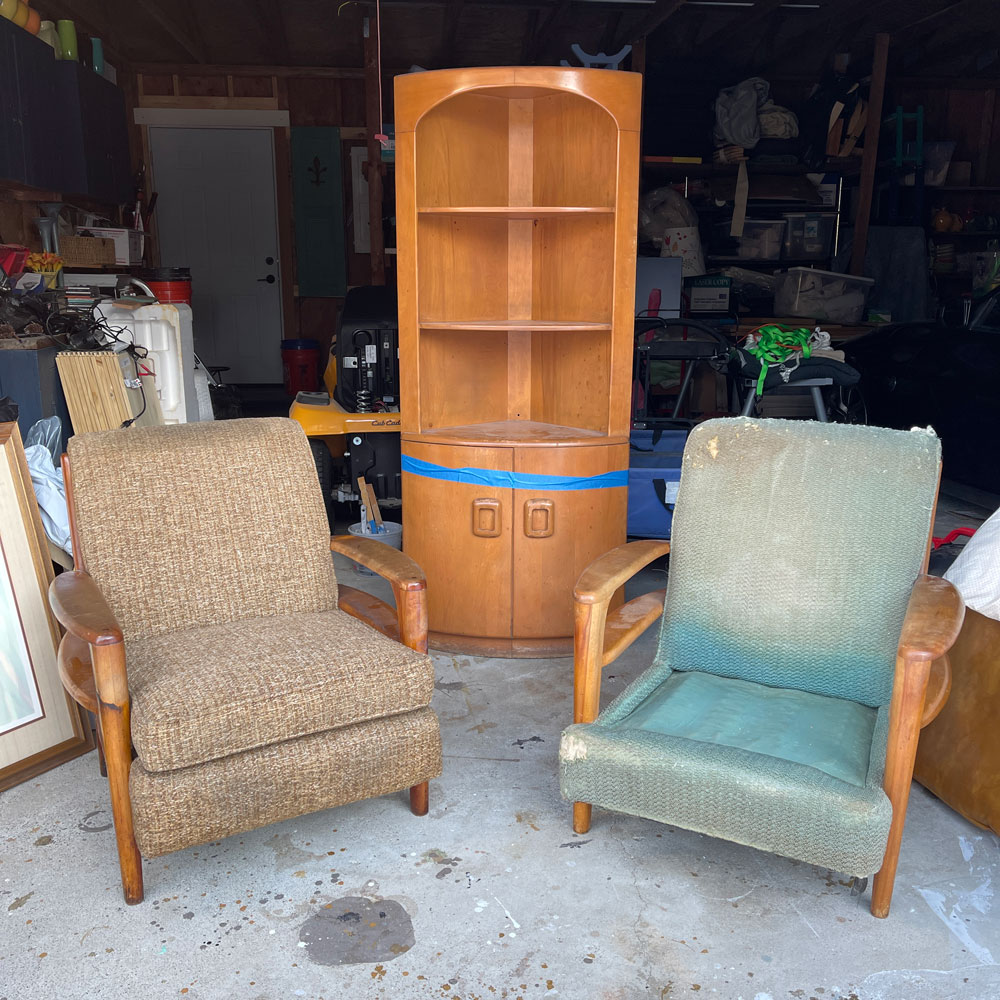
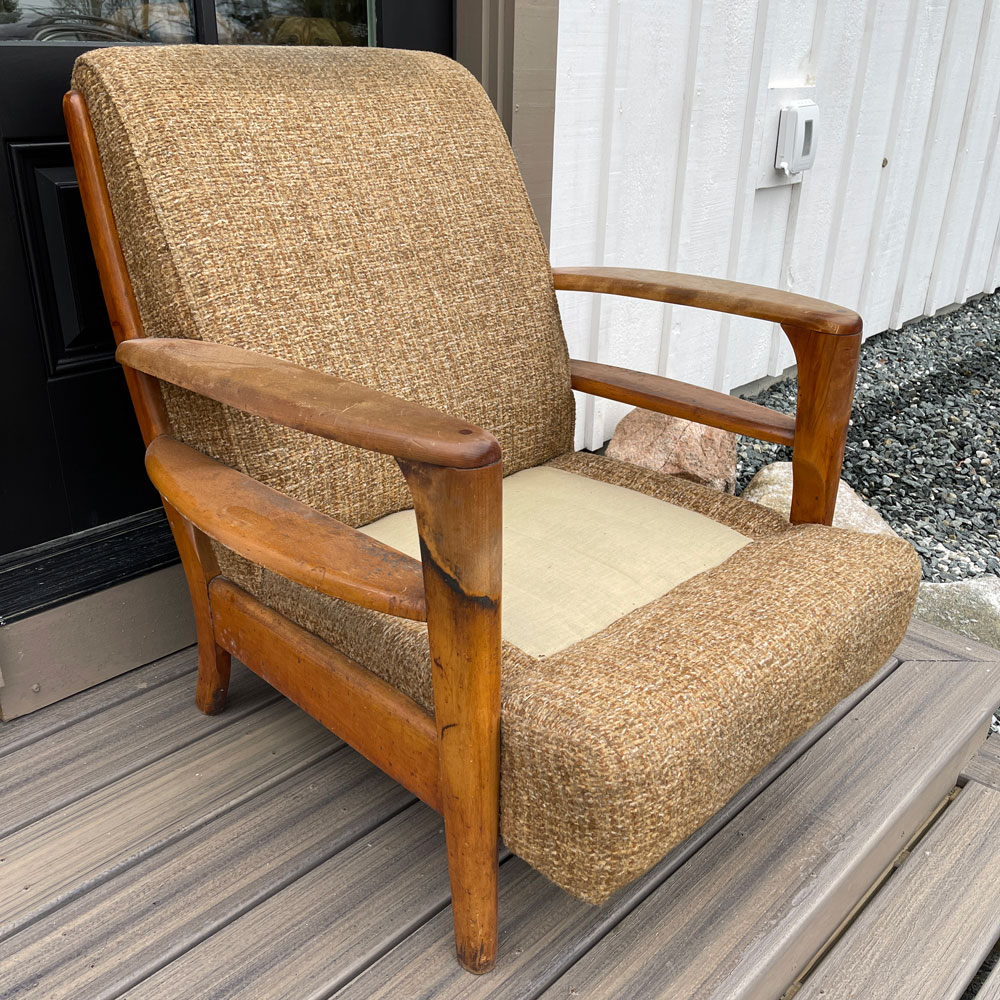
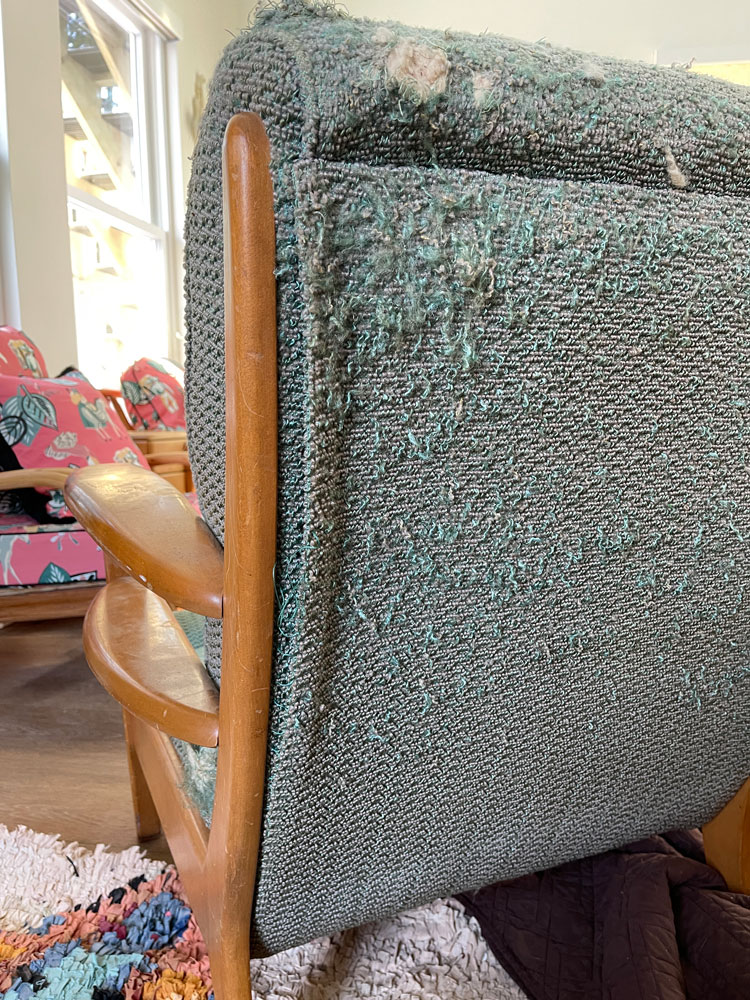
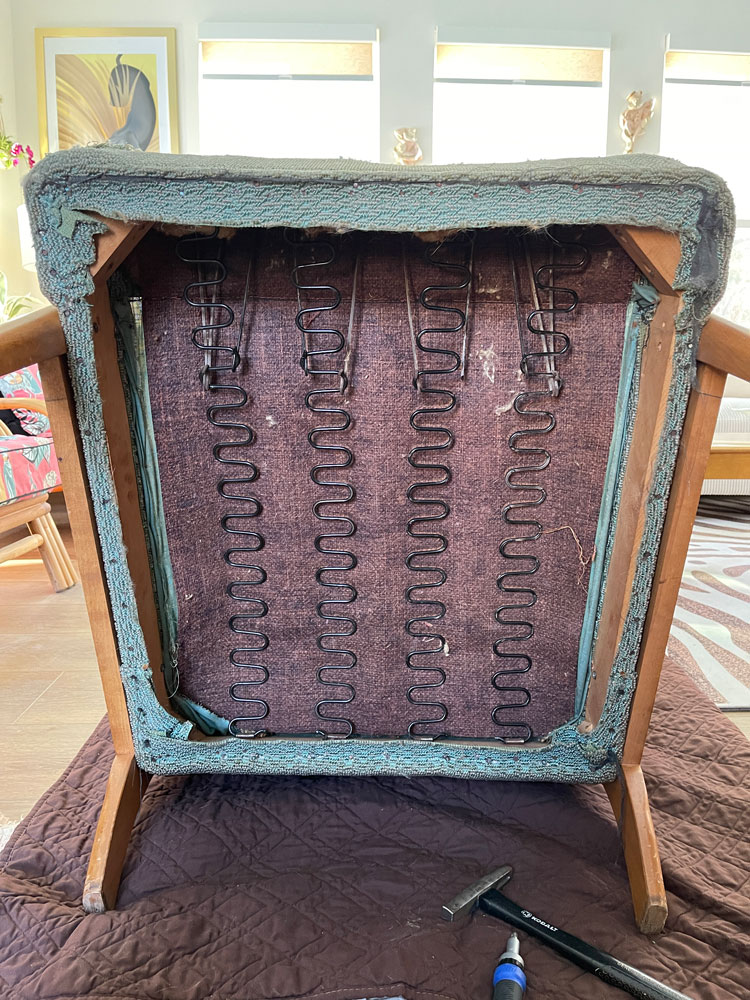
When I found them, the pair told two different stories. One chair still had its original upholstery, worn and faded but intact enough to reveal how it had been constructed. The other had been professionally reupholstered, probably sometime in the late 1960s or 1970s, in a textured brown fabric that was much more of its own era than Heywood-Wakefield’s. Both chairs needed work, but the original chair was the real gift. It gave me a physical pattern, a construction guide, and a little time capsule of how these chairs were put together when they left the factory. The second chair needed significant repair to the back springs.
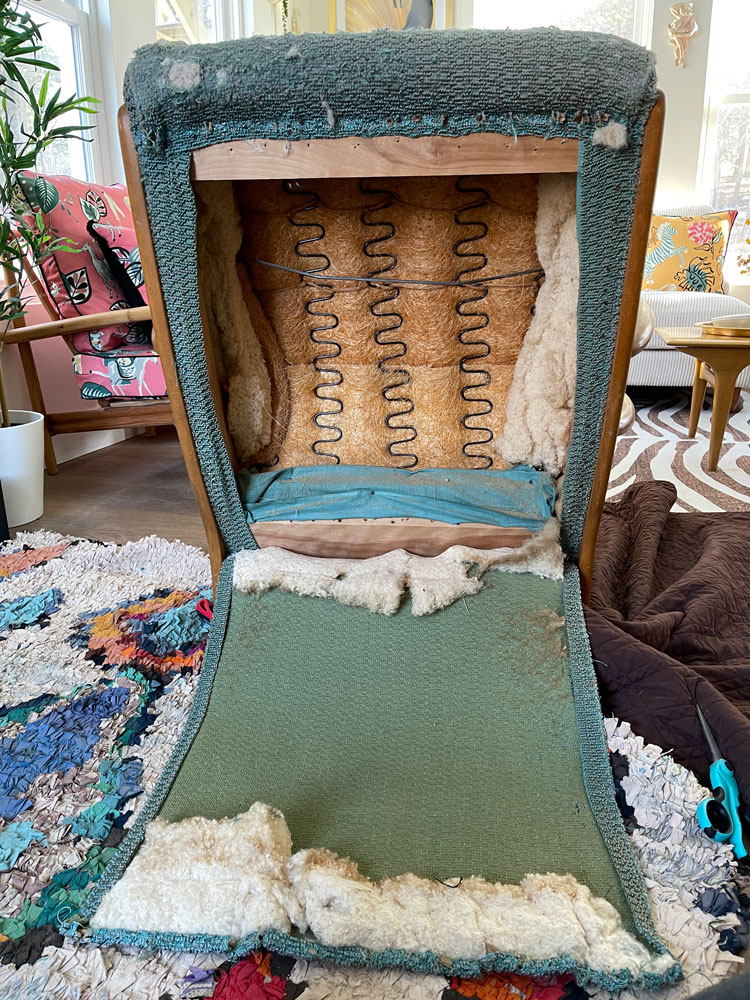
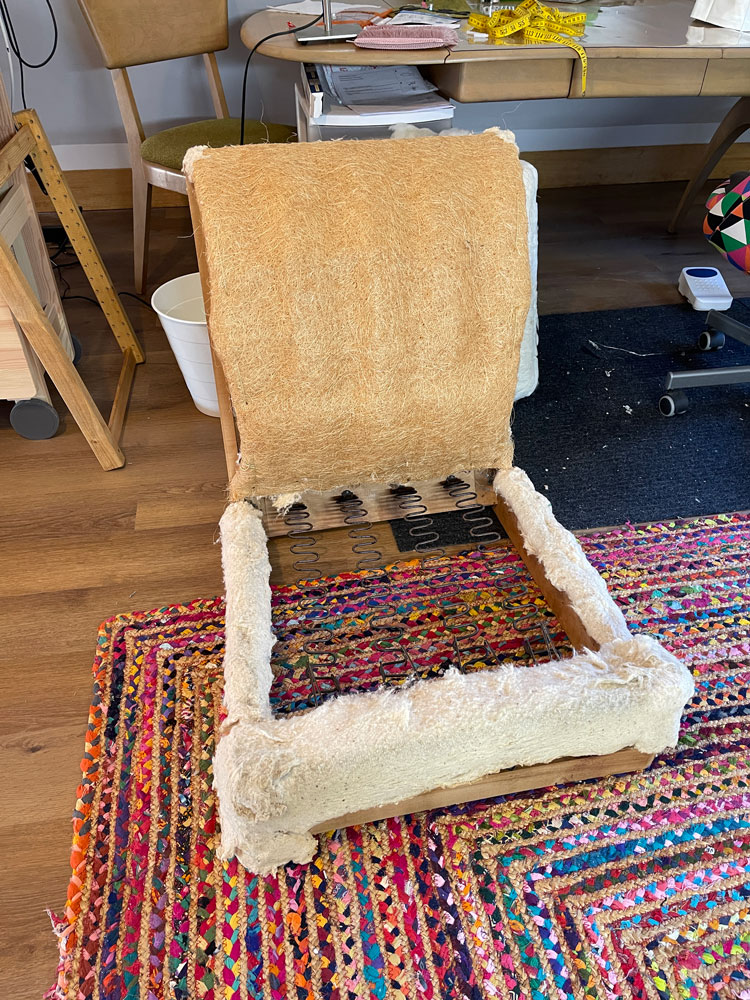
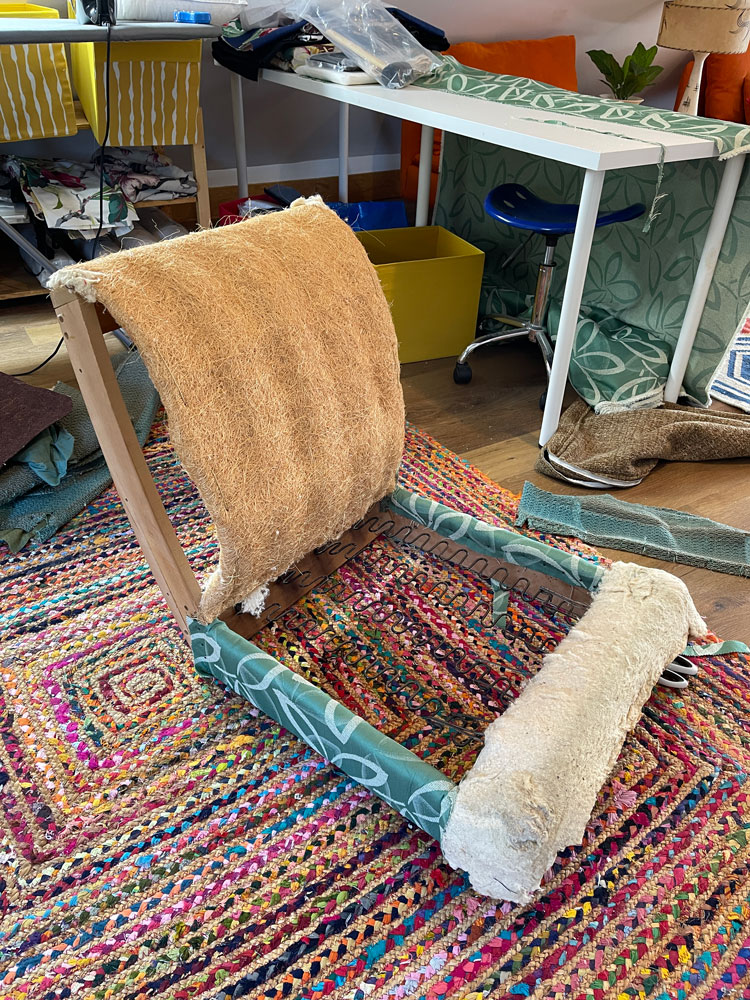
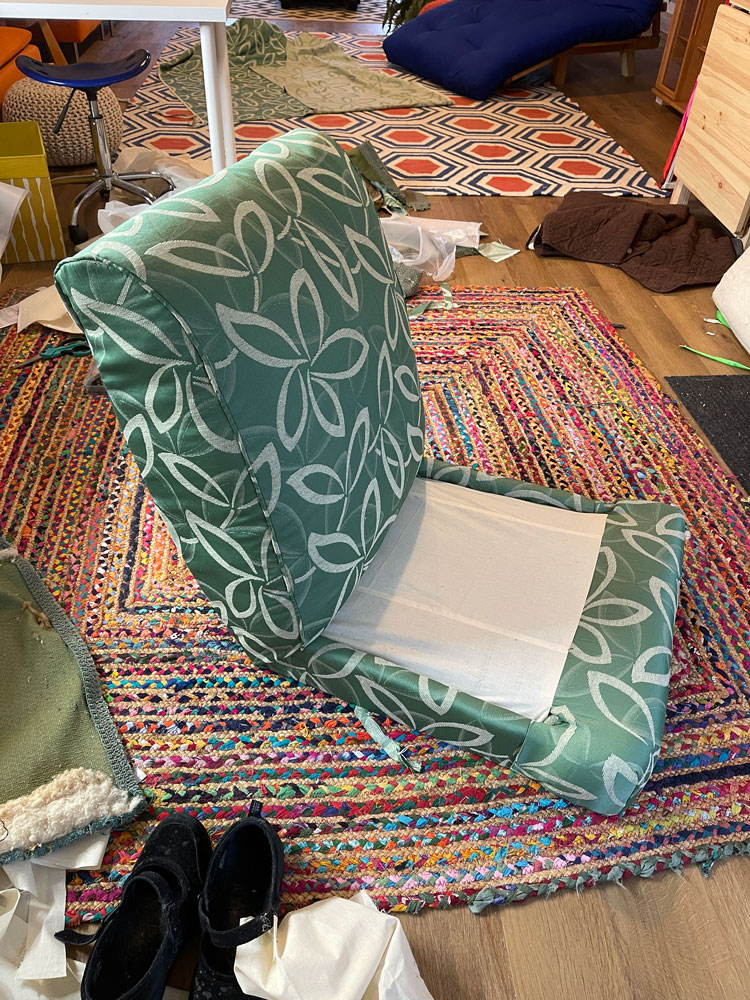
I am especially glad I tackled the original one first, because it was my very first upholstery job. That sounds slightly insane in retrospect, but it was also the best possible education. Taking the chair apart slowly let me see the order of construction, the way the fabric was wrapped, where the seams fell, how the cushion was shaped, and how the interior materials worked together. Under the fabric were the old springs, padding, and structural clues that would have been impossible to fully understand from photographs alone. I tried to treat it less like “recovering a chair” and more like reverse engineering an object.
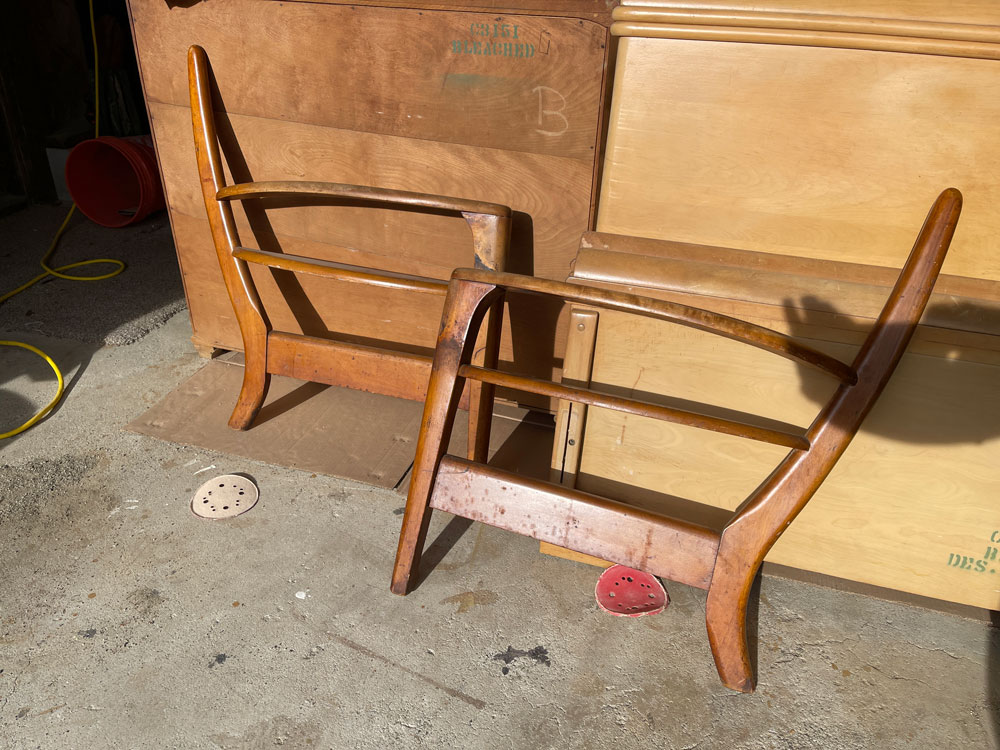
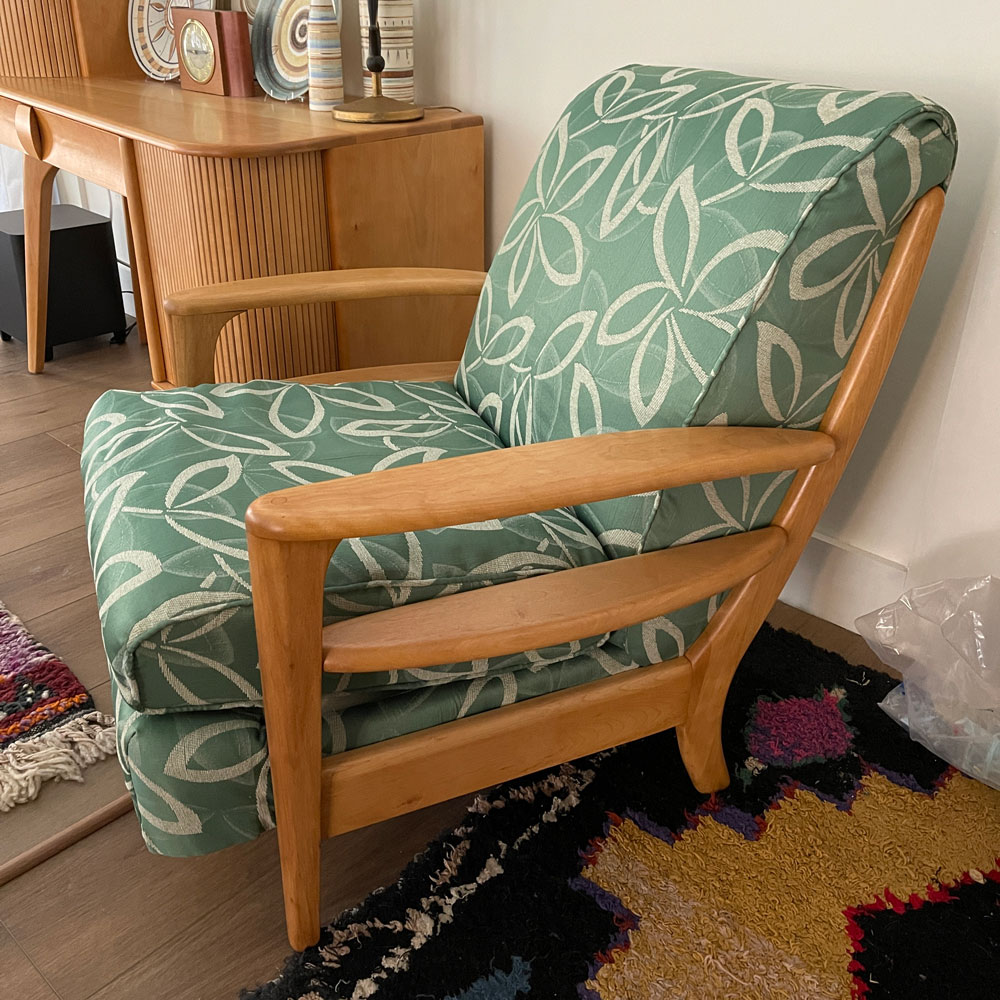
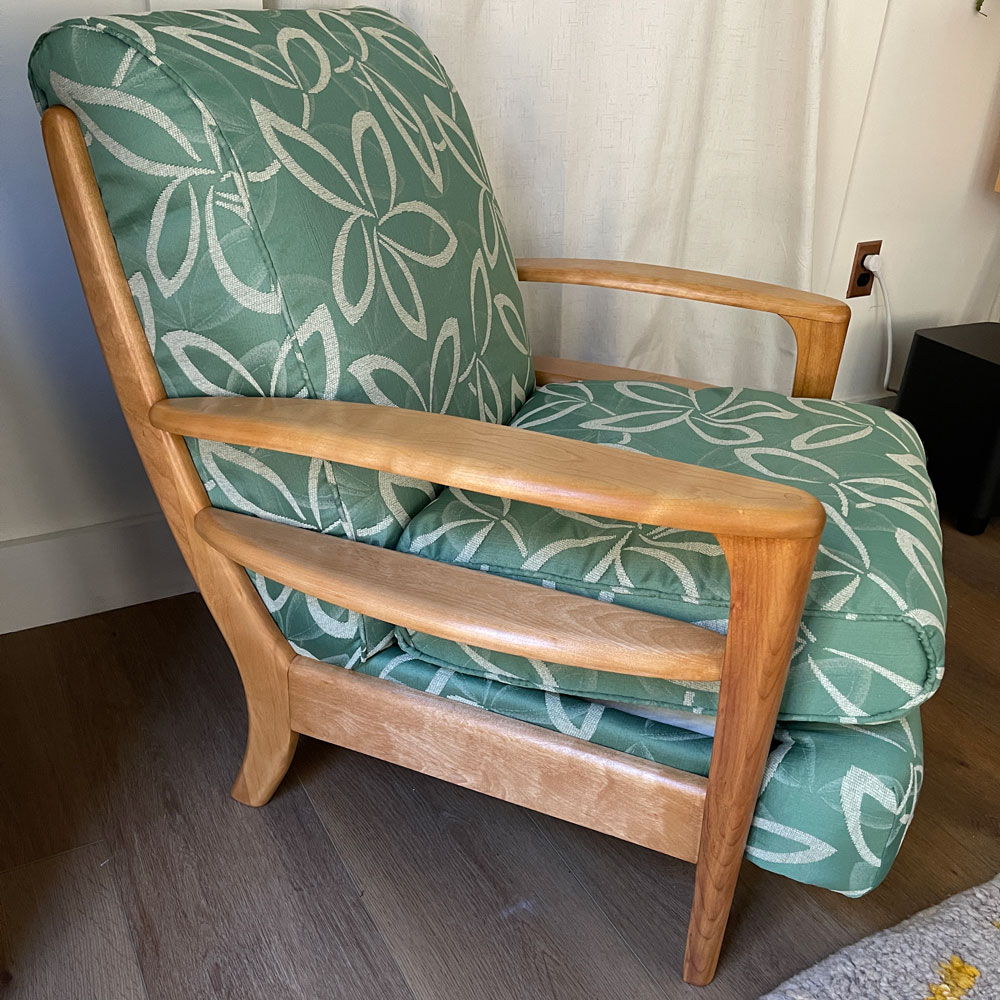
I refinished the frames in Champagne stain, which brought the wood back to the warm, pale tone associated with Heywood-Wakefield’s classic finishes. The original finish had darkened, worn, and stained over time, especially on the arms and lower frame, but the wood itself was still beautiful. Once stripped and refinished, the shape of the chairs came forward again. The rounded arms, tapered legs, and broad rails suddenly read as intentional design instead of just old furniture that had seen a lot of use.
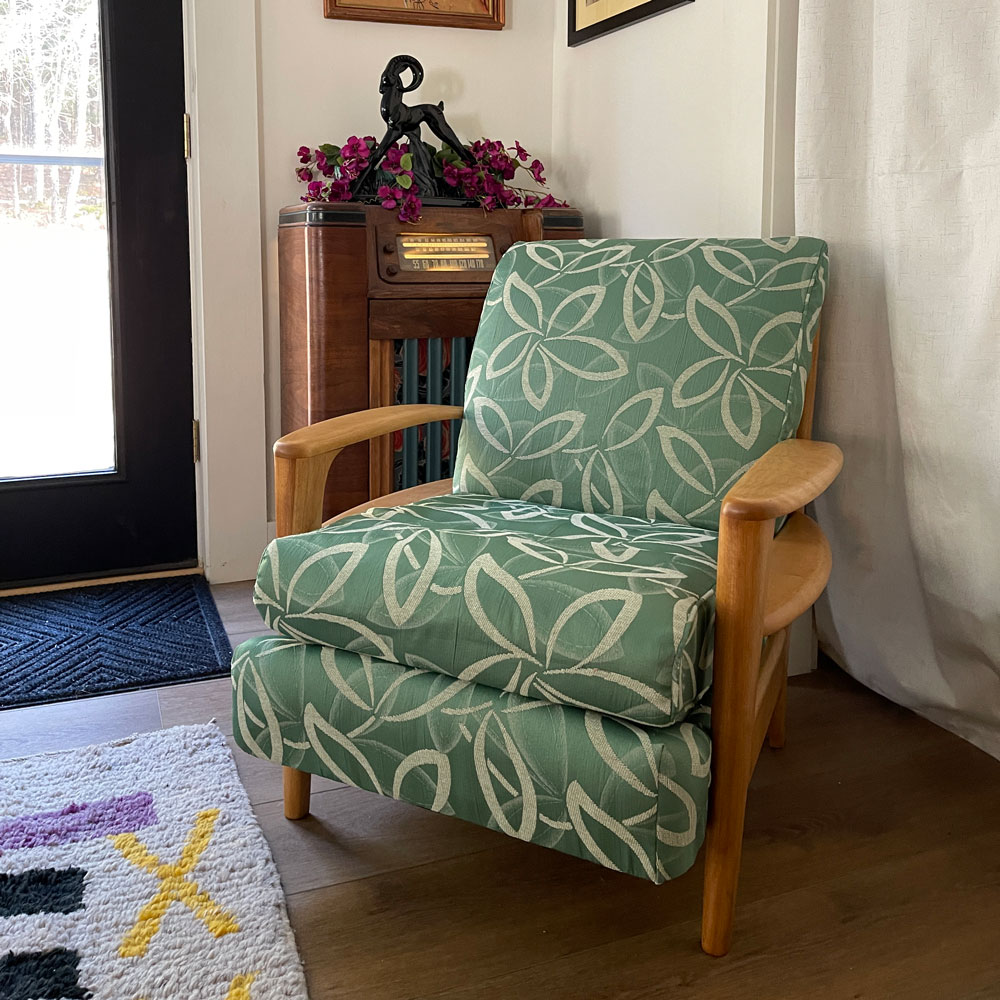
For the upholstery, I wanted something that respected the period without pretending to be an exact reproduction. I chose a green fabric with a large-scale, looping leaf pattern that works well with the generous planes of the back and seat cushions. The pattern has enough movement to complement the curved frame, while the color plays nicely against the Champagne finish. It is not original, but it feels sympathetic to the chair: graphic, warm, and slightly playful, which is where a lot of Heywood-Wakefield furniture lives at its best.
The original chair also taught me how much labor is hidden inside a seemingly simple upholstered armchair. Once the outside fabric is off, the chair becomes a layered system of springs, burlap, padding, muslin, shaped cushion forms, tack lines, seams, boxing, and tension. Nothing is really flat. Every edge has to turn a corner. Every cushion has to compress but still recover. Every mistake shows somewhere. By the time I finished the first chair, I understood why upholstered pieces are often the hardest Heywood-Wakefield items to find in good condition.
That scarcity makes sense. Case pieces can survive decades with scratches, water rings, or a bad refinish, but upholstered chairs ask more from their owners. Fabric wears out, foam collapses, springs sag, and tastes change. Once a chair started looking tired, many people simply discarded it rather than investing in reupholstery. Even when the frame survived, the original upholstery was often removed long ago, taking with it a record of how the chair was made.
The second chair was easier because the first one had done the teaching. It had already shown me the map. The professionally reupholstered chair was useful in its own way, but it no longer carried the same evidence. The original chair gave me the details I needed to make both pieces feel like a pair again: not factory-new, and not over-restored, but structurally sound, usable, and visually coherent.
Now restored, the C3980C chairs have the presence they should have had all along. They are comfortable without being bulky, modern without being cold, and solid in the way Heywood-Wakefield furniture usually is.
This project was a lot to take on as a first upholstery attempt, but it was also exactly the kind of project I like: part restoration, part research, part problem-solving. The best thing about working on pieces like this is that they reward close attention. The more carefully you take them apart, the more they tell you. And in this case, one worn original chair helped bring a matching pair back into use.