



Restoring a Rare Set of 1936 Heywood-Wakefield C2918 Streamline Chairs
Some pieces announce themselves immediately. Others take a little looking. These 1936 Heywood-Wakefield C2918 chairs fall into the second category: modest at first glance, but quietly important once you understand where they sit in the company’s design history. In fact, I had watched these chairs for more than a year on Marketplace before picking them up in the Boston area. They are part of the earliest phase of Heywood-Wakefield’s Streamline line, introduced at a moment when the company was beginning to move away from more traditional forms and toward the cleaner, lighter, more modern furniture that would define its best-known work in the decades that followed.
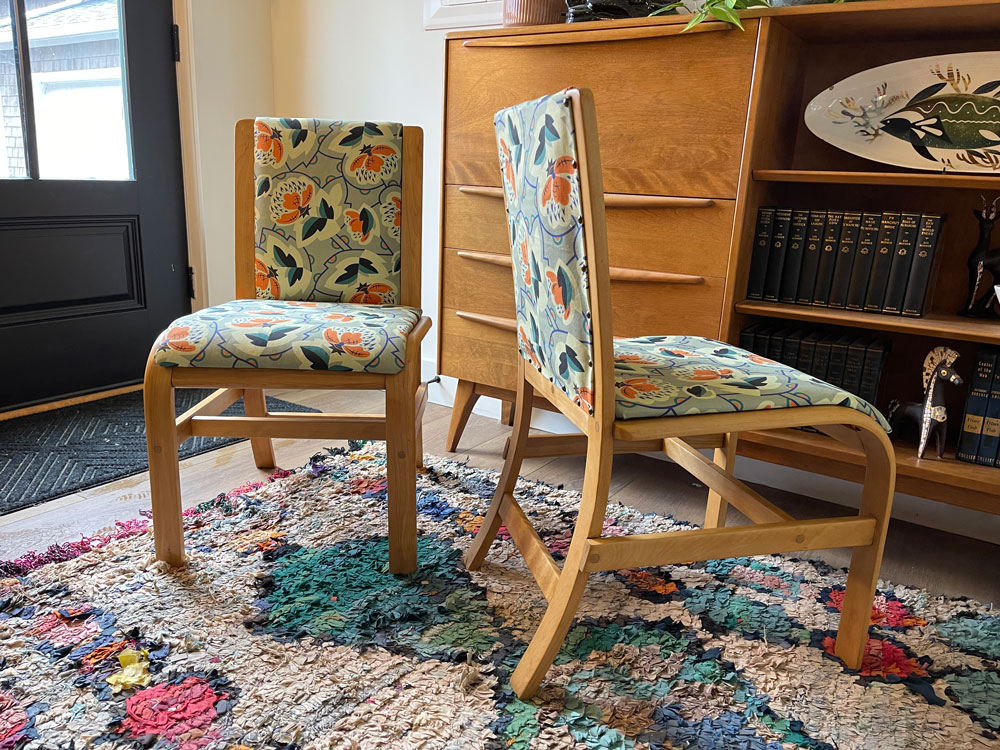
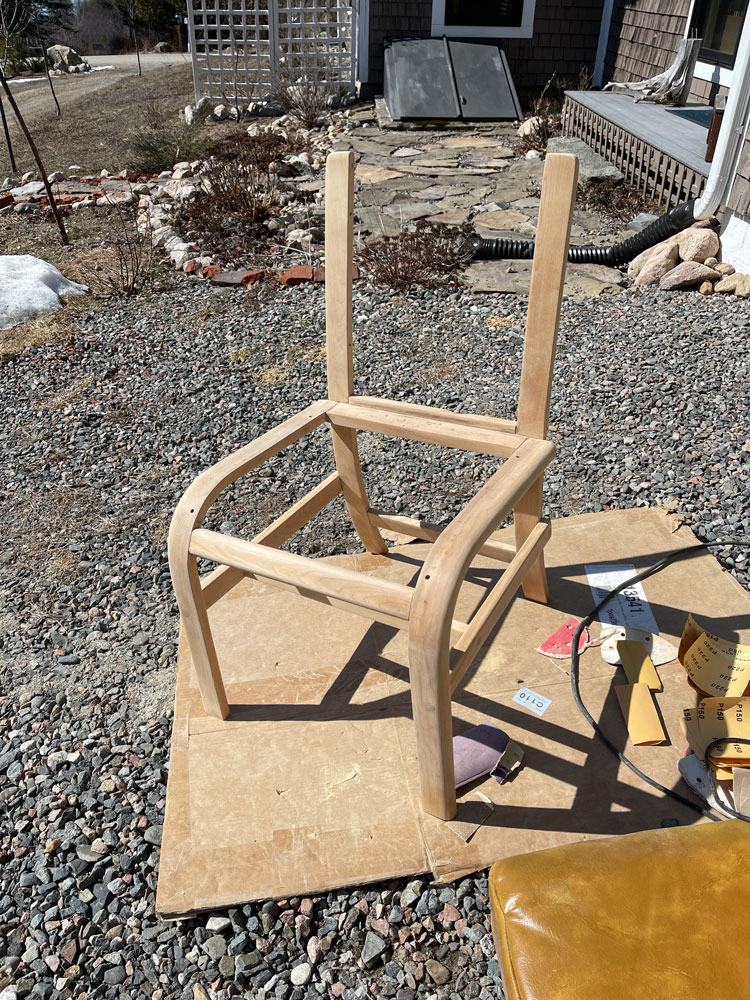
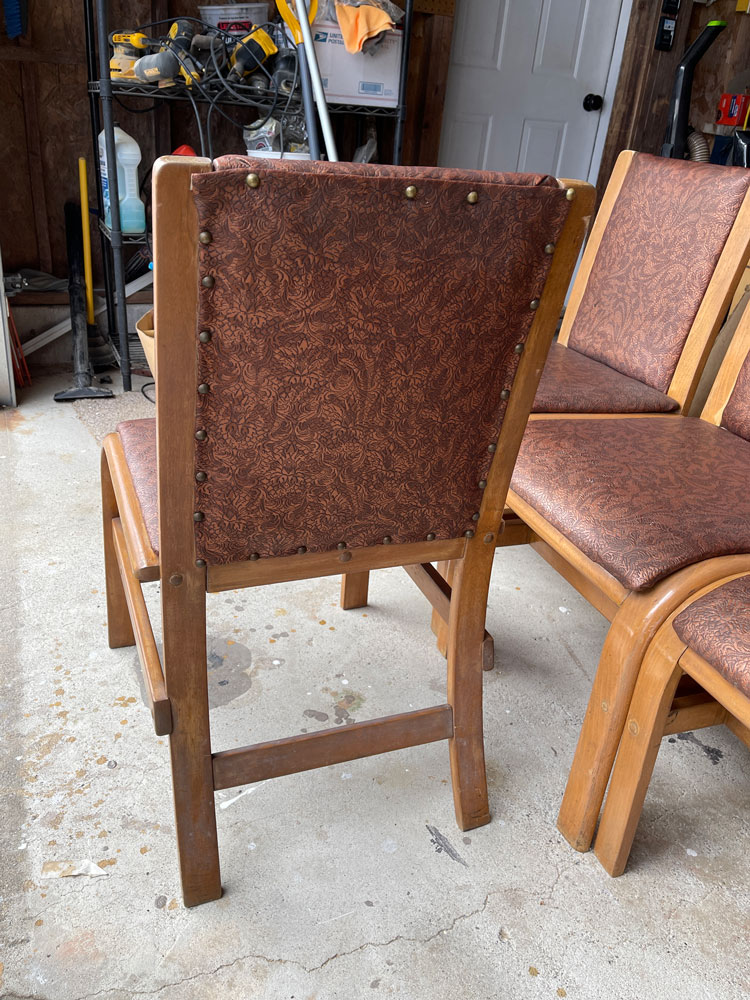
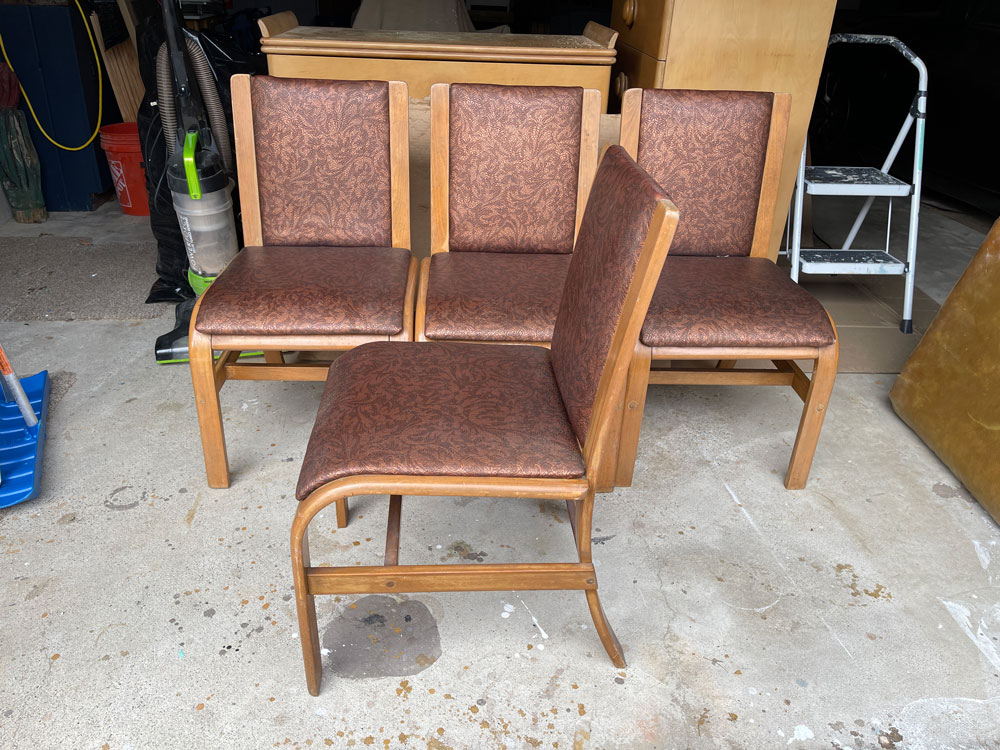
The C2918 chair is a particularly interesting design because it still carries some of the practical construction language of earlier Heywood-Wakefield seating while introducing a much more modern silhouette. The frame is open and architectural, with a squared back, simple uprights, and a curved front leg structure that gives the chair a sense of motion without making it fussy. That curve is really the point. It is not ornament applied to the surface; it is built into the structure of the chair. In that way, the design belongs very much to the mid-1930s, when American manufacturers were translating the language of streamlining into domestic furniture through rounded corners, softened profiles, exposed construction, and a general sense of forward movement.
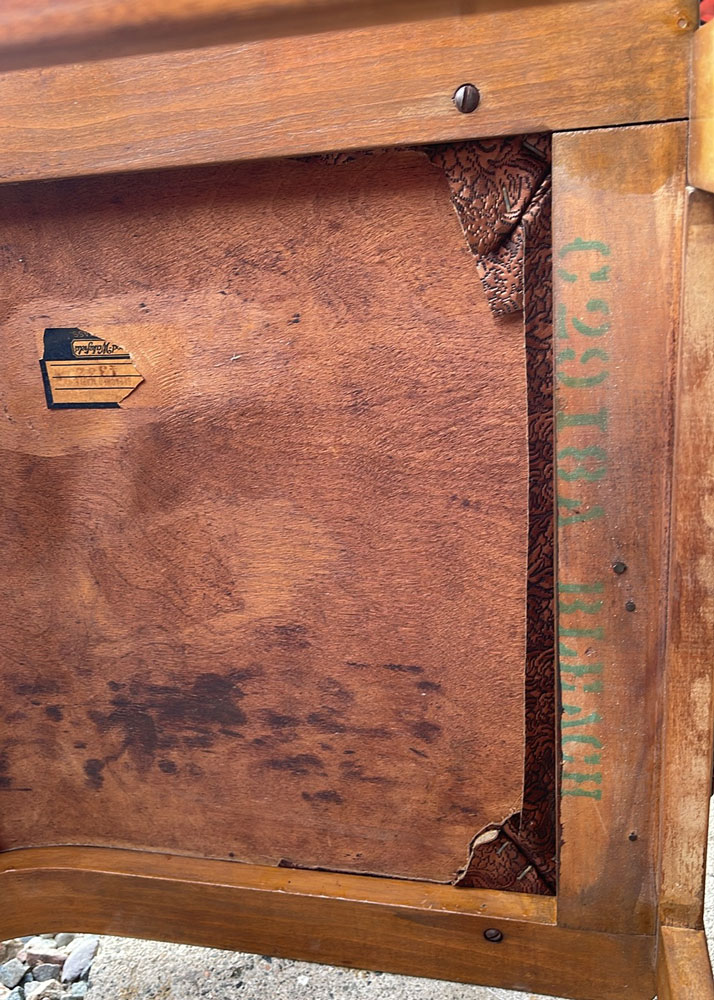
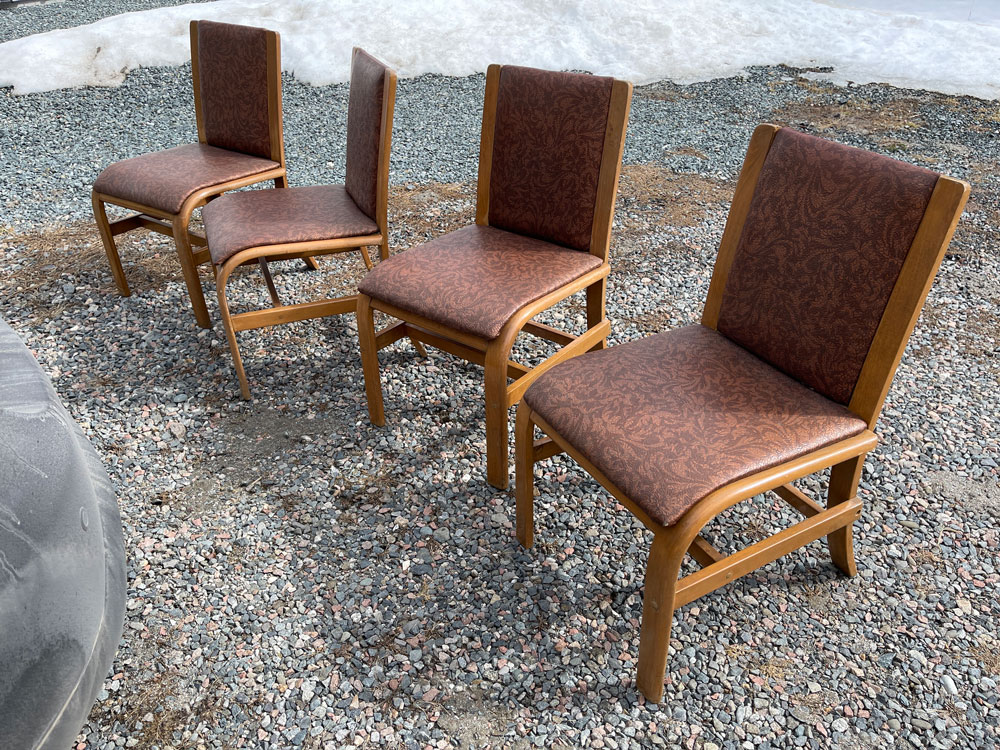
When I found these maple chairs, the old and original upholstery was a dark bronze Naugahyde, secured with decorative nailheads around the back panels. The original “Bleached” (white blond) wood finish had significant discoloration, age-darkening, and old surface buildup.
The refinishing process brought the design back into focus. Once stripped and sanded, the frames revealed the clarity of the construction: the continuous curve of the front legs, the rounded front rail, the straight rear supports, and the simple geometry of the seat and back. Without the darkened finish, the chairs looked much closer to what makes early Streamline furniture so compelling, but they are not yet the fully developed Heywood-Wakefield “look” that collectors associate with the blond finishes and postwar modern lines. But they show the company actively working through a new vocabulary. I refinished them in a reproduction Champagne stain.
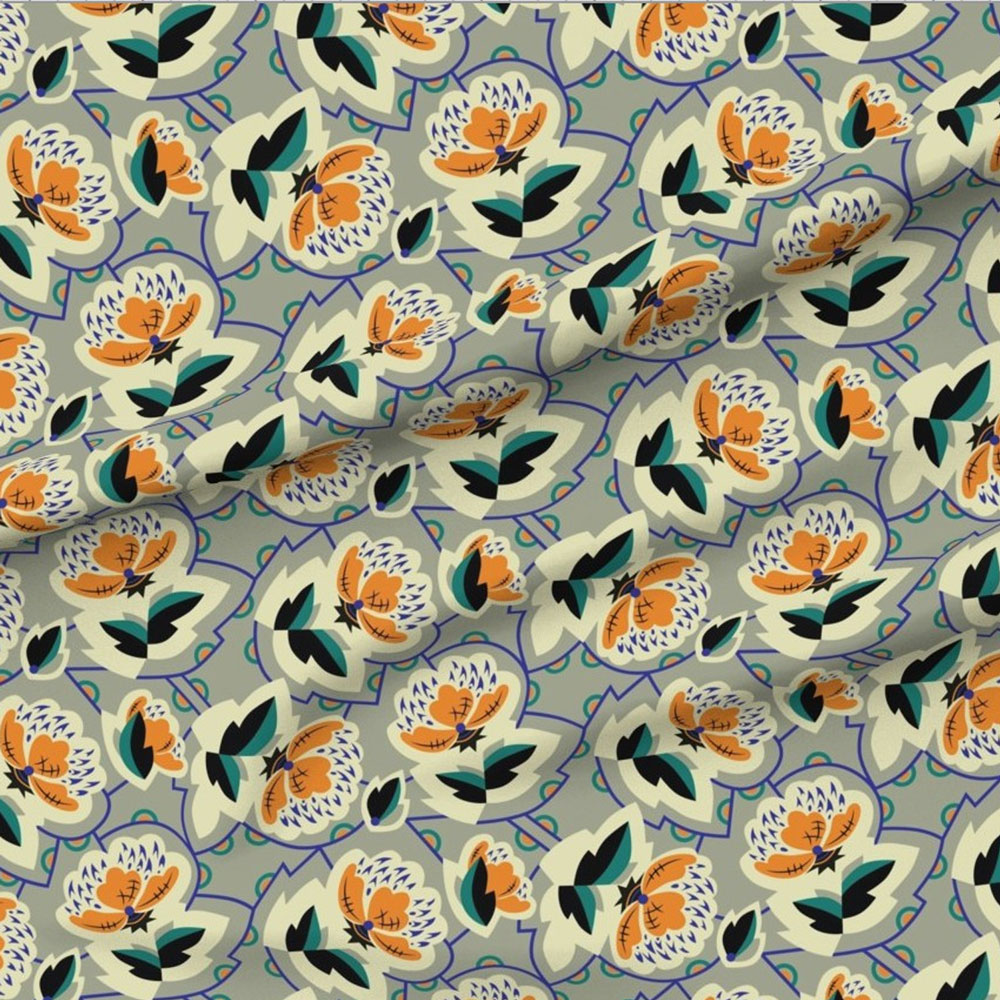
For the upholstery, I redesigned a Raoul Dufy fabric from the 1920s that changes the character of the chairs. The pattern is bold and modern, with stylized floral forms, blue-green leaves, orange blossoms, and looping linework on a warm neutral ground. I wanted the chairs to feel usable, lively, and historically sympathetic rather than frozen in a museum-state version of correctness. The result is bright, graphic, and a little unexpected, which feels right for a Streamline design from this transitional period.
What I love most about these chairs is that they show Heywood-Wakefield before the story becomes overly familiar. By the late 1930s and especially after the war, the company would become strongly associated with its blond modern furniture, sculptural case pieces, and highly recognizable finishes. These C2918 chairs come just before that identity fully solidified. They are early evidence of the shift: lighter in feeling, simpler in form, and more modern in attitude than much of what came before.
They are also rare. Dining and side chairs often had hard lives. They were used, recovered, refinished, separated from tables, stored in basements, or discarded when upholstery failed. Finding a set of early Streamline chairs with identifiable markings is unusual; finding four together is even better. The restoration was not just about making them attractive again, but about preserving a small, early chapter in Heywood-Wakefield’s modern design evolution.
Now restored, the chairs feel fresh without losing their age. The warm wood, open frames, and patterned upholstery make them easy to place in a contemporary interior, but they still carry the evidence of their 1936 design origin. They are not the most famous Heywood-Wakefield chairs, and that is part of their appeal. They represent the experimental edge of the company’s Streamline period, when modern American furniture was still being worked out in real time, one curve, rail, and frame at a time.